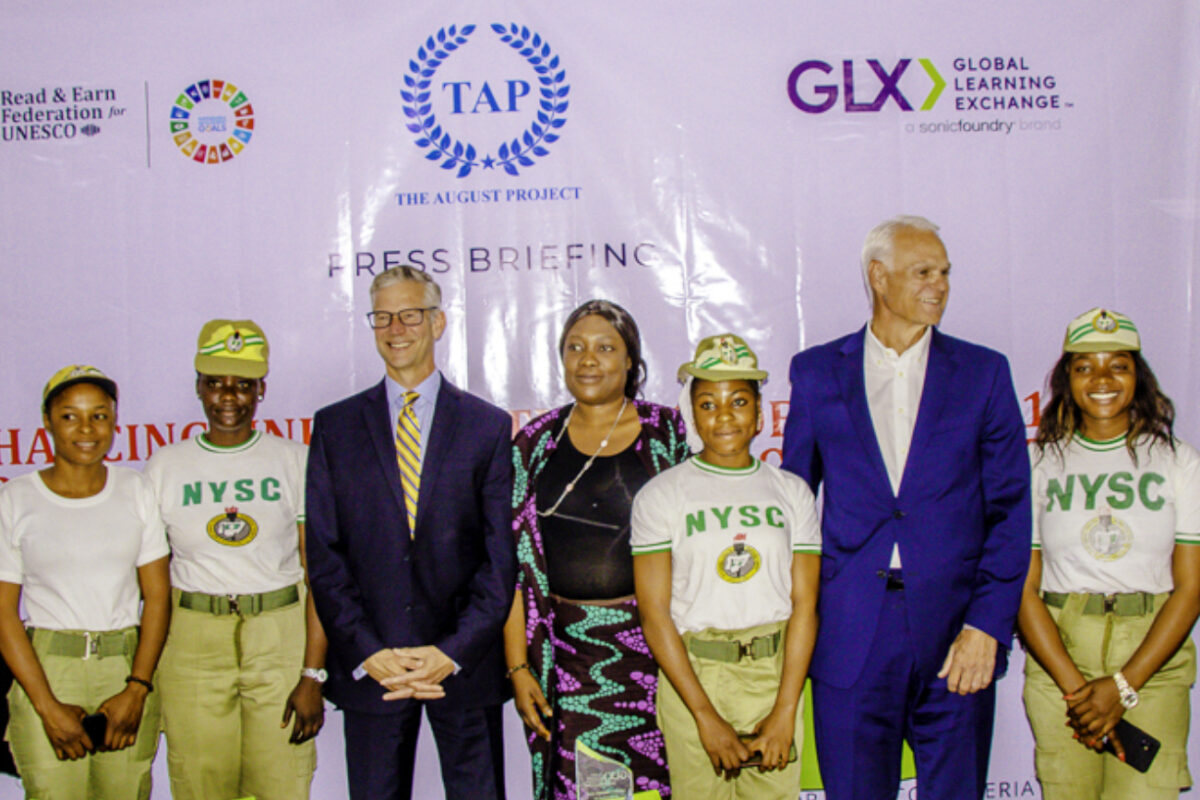
OVER 60,000 YOUTH TO BENEFIT FROM UNESCO REF’S (SIP) X2 PARTNERSHIP

Digital Technology Capacity Building – Special Intervention Program (SIP X2)

In recognition of the urgent need to bridge the gap in artificial intelligence (AI) awareness and skills among young people, UNESCO REF, in partnership with leading global experts, has launched the Digital Technology Capacity Building (DTCB) – Special Intervention Program (SIP X2). This pioneering initiative is designed to engage more than 60,000 youths annually, equipping them with the knowledge, competencies, and support required to thrive in the rapidly evolving field of AI.

The program will address the societal and human rights implications of AI, acknowledging that responsible adoption of emerging technologies can only be achieved through collaborative, multi-stakeholder engagement. SIP X2 will curate expert knowledge across disciplines, ensuring that participants gain both technical proficiency and ethical awareness.

Through structured training, SIP X2 will provide young people with modern digital literacy and AI-related skills, exposing them to the latest developments in the field and preparing them for diverse career opportunities within the global digital economy. The program emphasizes not only employability but also the importance of ethical responsibility, ensuring that participants are equipped to navigate challenges such as data privacy, algorithmic bias, and the broader societal impacts of AI.

In an era where technology is reshaping the way societies live, work, and communicate, it is imperative that youth are empowered with the tools to participate meaningfully and responsibly. SIP X2 represents a strategic step toward building an inclusive and equitable digital future, while simultaneously preparing nations with a new generation of skilled AI practitioners.

This initiative will provide participants with access to learning resources, mentorship, and opportunities previously unavailable, positioning them at the forefront of innovation and ensuring that they contribute to sustainable development goals through responsible digital engagement.

GET EDUCATED

Strategic Collaboration for Education and Skills Development

The Global Learning Exchange™ (GLX)  established a constructive partnership with the Read and Earn Federation for UNESCO under the NEPAD_EY framework, to be implemented through the TAP Category 2.9 platform This initiative will launch and promote an integrated education and skills development program, incorporating schemes such as the Master’s Support Program and facilitating international job placements for outstanding graduates. TAP participants will benefit from enhanced opportunities and added advantages.


This collaboration underpins the establishment of multiple GLX Hub facilities in emerging economies, beginning in Nigeria ([GLX Nigeria Hub](https://globallearningexchange.com/nigeria/)). These hubs will provide participants with a supportive learning environment, access to advanced technology, academic guidance, counselling and mental health services, career planning, and a wide range of academic and professional development resources.

Key Benefits

Infrastructure

Through this synergy, modern GLX Hub facilities will be established across Nigeria’s six geopolitical zones. These networked spaces will offer shared learning facilities, equipped with laptops, high-speed internet, and e-libraries. Participants will benefit from academic guidance, counselling, and a positive study environment, enabling them to matriculate and graduate with leading international GLX university partners in the **United States, United Kingdom, Canada, and Australia**.

Job Creation and Employment

The initiative will generate employment opportunities within GLX Hubs for qualified local professionals. Personnel with relevant expertise will be engaged to manage daily operations and provide administrative and academic support services, fully funded by GLX.

Career Support and Mental Wellbeing

Each hub will deliver comprehensive wraparound services, including academic guidance, counselling, mental health support, and career planning. A strong emphasis will be placed on student retention, employability, and long-term success.

Knowledge and Technology Transfer

The collaboration will facilitate the transfer of knowledge and technology through structured operational processes, training, and certification programs for all GLX employees, ensuring sustainability and institutional capacity building.

STRATEGIC IINTERVENTION PROGRAMME (SIP) X1 ON DIGITAL REVOLUTION

Digital Technology Capacity Building for Youth Empowerment

The rapid permeation of information and digital technologies into all aspects of human endeavor, coupled with Nigeria’s position as Africa’s largest and most dynamic economy, underscores the urgency of strengthening user protection and promoting best practices. The pace of digitization, expansion of mobile access, and proactive policy initiatives of the Central Bank further highlight the imperative to build capacity for responsible engagement in the digital space.

In alignment with the scope of the program, UNESCO–REF, through Category 2.9 of the TAP Project, is collaborating with global stakeholders to deliver joint training initiatives for youth in the digital sector. Annually, more than 120,000 young Nigerians will benefit from the SIP‑X1 program, which is designed to equip participants with the knowledge and skills required to harness opportunities and mitigate risks in the digital environment.

The course seeks to strengthen youth capacity to responsibly adopt and adapt to the digital revolution. Early investment in training is essential to ensure that stakeholders and beneficiaries are prepared to navigate rapidly evolving technologies.

The Digital Technology Capacity Building (DTCB) program, a core component of the TAP Project, serves as a critical resource in this process, providing structured training and guidance to empower beneficiaries with the competencies necessary for sustainable participation in the global digital economy.

USA, SONIC FOUNDRY PARTNER UNESCO REF TOWARDS EASY ATTAINMENT OF SDGS GOAL $ AND 8 IN NIGERIA

SDGs Global Mission Scheme SGMS, Nigeria Pilot
Overview
SDGs Global Mission Scheme (SGMS) is a three‑year, USD 100 million pilot in Nigeria, led by Sonic Foundry Inc. in partnership with GLX university partners in Australia, the United Kingdom, and the United States. SGMS mobilizes technology, scholarship capital, and public‑private partnerships to expand equitable access to higher education, strengthen youth employability, and build resilient educational infrastructure aligned with the United Nations Sustainable Development Goals. The program is designed to be replicable across emerging economies and to attract multilateral and private sector collaboration.

Objectives and Expected Impact
Primary Objectives
– Expand academic access: Fund Bachelor’s, Master’s, and recognized professional certifications for eligible Nigerian youth through accredited GLX university partners.
– Deploy GLX Hubs: Establish Sonic Foundry GLX Hub facilities offering study spaces, digital access, academic advising, mental health services, and career planning.
– Prioritize girl child education: Direct a larger share of resources to out‑of‑school girls and recent high school graduates to reduce barriers such as early marriage and exploitation.
– Boost employability: Emphasize retention, skills alignment with labor market needs, internships, and international job placement opportunities for top graduates.

Expected Impact
– Contribute to SDG 4, SDG 8, SDG 9, and SDG 17,
– Create measurable human capital gains through increased tertiary enrollment, higher graduation rates, and improved job placement outcomes.
– Deliver a scalable model for public‑private collaboration that can be adapted to other countries.

Program Design and Funding Allocation
Mission Funding: USD 100,000,000 over three years for the Nigeria pilot.
Delivery Model: Scholarships awarded on merit and need; GLX Hubs operated via public‑private partnerships with national ministries, UNESCO REF, the Nigerian Police Force Education Unit, local universities, and employer networks. Performance‑based disbursements and phased rollouts will manage risk and ensure accountability.

Funding Allocation and Program Design

The USD 100 million investment for the Nigeria pilot will be strategically deployed across six priority areas to maximize impact and sustainability:

• Scholarships and Tuition (USD 40 million): Direct financial support for Bachelor’s, Master’s, and professional certification programs through GLX university partners in Australia, the UK, and the USA.
• GLX Hub Capital and Technology (USD 25 million): Establishment of modern learning hubs equipped with advanced audio-visual systems, connectivity, and digital infrastructure to support hybrid learning.
• Operations and Staffing (USD 15 million): Recruitment and training of academic advisors, counsellors, and administrative staff to ensure high‑quality student support services.
• Employability and Placement (USD 10 million): Career services, internship programs, and employer partnerships designed to align graduates with labour market needs and international opportunities.
• Monitoring, Evaluation, and Research (USD 5 million): Independent impact measurement, quarterly reporting, and transparent assessments to ensure accountability and continuous improvement.
• Contingency and Partnerships (USD 5 million): Reserved funds to manage unforeseen risks, strengthen local partnerships, and ensure program resilience.

Governance Safeguards and Partnerships
Governance Structure
– International Steering Committee: Sonic Foundry, GLX university representatives, UNESCO REF, Nigerian government officials, civil society, and independent auditors.
– National Program Office: Responsible for hub rollout, scholarship administration, partner management, and day‑to‑day operations.

Safeguards
– Child protection and gender‑sensitive policies.
– Grievance redress mechanisms and data protection standards.
– Independent midline and endline evaluations and public annual reporting.

Partnerships
– Academic partners: GLX university network in Australia, the UK, and the USA.
– Implementation partners: UNESCO REF, local universities, and private sector employers.

Impact Framework and Key Performance Indicators
Primary KPIs
– Enrollment: Number of scholarship recipients.
– Graduation Rate: Completion rate for degree programs.
– Employment: Placement in formal employment or internships within 12 months of graduation.
– Gender Focus: Share of resources and enrollments for girls and young women.
– Hub Utilization: Attendance and service uptake metrics.

Three Year Targets
– Enrollments: 10,000.
– Graduation Rate: ≥70% for degree programs.
– Employment: ≥60% placed in formal employment or internships within 12 months.
– Gender Allocation: ≥55% of scholarship resources directed to girls and young women.

Measurement Approach
Quarterly dashboards, independent evaluations, alignment with SDG indicators, and transparent public reporting.

Call to Action and Contact
Join the Partnership, SGMS invites UN agencies, bilateral donors, philanthropic foundations, academic institutions, and private sector employers to co‑finance, co‑design, and scale this model. Stakeholders are invited to contribute funding, technical expertise, internship and employment pathways, and local implementation capacity.