UNESCO REF Partners Nigerian Diaspora and U.S.-Based Company in Water Purification under the UNESCO REF Strategic Intervention Programme-ALPHA, Category 11

Executive Summary

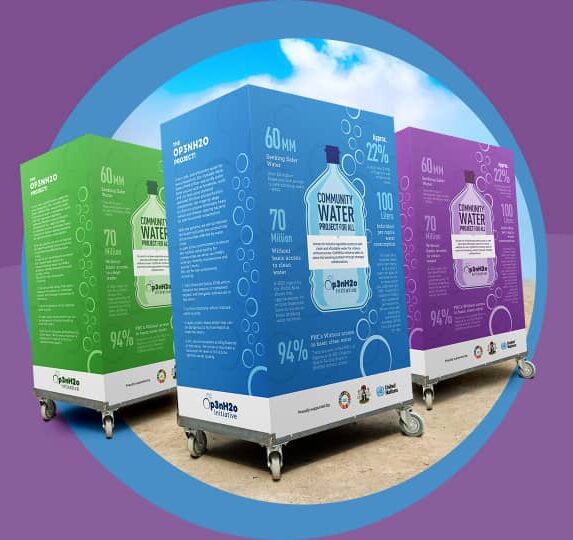
UNESCO REF, in strategic partnership with distinguished Nigerian diaspora professionals and a U.S.- based technology company, has inaugurated a modular, indigenously maintainable water purification system. The prototype is currently undergoing operational and public health validation as the foundational deployment of a nationally scalable framework.

This initiative constitutes a landmark in applied diaspora engagement, structured technical transfer, and multisectoral governance, positioning Nigeria at the vanguard of sovereign, community-anchored water security. It delivers integrated progress across SDG 3, SDG 6, SDG 8, SDG 9, and SDG 17, in direct alignment with national policy imperatives and the African Union’s Agenda 2063.

The Strategic Imperative

Nigeria’s water crisis is not merely an infrastructure deficit. It is a compounding drag on public health, economic productivity, educational continuity, and national security. Waterborne disease remains among the primary drivers of preventable mortality, with disproportionate impact on youth, women, and vulnerable communities.
This pilot represents a deliberate, evidence-led intervention at the intersection of technical innovation, institutional governance, and local enterprise development. It is engineered not as a project but as the nucleus of a national programme: replicable, independently sustainable, and designed from inception for integration into existing federal and state systems.


The NYSC Federal Capital Territory site is not an arbitrary starting point. It is a strategic gateway; a nationally networked institution with presence in all 36 states and the FCT, providing the optimal infrastructure for validated, phased replication at scale.

Technical and Operational Architecture

System Design
The purification train is configured to address the full spectrum of microbial and chemical contaminants prevalent in Nigerian water sources:
• Primary treatment: Multi-stage sediment pre-filtration and activated carbon adsorption for turbidity reduction and chemical load management


• Membrane filtration: Ultrafiltration or reverse osmosis modules deployed contextually, delivering certified pathogen removal to WHO and NAFDAC standards


• Terminal disinfection: UV-C irradiation providing validated residual protection without chemical dependency


• Safe storage: Covered dispensing infrastructure with contamination-resistant design


• Power resilience: Solar-hybrid configuration with battery buffering and optional grid integration, ensuring uninterrupted operation in contexts of irregular power supply


• Monitoring and telemetry: On-unit turbidity and flow sensors, operator dashboard, and remote monitoring capability for programme-level oversight and public reporting


Operational Philosophy

The system has been engineered around a single governing principle: local ownership from day one. Component standardisation, local sourcing of non-critical parts, modular cartridge architecture, and field-repair protocols eliminate dependency on international supply chains or external technical support for routine operations. This is technology in service of sovereignty.
Deployment contexts span community water points, NYSC camps, schools, and primary health centres; deliberately sequenced to maximise public trust, institutional integration, and verifiable health-outcome data.

Public Health, Social, and Economic Impact

Health Outcomes

The system is calibrated to eliminate the microbial and chemical vectors responsible for cholera, typhoid, hepatitis A, and endemic diarrhoeal disease. Validation at the prototype site is structured around WHO-standard microbial removal efficacy benchmarks, safe-storage practice protocols, and measurable health indicators integrated with national disease surveillance architecture.

Independent midline and endline evaluations will generate peer-reviewed evidence for policy adoption, development financing, and international replication.
Social and Economic Returns

Safe water is an economic lever, not merely a humanitarian concern. The programme projects measurable reductions in preventable clinic attendance, gains in school enrolment continuity (particularly for girls), and improved workforce productivity in host communities. Behaviour-change programming accompanies each deployment to maximise health gains, community compliance, and institutional sustainability.
The economic case is equally compelling for the private sector: reduced healthcare expenditure, stronger human capital, and communities capable of productive economic participation.

Skills Transfer and Local Enterprise

A certified training curriculum, co-developed with Nigerian technical institutes, will produce a structured cadre of trained operators, field technicians, and programme supervisors. Apprenticeship pathways and local enterprise support frameworks for assembly, logistics, and spare-parts supply will embed this programme within Nigeria’s existing technical and vocational ecosystem, creating livelihoods, not dependency.

Governance, Accountability, and Safeguards

Institutional Governance Structure
Programme governance is structured for both agility and rigour. A National Programme Office coordinates operational execution under the oversight of an International Steering Committee comprising UNESCO REF, diaspora representatives, the U.S.-based technology partner, relevant federal ministries, and independent technical evaluators. This architecture ensures accountability to Nigerian institutions while preserving the programme’s international credibility and knowledge-exchange function.

Safeguards and Transparency

Child-protection measures, gender-sensitive access policies, grievance redress mechanisms, and data-protection standards are embedded across all deployment contexts. Non-sensitive operational and water-quality data will be published via public dashboards, ensuring that government, civil society, development partners, and the media have unmediated access to programme performance indicators.
This transparency is not a compliance obligation. It is a deliberate institutional posture.

Invitation to Partnership


UNESCO REF extends a formal institutional invitation to federal and state ministries, NYSC commands, technical and vocational institutes, UN agencies, bilateral development partners, research institutions, the private sector, and civil society organisations to engage this initiative as:
• Demonstration and host sites for validated programme replication
• Curriculum adoption partners for the certified technical training framework
• Data and surveillance partners integrating pilot findings into national public-health systems
• Financing and co-investment partners for phased national rollout
• Independent validation partners contributing to the evidentiary base for policy and international knowledge exchange


Prince Abdulsalami Ladigbolu-Oranmiyan
President, UNESCO REF
“This partnership is a demonstration of what becomes possible when diaspora expertise, international technical capability, and Nigerian institutional leadership operate in deliberate alignment. We are not delivering aid. We are building sovereign infrastructure. Every system installed is a commitment to the community it serves, a qualification earned by a technician it trains, and a disease prevented in a child who deserves better.”

Nigeria does not need more observers. It needs builders. UNESCO REF invites you to be one.

Jonathan David
Chief Executive Officer, U.S. Tech Partner
“Our engagement with UNESCO REF reflects a deeply held conviction that technology transfer, done properly, must leave capacity behind. It must build capability, never dependency. We are here to transfer knowledge, establish local technical authority, and build systems communities can own, maintain, and expand entirely on their own terms.”

UNESCO REF Call for Volunteers 2026: Application Process Opens June 12 and Closes September 12, 2026 – Join a Distinguished Network of High Impact, Change Makers Shaping Nigeria’s Future

Your Skills in Service: Our Mission in Action.

CALL FOR APPLICATIONS – 2026

Open to qualified applicants globally. Remote options available for select roles. Physical presence in Nigeria required for certain assignments. Learn More About the Volunteering Process.


Child Labour: Nigeria’s Forgotten Pipeline to Terrorism

By Prince Abdulsalami Ladigbolu‑Oranmiyan, UNESCO REF President.

Democracy Day and a Sobering Reality

As Nigeria commemorates Democracy Day alongside the International Day Against Child Labour, the nation must confront a sobering truth: child labour is not merely an economic or social problem, it is a national security crisis. Children forced into labour, hawking on streets, mining in unsafe conditions, or performing hazardous tasks are denied education and hope. Extremist groups exploit this vulnerability, turning poverty into a recruitment pipeline. Every child lost to labour is a potential recruit diverted from classrooms into conflict, from innovation into insurgency.


Nigeria’s Greatest Resource at Risk

Nigeria’s greatest resource is not oil or minerals, it is its people. Yet child labour steadily erodes this foundation, reducing the nation’s intellectual capital and weakening its ability to compete in a knowledge‑driven world. Protecting children today is therefore not just a moral duty, it is a strategic imperative for Nigeria’s survival and growth.

Democracy is built on participation, inclusion, and opportunity. Child labour undermines these principles by silencing millions of voices before they can even be heard. A democracy that fails to protect its children is a democracy at risk.

Linking the Fight to Global Goals

This fight is inseparable from the United Nations Sustainable Development Goals (SDGs):

  • SDG 4 Quality Education: Ensuring every child has access to inclusive, equitable, and quality learning.
  • SDG 8 Decent Work and Economic Growth: Breaking cycles of poverty and exploitation through safe, dignified opportunities for families.
  • SDG 16 Peace, Justice, and Strong Institutions: Protecting children from recruitment into violence and building democratic resilience.
  • SDG 17 Partnerships for the Goals: Fostering collaboration between Nigeria, international partners, and civil society to dismantle child labour and terrorism pipelines.

A Call to Leadership and Partnership

At this critical juncture, UNESCO REF President Prince Abdulsalami Ladigbolu-Oranmiyan calls upon President Bola Ahmed Tinubu to inject an intersection of fresh ideas that synchronize the Ministry of Culture, the Ministry of Information, and the Ministry of Humanitarian Affairs. The solution to this menace is in the hands of these ministries. Nigeria must empower intellectuals, not busy driven professionals to design and implement strategies that combine cultural renewal, information management, and humanitarian outreach. This effort must also be enhanced by cooperation between the Global North and South, recognizing that child labour and terrorism are shared challenges requiring shared solutions. Nigeria’s call is not for charity, but for partnership; a partnership that secures democracy and safeguards humanity.

Nigeria cannot confront this challenge alone. UN agencies, donor bodies, and international partners must join hands with Nigeria in eradicating child labour and dismantling the recruitment pipelines of terror. Partnership must translate into investment in education, building schools, training teachers, and ensuring access to quality learning for every child. It must include social protection systems that provide safety nets for families vulnerable to child labour, counter-terrorism strategies that integrate child protection into national and regional security frameworks, and community resilience programs that empower local leaders and families to resist extremist recruitment.

The eradication of child labour is not a distant goal, it is an urgent necessity. Nigeria must strengthen its laws, enforce accountability, and prioritize education as a national security strategy. International partners must provide technical expertise, funding, and solidarity. Civil society must continue to raise awareness and hold leaders accountable. This is a fight that requires multi-sectoral collaboration: government, private sector, civil society, and international organizations working hand in hand. The stakes are too high for complacency.

On this Democracy Day, let us affirm that democracy is not measured solely by ballots, but by the futures we safeguard for our children. The fight against child labour is inseparable from the fight against terrorism. By protecting Nigeria’s children, we protect Nigeria’s democracy and by extension, the stability of Africa and the world. The time to act is now. The world must not look away. Nigeria’s children deserve more than survival, they deserve the chance to thrive, to innovate, and to lead. The measure of our collective humanity will be judged by how we respond to this crisis

UNESCO REF To Launch Its SDGs Mission In Egypt

The UNESCO REF is proud to announce the forthcoming formal launch of its SDGs Mission in the Arab Republic of Egypt, marking a major continental expansion of the TAP Project under Categories 2.7 and 2.8 of the scheme, in alignment with the NEPAD_EY Strategic Implementation Platform.

Egypt, a founding member of the African Union and one of Africa’s most strategically positioned nations, stands as a critical gateway for UNESCO REF’s NEPAD_EY continental education mandate.

Advancing Global Goals

The TAP SDGs Mission in Egypt directly contributes to:

  • SDG 4 – Quality Education: Expanding access and strengthening educational systems.
  • SDG 8 – Decent Work and Economic Growth: Empowering youth with skills for sustainable employment.
  • SDG 9 – Industry, Innovation, and Infrastructure: Building resilient systems for innovation and industrial growth.

Strategic Alignment

This mission is fully aligned with:

  • UN 2030 Agenda for Sustainable Development
  • AU Agenda 2063 for Africa’s transformation
  • UNESCO Education 2030 Framework for inclusive, equitable education

The Mission

The TAP SDGs Mission in Egypt will mobilize Egyptian and Nigerian youth, institutions, and development partners to drive generational capacity building. This initiative represents a unified effort to strengthen education, innovation, and economic opportunity across Africa.

A Continental Call

“Egypt is not just a destination – it is a declaration of UNESCO REF’s continental purpose.”


UNESCO REF Partner United Kingdom Global University Application Portal to Complement Nigeria’s NELFUND, Advance Africa’s Agenda 2063 and the UN SDGs

A National, Continental and Global Commitment

The Educational Financing Facility Scheme (EFFS) is a flagship initiative of the UNESCO REF, under the leadership of President Prince LadigboluOranmiyan, designed to complement Nigeria’s National Education Loan Fund (NELFUND). The scheme expands access to international higher education, strengthens Nigeria’s human capital development, and aligns with Africa’s Agenda 2063 and the United Nations Sustainable Development Goals (SDGs).

The Global University Application Portal (UAPP) participates in the EFFS as a strategic partner, working with UNESCO REF to reinforce governance, transparency, and delivery, thereby strengthening the easy attainment of the scheme’s goals. The EFFS remains open for other credible institutions and stakeholders to read, engage, and partake, ensuring that the programme benefits from broad collaboration and shared responsibility.

Leadership Voice of Commitment

UNESCO REF President Prince Ladigbolu-Oranmiyan stated: “The EFFS is more than financing. It is a national, continental, and global commitment to ensure that no talented Nigerian is denied the opportunity to earn accredited international credentials because of financial barriers. By complementing NELFUND, we are embedding transparency, accountability, and equity into education financing. This is Nigeria’s gift to Africa, and Africa’s contribution to the world.”

POWA President Dr. Mrs. Egbetokun emphasized: “Our youth are the custodians of Nigeria’s future. The EFFS ensures that their aspirations are matched with structured support, ethical governance, and global opportunity. It is a flagship programme that strengthens families’ confidence and positions Nigeria as a leader in human capital development.”

UAPP CEO Mr. Md Shamim added: “Through our participation in the EFFS, we are connecting Nigerian students to world class universities with a transparent and credible admissions process. This collaboration ensures that ambition is matched with opportunity, and that financing is responsibly structured under UNESCO REF’s governance. It is a model of how global collaboration can empower Africa’s next generation.”

Advancing Nigeria’s National Priorities

The EFFS complements NELFUND by supporting youth empowerment, human capital development, and economic diversification. It ensures that financial barriers do not prevent talented students from pursuing global opportunities, reinforcing national strategies for innovation, employability, and sustainable growth.

Driving Africa’s Continental Agenda

The EFFS advances the African Union’s Agenda 2063, which envisions an Africa whose development is people driven, relying on the potential of African people, especially its youth. By positioning Nigerian students as global learners and future leaders, the EFFS contributes to Africa’s aspiration for inclusive growth, innovation, and prosperity.

Aligning with the United Nations SDGs

The EFFS contributes directly to:

  • SDG 4 Quality Education expanding access to higher education and lifelong learning
  • SDG 5 Gender Equality ensuring equitable opportunities for young women
  • SDG 8 Decent Work and Economic Growth preparing youth for global employment markets
  • SDG 9 Industry, Innovation and Infrastructure fostering innovation ecosystems through skilled graduates
  • SDG 10 Reduced Inequalities removing financial and administrative barriers to education
  • SDG 17 Partnerships for the Goals exemplifying multi stakeholder collaboration across institutions, civil society, and private partners

Roles and Responsibilities

  • UNESCO REF provides strategic oversight, governance, and beneficiary protections
  • UNESCO REF Chartered Institute Lichfield serves as the administrative hub, managing compliance and pre departure employability training
  • UAPP participates in admissions facilitation and strengthens attainment of scheme goals
  • UAPP Private Financial Partners and Consultants provide loan products and advisory services under REF’s governance framework
  • Other Stakeholders are invited to read, engage, and partake in the EFFS to broaden collaboration and impact

Implementation Framework

  • Pilot Phase initial implementation in Police Schools in Nigeria
  • National Rollout phased expansion across Nigeria aligned with NELFUND
  • Continental Scaling integration into AU Agenda 2063 youth empowerment frameworks
  • Global Partnerships alignment with UNESCO Education 2030 and World Bank Human Capital Project

Impact Metrics

  • Access 60,000 youth beneficiaries in the first phase
  • Equity minimum 50 percent participation by young women
  • Employability pre training modules linked to job readiness and entrepreneurship
  • Accountability independent audits, grievance mechanisms, and transparent reporting
  • Sustainability integration with national and continental financing frameworks

Confidence Statement

The EFFS is a professionally governed, student centred response to the needs of Nigerian families seeking international education. It complements NELFUND, advances Africa’s Agenda 2063, and contributes to the SDGs. With UNESCO REF providing oversight, Lichfield managing administration and pre training, UAPP participating as a strategic partner, and private partners supplying loan products, the EFFS stands as a global model for equitable, transparent, and sustainable education financing.

Know more about the EFFS through the UNESCO REF Chartered Institute, Lichfield, the official administrative contact point for enquiries and programme information.

1 2 3 6