
The Needful Now: How Nigeria Built a Covenant Between Its Badge and Its Youth
UNESCO REF Media Centre | Special Report | Lead Investigation
From the streets of August 2024 to the halls of Louis Edet House: an investigation into how a country under strain chose dialogue over confrontation, and how the UNESCO REF Nigeria Police Youths Summit turned public anger into a structured partnership between Nigeria’s security institutions and its young citizens.
Special Report. This is a summary of the Lead Investigation. Read the complete report, Annex A of the UNESCO REF Special Reports.
ABUJA, Nigeria. In the space of fourteen months, Nigeria passed from economic shock to street protest to something few had predicted: a national conversation between its police and its young people. This report examines the civic demands that were raised, the institutional responses that followed and the accountability framework now required to honour what was promised. It traces the sequence of events that culminated on 12 August 2024, International Youth Day, in the UNESCO REF Nigeria Police Youths Summit.
Global alignmentAlignement mondialThe global commitments this story advances. Open to see how.
- SDG16
SDG 16, Peace, Justice and Strong Institutions (primary)
ProvisionTarget 16.6: accountable institutions; Target 16.7: inclusive, participatory decision-making
How the Summit respondsYouth advisory councils, independent oversight and public reporting
- UNSC
UN Security Council Resolution 2250 (2015)
ProvisionYouth, Peace and Security: participation, protection, prevention, partnerships
How the Summit respondsYoung people treated as partners in national security
- UNSC
UN Security Council Resolution 2419 (2018)
ProvisionRole of youth in negotiating and implementing peace
How the Summit respondsYouth voice built into a standing dialogue mechanism
- SDG8
SDG 8, Decent Work
ProvisionTarget 8.6: youth not in employment, education or training
How the Summit respondsEconomic empowerment treated as a security strategy
- SDG17
SDG 17, Partnerships
ProvisionTarget 17.17: public and civil society partnerships
How the Summit respondsA partnership between the Nigeria Police Force and UNESCO REF
- AYC
African Youth Charter
ProvisionYouth participation in decision-making
How the Summit respondsStructured dialogue between youth and the Force
- AU
African Union Agenda 2063
ProvisionAspiration 6: development driven by the potential of African youth
How the Summit respondsYouth at the centre of the national security conversation
- IYD
United Nations International Youth Day
ProvisionAnnual observance on 12 August
How the Summit respondsSummit convened on International Youth Day 2024
“The UNESCO REF Nigeria Police Youths Summit is not merely an event, but a national platform for reconciliation and partnership, a covenant between the Police and our youth to build trust, respect, and shared responsibility.”
Prince Abdulsalami Ladigbolu-Oranmiyan, President, UNESCO REF, Louis Edet House, Abuja
Three words at Eagle Square
Trois mots sur Eagle Square
The story begins on the morning of 29 May 2023, at Eagle Square, Abuja. In his inaugural address, President Bola Ahmed Tinubu announced the end of the petrol subsidy in three words: “Subsidy is gone.” Within days, pump prices multiplied, and the subsequent floating of the naira added a currency shock to a fuel shock.
For millions of households, the effect was immediate: higher transport fares, higher food prices and shrinking incomes. Young Nigerians, facing rising costs for data, transport and starting a business, felt the pressure most acutely.
The spiral
La spirale
Over the months that followed, inflation climbed above 33 per cent, with food prices rising faster still. The Special Report records fourteen months of sustained pressure on households, in which the frustrations of the young accumulated without a channel through which they could be heard by the institutions of the State.
An answer in the fields
Une réponse dans les champs
Even before the streets erupted, UNESCO REF was advancing a structural response. In May and June 2024, Prince Abdulsalami Ladigbolu-Oranmiyan and Dr Mrs Elizabeth Egbetokun, National Advocate of the Young Women in Agriculture programme and National President of the Police Officers’ Wives Association, undertook an advocacy tour of the South West, presenting the agricultural value chain as a durable path to livelihoods for young Nigerians.
“The agricultural value chain is not a fallback. It is the structural answer to a structural problem.”
Prince Abdulsalami Ladigbolu-Oranmiyan, June 2024
Ten days in August
Dix jours d’août
On 1 August 2024, young Nigerians took to the streets under the banner #EndBadGovernance. For ten days, protests unfolded in cities across the Federation, from Lagos and Abuja to Kano, Kaduna, Port Harcourt, Enugu, Ibadan, Owerri and Benin City. The Special Report records loss of life, citing Amnesty International, and heavy economic losses at the height of the unrest.
The Honourable Minister of Police Affairs, Senator Ibrahim Gaidam, acknowledged that the protests carried genuine grievances, even as some sought to exploit them. The question before the nation was whether those grievances would be met with force alone, or with a hearing.
A conversation at Louis Edet House
Une conversation à Louis Edet House
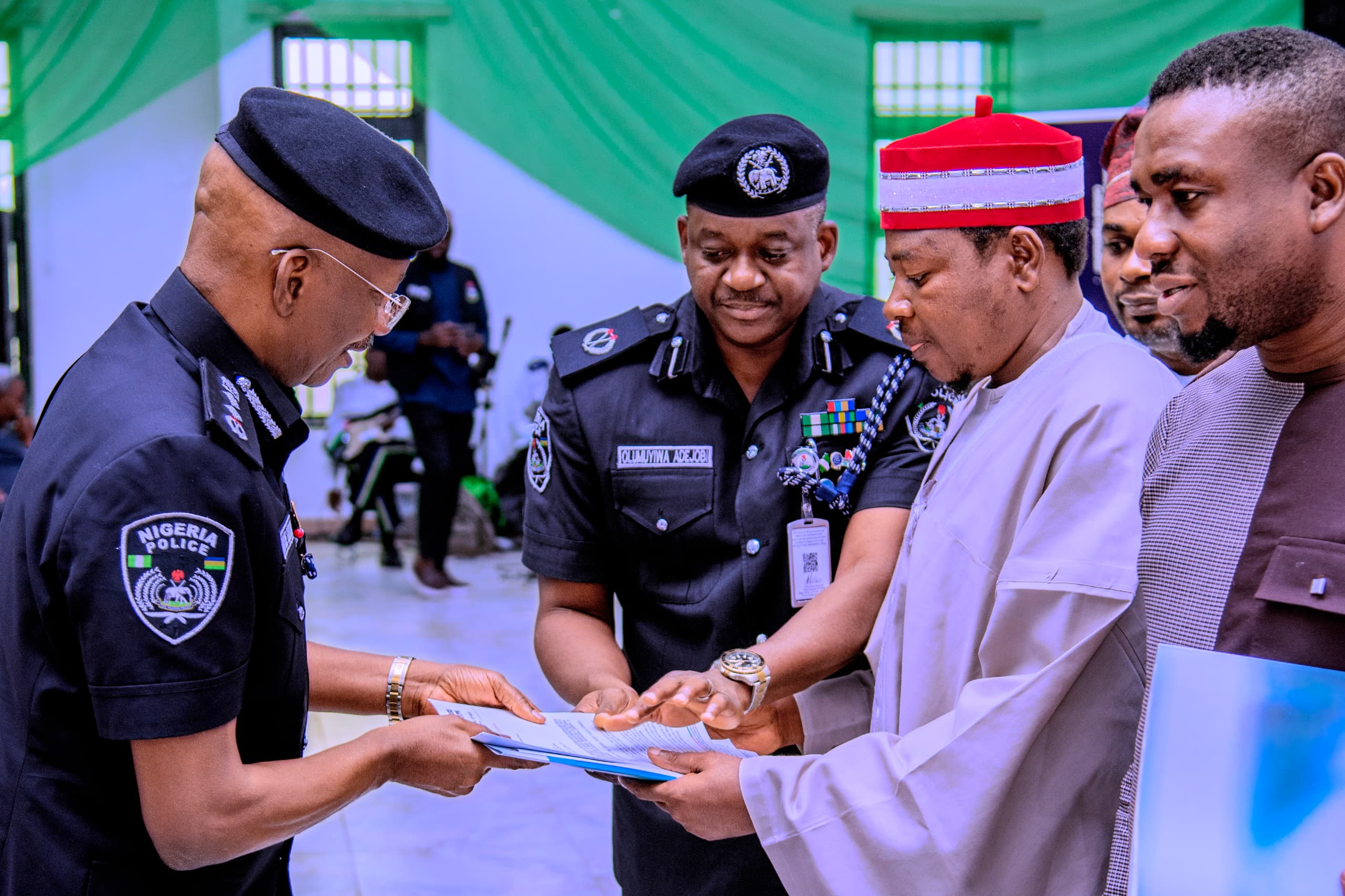
The answer began with an unscheduled conversation. While the protests were still under way, the President of UNESCO REF paid a working visit to Louis Edet House, the headquarters of the Nigeria Police Force on Shehu Shagari Way, Abuja, where he met the Force Public Relations Officer, Muyiwa Adejobi. From that meeting came an agreement to convene a national summit of youth and police on 12 August 2024, International Youth Day.
“We are not here today because of the protests of August.”
Muyiwa Adejobi, Force Public Relations Officer
The remark captured an important truth: the protests had made the need visible, but the need itself was long-standing. The full substance of the Louis Edet House conversation has not been published.
The Summit
Le Sommet
| Element | Detail |
|---|---|
| Date | 12 August 2024, United Nations International Youth Day |
| Venue | Nigeria Police Force Resource Centre, Abuja |
| Convenors | UNESCO REF and the Nigeria Police Force |
| Delegates | More than 400, from all 36 States and the Federal Capital Territory |
| Principal participants | Inspector-General of Police, Dr Kayode Adeolu Egbetokun, PhD, NPM; Dr Jamila Bio Ibrahim, Minister of Youth Development, representing President Tinubu; Senator Ibrahim Gaidam, Minister of Police Affairs; Professor Olanrewaju Fagbohun, SAN, guest keynote |
| Format | Addresses, an open dialogue with the Inspector-General and thematic breakout sessions |
The gathering opened with performances by members of the National Youth Service Corps and continued through a full day of engagement.
On the record
Les déclarations officielles
“The Nigeria Police Force is fully committed to protecting the rights and welfare of our youths.”
Dr Kayode Adeolu Egbetokun, Inspector-General of Police
“There is a trust gap between the security agencies and the youth.”
Senator Ibrahim Gaidam, Minister of Police Affairs
“Trust is not announced. It is demonstrated. Over time.”
Professor Olanrewaju Fagbohun, SAN
“This summit is not a courtesy gathering.”
Dr Jamila Bio Ibrahim, Minister of Youth Development
Delivering the message of President Tinubu, Dr Ibrahim set out commitments under the youth pillar of the Renewed Hope Agenda: NYSC enterprise funding of up to N10 million per beneficiary, support for 5,000 graduate ventures, the National Youth Skills Programme, a commitment to 30 per cent youth inclusion and a planned Young Leaders Institute.
The dialogue
Le dialogue
The most consequential hour of the day was unscripted. Delegates questioned the Inspector-General directly. A delegate from Lagos asked about the policing of protests; the Inspector-General replied that the role of the police is to manage protests, not to prevent them. A delegate from Abuja raised misconduct; he acknowledged it and said his administration was removing corrupt officers. Halimat Chagua, a delegate from the North East, asked about the security of farmers; he pointed to dedicated farm patrols during planting and harvest seasons.
Not every delegate left satisfied, and the Special Report says so. But the exchange itself, conducted in public between the head of the Force and the young people it serves, marked a departure. Breakout sessions on crime prevention, conflict resolution, social media engagement and community policing turned the exchange into proposals.
The Abuja Communique and the accountability framework
Le Communiqué d’Abuja et le cadre de redevabilité
The Summit closed with Abuja Communique No. 01 and five recommendations. The Special Report sets out the framework against which their implementation should be judged:
| Recommendation | What implementation looks like |
|---|---|
| 1. Youth advisory councils | Councils at federal, State and local levels with real influence on security policy, beginning with State pilots |
| 2. Secure intelligence networks | Technology-enabled channels for community intelligence, with anonymity, encryption and due process |
| 3. Trust through transparency | Independent oversight, accessible complaint procedures and public reporting |
| 4. Economic empowerment as security | Skills, jobs and enterprise support in high-risk communities |
| 5. Continuous dialogue | Quarterly national convenings and regular regional dialogues |
“Security in Nigeria is not achieved by force alone.”
Mallam Nuhu Ribadu, National Security Adviser
“Every generation of Nigerian youth has been asked to wait.”
Ibrahim Danladi, delegate, Borno State
Why it matters
Les enjeux
The relationship between young people and the institutions charged with their security is a question of national stability. A 2023 study by the United Nations Development Programme found that about a quarter of voluntary recruits to violent extremist groups in sub-Saharan Africa cited job opportunities as their main reason for joining. Trust, inclusion and economic opportunity for the young are therefore central to security policy, not peripheral to it.
That is the covenant the title of this report describes: an undertaking by the badge to listen and to answer, and by the youth to engage and to build. Its value will be measured not by the day on which it was made, but by the years in which it is kept.
Read the full investigation
Lire l’enquête complète
This summary draws on the Lead Investigation published by the UNESCO REF Media Centre. Readers are warmly invited to read the complete account, with its chronology, data and full record of the dialogue:
- The Special Report. The Needful Now, Annex A, UNESCO REF Special Reports.
- The Report of Events. UNESCO REF Nigeria Police Youths Summit.
Read the Special Report. The complete investigation is available at the UNESCO REF Media Centre: unesco-ref.org/special-reports.
ENDS
Notes to editorsNotes aux rédactions
About the Special Reports. The UNESCO REF Special Reports are in-depth investigations published by the UNESCO REF Media Centre. “The Needful Now” is Annex A of the series, in the National Security strand of the Lead Investigation Series. Coordination: Ibrahim Danladi. Media and Outreach: Ms Bupwatda.
About UNESCO REF. The Read and Earn Federation for UNESCO (UNESCO REF) works to strengthen human and institutional capacity across Nigeria and Africa through education, research and professional development, in alignment with the 2030 Agenda for Sustainable Development.
Media enquiries. UNESCO REF Media Centre, [email protected]
SourcesSources
- The Needful Now: How Nigeria Built a Covenant Between Its Badge and Its Youth, UNESCO REF Special Reports, Annex A, published 12 August 2024, revised July 2026
- UNESCO REF Nigeria Police Youths Summit, Report of Events, UNESCO REF
- Lack of jobs, the main driver of violent extremism in sub-Saharan Africa, UN News, February 2023