The Strategic Intervention Program (SIP X2) has been unveiled as a landmark initiative to prepare young people for the opportunities and challenges of artificial intelligence and the digital economy. More than a training program, SIP X2 is a national, continental, and global platform that combines technical proficiency with ethical responsibility, empowering a new generation to drive innovation while safeguarding human rights, democratic values, and societal resilience.
Nigeria’s Gift to Africa, Africa’s Contribution to the World
At the national level, SIP X2 strengthens Nigeria’s digital economy and aligns with President Bola Ahmed Tinubu’s agenda for youth empowerment and innovation. At the continental level, it positions Africa as a leader in ethical AI adoption, ensuring that African youth are not left behind in the Fourth Industrial Revolution. Globally, SIP X2 contributes to the United Nations Sustainable Development Goals (SDGs), particularly:
SDG 4 (Quality Education) – advancing digital literacy and lifelong learning.
SDG 8 (Decent Work and Economic Growth) – preparing youth for future employment in the digital economy.
SDG 9 (Industry, Innovation, and Infrastructure) – fostering innovation ecosystems.
SDG 10 (Reduced Inequalities) – ensuring equitable access to digital opportunities.
SDG 16 (Peace, Justice, and Strong Institutions) – embedding ethics and accountability in AI governance.
Institutional Voice of Leadership
UNESCO REF President declared: “Technology must serve humanity. SIP X2 ensures that young people are not only prepared for the jobs of tomorrow but also for the ethical responsibilities that come with shaping our digital future. This is Nigeria’s gift to Africa and Africa’s contribution to the world.”
Building Ethical Competence for the Digital Age
Through structured training, mentorship, and access to global expertise, SIP X2 equips participants with modern digital literacy and AI‑related skills. The program emphasizes employability while ensuring that youth are prepared to address critical issues such as data privacy, algorithmic bias, and the broader societal impacts of emerging technologies.
A Multi‑Stakeholder Global Movement
SIP X2 represents a strategic step toward building an inclusive and equitable digital society. By curating expert knowledge across disciplines and fostering multi‑stakeholder collaboration, the program positions nations to harness AI responsibly while strengthening democratic governance, sustainable development, and global solidarity.
Empowering Youth as Architects of Digital Equity
Participants will gain access to resources, mentorship, and opportunities previously unavailable, positioning them at the forefront of innovation. SIP X2 ensures that their contributions advance national priorities, continental aspirations, and global digital equity, embedding ethics at the heart of technological progress.
About SIP X2
SIP X2 is a multi‑stakeholder initiative committed to advancing digital literacy, ethical AI adoption, and youth empowerment. By combining technical excellence with ethical awareness, SIP X2 prepares nations with a new generation of skilled practitioners ready to shape the future responsibly.
Through GLX Hubs in all six geopolitical zones, the GET EDUCATED pathway gives Nigerians aged 18 to 35 locally supported access to internationally accredited degrees and certifications from university partners in the United States, the United Kingdom, Canada and Australia.
UNESCO REF Media Centre | Abuja, Nigeria | 17 October 2026
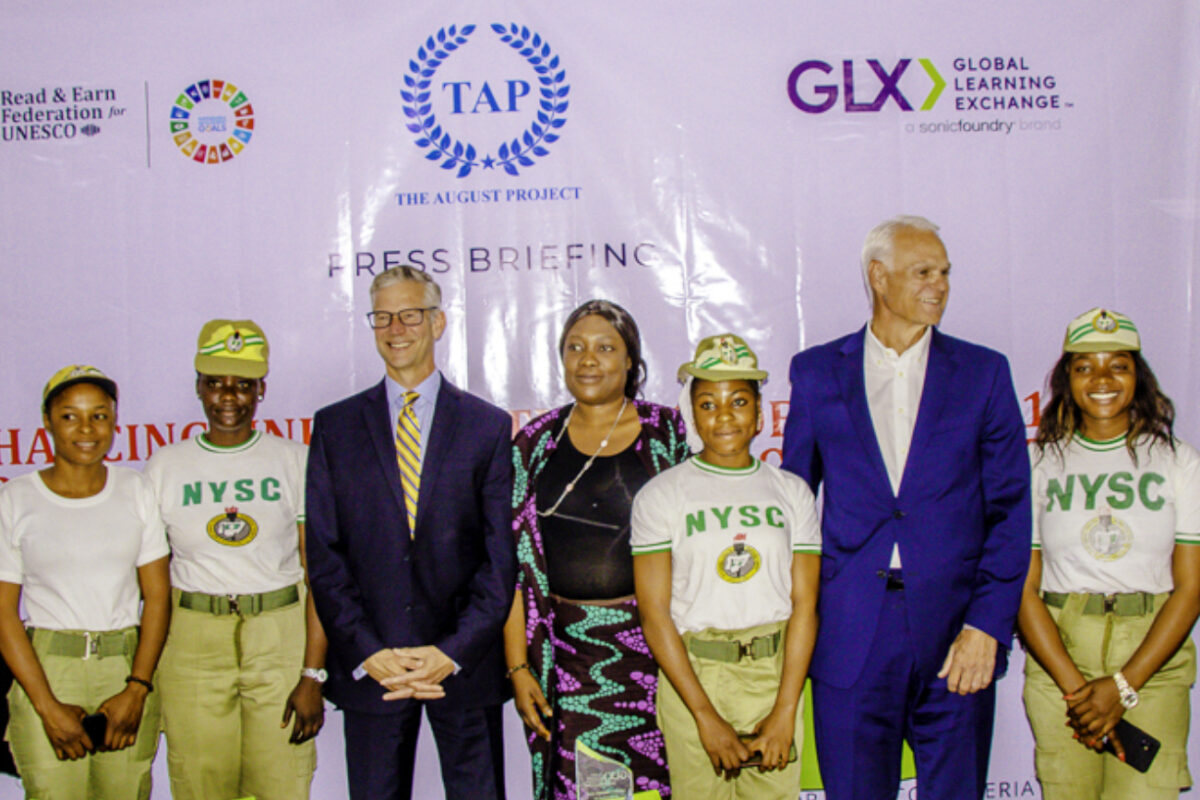
ABUJA, Nigeria, 17 October 2026. The Read and Earn Federation, for UNESCO (UNESCO REF) and the Global Learning Exchange™ (GLX), a United States-based education company, are advancing a strategic collaboration for education and skills development in Nigeria. Branded GET EDUCATED, the partnership opens internationally accredited academic programmes, professional certifications and digital skills to young Nigerians, regardless of geography or economic circumstance.
First announced in September 2022 under The August Project (TAP), a UNESCO REF initiative then supported by the Office of the Senior Special Assistant to the President on the Sustainable Development Goals, the collaboration now operates within the UNESCO REF Strategic Intervention Programmes for Accelerated Learning and Productive Human Asset (SIP-ALPHA) and the NEPAD_EY framework, implemented through TAP Category 2.9.
The access gap
Le déficit d’accès
Education is the foundation of sustainable development, social mobility and global competitiveness, yet demand for higher education in Nigeria far exceeds the places available where students most want them. More than 2.24 million candidates registered for the 2026 Unified Tertiary Matriculation Examination. In 2025, Nigerian tertiary institutions filled about 1.01 million places, with university places, at 74 per cent utilisation, the most heavily contested.
Each year, therefore, more than a million qualified and aspiring young Nigerians are left without a place. GET EDUCATED offers them a credible alternative: internationally accredited study, supported locally, without the need to relocate abroad.
GLX Hubs across the six geopolitical zones
Des centres GLX dans les six zones géopolitiques
The cornerstone of the initiative is a network of GLX Hub facilities across Nigeria’s six geopolitical zones. Each hub provides:
A modern learning environment. Laptops, high-speed internet and e-libraries.
Academic guidance and wellbeing. Counselling, career planning and mental health support.
A path to graduation. A supportive study environment in which participants matriculate and graduate with GLX university partners in the United States, the United Kingdom, Canada and Australia.
Local employment. Each hub creates jobs for qualified local professionals, who manage operations and provide academic and administrative support. The model builds institutional capacity, creates local ownership and secures sustainability.
Retention and wellbeing. Recognising that education must be holistic, the hubs deliver wraparound services, including career planning, counselling and mental health support, so that participants are prepared academically, personally and professionally.
Knowledge and technology transfer. Structured training and certification programmes localise expertise, build institutional capacity and position Nigeria as a hub for educational innovation in Africa.
The GET EDUCATED pathway
Le parcours GET EDUCATED
GET EDUCATED expresses the institutional commitment of both partners to connect Nigeria’s intellectual capital with global opportunity. The pathway serves young people aged 18 to 35, including National Youth Service Corps members, graduates and young professionals, and provides access to internationally validated programmes.
The result is a pipeline of globally competitive graduates, equipped to contribute to national development and to international collaboration.
Global alignment
Alignement mondial
Framework
Provision
How GET EDUCATED responds
SDG 4, Quality Education (primary)
Target 4.3: equal access to affordable, quality tertiary education; Target 4.4: youth with relevant skills, including ICT skills
Internationally accredited degrees, certifications and digital skills
SDG 8, Decent Work
Target 8.6: reduce youth not in employment, education or training
Employment pathways for graduates and jobs for local hub staff
SDG 3, Good Health and Well-being
Target 3.4: promote mental health and well-being
Counselling and mental health support in every hub
SDG 9, Industry, Innovation and Infrastructure
Target 9.c: increase access to information and communications technology
Laptops, high-speed internet and e-libraries
SDG 10, Reduced Inequalities
Target 10.2: inclusion irrespective of economic status
Access regardless of geography or economic circumstance
SDG 17, Partnerships
Target 17.6: knowledge and technology sharing; Target 17.17: effective partnerships
Knowledge and technology transfer between the United States and Nigeria
UNESCO Education 2030 Framework for Action
Inclusive, equitable quality education and lifelong learning for all
Higher education access for youth outside the university system
African Union Agenda 2063
Aspiration 6: development driven by the potential of African people, especially youth
Youth aged 18 to 35 at the centre of the programme
Continental Education Strategy for Africa (CESA)
Expanded, quality tertiary education and ICT in education
GLX Hubs as technology-enabled learning centres
AUDA-NEPAD and NEPAD_EY frameworks
Education and employment as pillars of Africa’s growth
Implemented through the NEPAD_EY framework
A strategic investment in Nigeria’s future
Un investissement stratégique pour l’avenir du Nigéria
The UNESCO REF and GLX partnership is more than an educational programme. It is a strategic investment in Nigeria’s future and in Africa’s transformation. By combining infrastructure, employment, career and wellbeing support and knowledge transfer, the collaboration creates a complete ecosystem for learning and growth, anchored in global good practice and aligned with the Sustainable Development Goals.
ENDS
Notes to editors
Notes aux rédactions
About GET EDUCATED. GET EDUCATED is the education and skills pathway of the UNESCO REF and Global Learning Exchange partnership, offering Nigerians aged 18 to 35 locally supported access to internationally accredited programmes through GLX Hubs in the six geopolitical zones.
About Global Learning Exchange. Global Learning Exchange (GLX) is a United States-based education company that provides students with low-cost, locally supported access to online learning from international institutions.
About UNESCO REF. The Read and Earn Federation, for UNESCO (UNESCO REF) works to strengthen human and institutional capacity across Nigeria and Africa through education, research and professional development, in alignment with the 2030 Agenda for Sustainable Development.
ABE are proud to be partners with UNESCO-Ref on the TAP project in Nigeria, which aims to empower 1.2m young people with high-impact entrepreneurial skills. Helping them find decent work or start their own business, reducing the massive unemployment and poverty crisis.
Digital Technology Capacity Building for Youth Empowerment
The rapid permeation of information and digital technologies into all aspects of human endeavor, coupled with Nigeria’s position as Africa’s largest and most dynamic economy, underscores the urgency of strengthening user protection and promoting best practices. The pace of digitization, expansion of mobile access, and proactive policy initiatives of the Central Bank further highlight the imperative to build capacity for responsible engagement in the digital space.
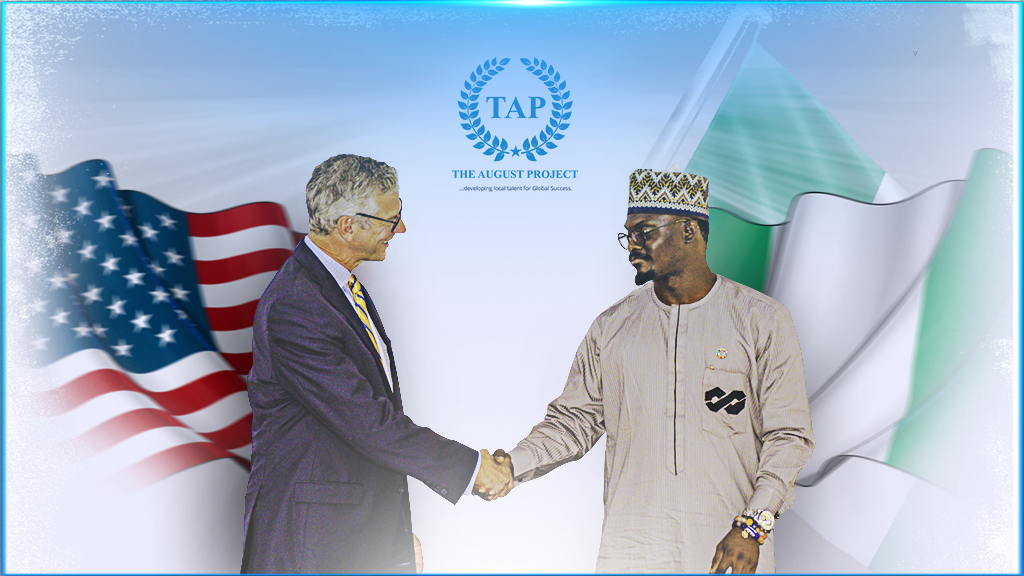
In alignment with the scope of the program, UNESCO–REF, through Category 2.9 of the TAP Project, is collaborating with global stakeholders to deliver joint training initiatives for youth in the digital sector. Annually, more than 120,000 young Nigerians will benefit from the SIP‑X1 program, which is designed to equip participants with the knowledge and skills required to harness opportunities and mitigate risks in the digital environment.
The course seeks to strengthen youth capacity to responsibly adopt and adapt to the digital revolution. Early investment in training is essential to ensure that stakeholders and beneficiaries are prepared to navigate rapidly evolving technologies.
The Digital Technology Capacity Building (DTCB) program, a core component of the TAP Project, serves as a critical resource in this process, providing structured training and guidance to empower beneficiaries with the competencies necessary for sustainable participation in the global digital economy.
The SDGs Global Mission Scheme (SGMS) is a three‑year, USD 100 million pilot in Nigeria, led by Sonic Foundry Inc. in partnership with GLX university partners in Australia, the United Kingdom, and the United States. SGMS mobilizes technology, scholarship capital, and public‑private partnerships to expand equitable access to higher education, strengthen youth employability, and build resilient educational infrastructure aligned with the United Nations Sustainable Development Goals. The program is designed to be replicable across emerging economies and to attract multilateral and private sector collaboration.
Objectives and Expected Impact
Primary Objectives
Expand academic access: Fund Bachelor’s, Master’s, and recognized professional certifications for eligible Nigerian youth through accredited GLX university partners.
Deploy GLX Hubs: Establish Sonic Foundry GLX Hub facilities offering study spaces, digital access, academic advising, mental health services, and career planning.
Prioritize girl child education: Direct a larger share of resources to out‑of‑school girls and recent high school graduates to reduce barriers such as early marriage and exploitation.
Boost employability: Emphasize retention, skills alignment with labor market needs, internships, and international job placement opportunities for top graduates.
Expected Impact
Contribute to SDG 4, SDG 8, SDG 9, and SDG 17.
Create measurable human capital gains through increased tertiary enrollment, higher graduation rates, and improved job placement outcomes.
Deliver a scalable model for public‑private collaboration that can be adapted to other countries.
Program Design and Funding Allocation
Mission Funding
USD 100,000,000 over three years for the Nigeria pilot.
Delivery Model
Scholarships awarded on merit and need; GLX Hubs operated via public‑private partnerships with national ministries, UNESCO REF, the Nigerian Police Force Education Unit, local universities, and employer networks. Performance‑based disbursements and phased rollouts will manage risk and ensure accountability.
Funding Allocation
Scholarships and Tuition (USD 40 million): Direct financial support for Bachelor’s, Master’s, and professional certification programs.
GLX Hub Capital and Technology (USD 25 million): Establishment of modern learning hubs with advanced audio‑visual systems and digital infrastructure.
Operations and Staffing (USD 15 million): Recruitment and training of advisors, counsellors, and administrative staff.
Employability and Placement (USD 10 million): Career services, internships, and employer partnerships.
Monitoring, Evaluation, and Research (USD 5 million): Independent impact measurement and transparent reporting.
Contingency and Partnerships (USD 5 million): Reserved funds for risk management and strengthening local partnerships.
Governance Safeguards and Partnerships
Governance Structure
International Steering Committee: Sonic Foundry, GLX university representatives, UNESCO REF, Nigerian government officials, civil society, and independent auditors.
National Program Office: Responsible for hub rollout, scholarship administration, partner management, and day‑to‑day operations.
Safeguards
Child protection and gender‑sensitive policies.
Grievance redress mechanisms and data protection standards.
Independent midline and endline evaluations with public annual reporting.
Partnerships
Academic partners: GLX university network in Australia, the UK, and the USA.
Implementation partners: UNESCO REF, local universities, and private sector employers.
Impact Framework and Key Performance Indicators
Primary KPIs
Enrollment: Number of scholarship recipients.
Graduation Rate: Completion rate for degree programs.
Employment: Placement in formal employment or internships within 12 months of graduation.
Gender Focus: Share of resources and enrollments for girls and young women.
Hub Utilization: Attendance and service uptake metrics.
Three‑Year Targets
Enrollments: 10,000.
Graduation Rate: ≥70% for degree programs.
Employment: ≥60% placed in formal employment or internships within 12 months.
Gender Allocation: ≥55% of scholarship resources directed to girls and young women.
Measurement Approach
Quarterly dashboards, independent evaluations, alignment with SDG indicators, and transparent public reporting.
Call to Action and Contact
Join the Partnership: SGMS invites UN agencies, bilateral donors, philanthropic foundations, academic institutions, and private sector employers to co‑finance, co‑design, and scale this model. Stakeholders are encouraged to contribute funding, technical expertise, internship and employment pathways, and local implementation capacity.