Osun State Partners UNESCO REF to Pilot The VOICE Initiative in Nigeria
Osun becomes the first sub-national government in Nigeria to implement the professional advancement programme for women with disabilities, a model set to scale to 120,000 women nationally and to all 54 African nations by 2030.
UNESCO REF Media Centre | Osogbo, Nigeria | 16 October 2026
OSOGBO, Nigeria, 16 October 2026. The Government of Osun State has entered into partnership with the Read and Earn Federation, for UNESCO (UNESCO REF), to pilot The VOICE Initiative in Nigeria. With this partnership, Osun State becomes the first sub-national government in the Federation to implement the Initiative, a professional advancement programme that prepares women with disabilities for dignified, independent and financially sustainable employment in the global digital economy.
The State has mobilised its first cohort of 64 women for Phase 1 of the pilot, with a second cohort to follow in Phase 2. Data verification for the Phase 1 cohort begins on 21 October 2026, to be followed by a virtual orientation, a three-week induction and the six-week programme itself.
A commitment to every citizen
Un engagement envers chaque citoyen
Speaking for the Osun State Government, Hon. Bankole Omisore, Senior Special Assistant to the Governor on the Sustainable Development Goals, said the partnership reflects the priorities of the administration.
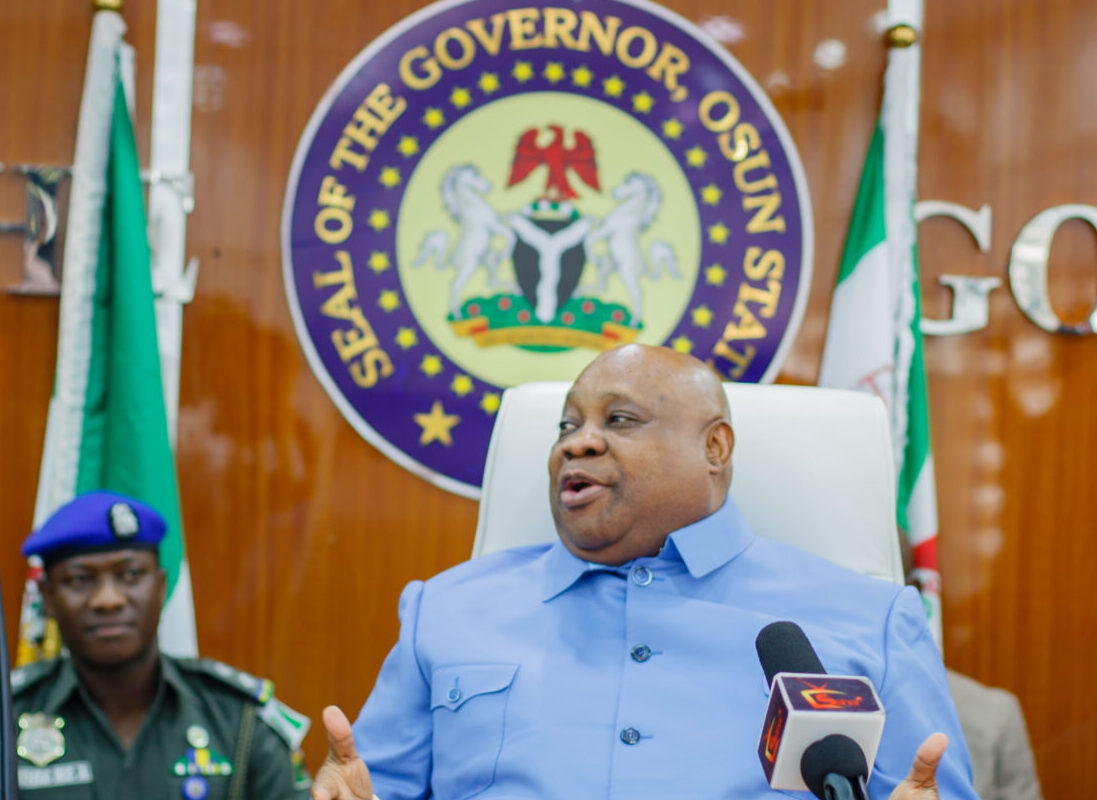
He stated that The VOICE Initiative aligns with the commitment and vision of His Excellency, Governor Ademola Jackson Nurudeen Adeleke, to ensure that every citizen of the State is well cared for.
The Initiative was launched on 1 October 2026 in commemoration of Nigeria’s Independence Anniversary, and Osun State serves as its official partner and first pilot state. The standard set in Osun will guide the national and continental rollout.
Two generations, one intervention
Deux générations, une seule intervention
The President of UNESCO REF, Prince Abdulsalami Ladigbolu-Oranmiyan, described the Initiative as an investment that reaches beyond the women enrolled.
“This programme is about two generations, through one intervention. When we equip a mother with a disability to earn a dignified income, we protect the schooling of her children. Our parents and our out-of-school children are not two separate challenges. They are one story, and The VOICE Initiative addresses both at once. Osun State has shown the courage to lead, and in doing so it has become the model for every other State of the Federation.”
Prince Abdulsalami Ladigbolu-Oranmiyan, President, UNESCO REF
The design rests on established research. Research cited by UNESCO REF finds that parental disability reduces children’s school attendance, with a larger effect where the mother has the disability, and that income controlled by women is more often spent on children’s welfare. Nigeria has an estimated 20 million out-of-school children and youth, according to data published by the UNESCO Institute for Statistics and the Global Education Monitoring Report.
The programme and its return to Government
Le programme et ses retombées pour le Gouvernement
The first course under the Initiative, AI Innovation and Digital Enterprise (TIER I), is delivered fully online through The Lichfield Academy over six weeks and 78 lessons. It is open to women with disabilities aged 18 and above who hold a first degree or its equivalent in any discipline, and requires no prior background in technology. The programme is built around a single outcome: that each graduate secures remote employment, locally or internationally, in the digital economy.
According to UNESCO REF, the Initiative is not a welfare scheme but a fiscal instrument that returns value to the public purse. Its projected benefits to Government include:
- No cost to Government. Training is fully funded by UNESCO REF through its Educational Financial Facility Scheme (EFFS), at no cost to the State or Federal Government.
- Personal income tax. Each Fellow in formal employment contributes to the tax base under the progressive rates of the Nigeria Tax Act, 2025.
- Value Added Tax. Household spending by employed Fellows generates VAT revenue.
- Local multiplier. Income earned, often from international employers, is spent within the State economy and circulates through local businesses.
- Recovered productivity. The International Labour Organization estimates that low- and middle-income countries lose between 3 and 7 per cent of GDP through the exclusion of persons with disabilities from work.
- Human security. A 2023 UNDP study found that about a quarter of voluntary recruits to violent extremist groups cited job opportunities as their main reason for joining. Dignified employment strengthens households and communities against that risk.
Full details of the programme, its curriculum and its policy papers are available on The VOICE Initiative page.
Global alignment
Alignement mondial
An estimated 1.3 billion people, or 16 per cent of the world’s population, experience significant disability, according to the World Health Organization. The VOICE Initiative responds directly to the international and national commitments that address their inclusion.
| Framework | Provision | How The VOICE Initiative responds |
|---|---|---|
| SDG 10, Reduced Inequalities (primary) | Target 10.2: social, economic and political inclusion of all, irrespective of disability or sex | Moves women with disabilities into the formal digital economy |
| SDG 8, Decent Work | Target 8.5: full and productive employment for all, including persons with disabilities | Built around one outcome: remote employment for every graduate |
| SDG 4, Quality Education | Target 4.5: equal access to education for persons with disabilities | Fully funded, accessible professional training |
| SDG 5, Gender Equality | Women’s full participation in economic life | Serves women exclusively |
| SDG 1, 16 and 17 | No poverty; peace and strong institutions; partnerships | Household income, human security, and a State and civil society partnership |
| UN Convention on the Rights of Persons with Disabilities | Article 6 (women with disabilities), Article 24 (education), Article 27 (work and employment) | Equal access to skills and to work for women with disabilities |
| Maputo Protocol | Article 23: protection of women with disabilities | Economic empowerment of women with disabilities |
| African Union Protocol on the Rights of Persons with Disabilities in Africa, 2018 | Rights to education and to work | Continental rollout to all 54 African nations by 2030 |
| Discrimination Against Persons with Disabilities (Prohibition) Act, 2018 (Nigeria) | Inclusion of persons with disabilities in education and employment | State-level implementation, beginning in Osun |
From Osun to Africa
D’Osun à l’Afrique
The Osun pilot opens a four-year programme running from 2026 to 2030. National upscaling to 120,000 women, 20,000 in each of Nigeria’s six geopolitical zones, is targeted for 2027 and will be led by Dr Safiyyah Hassan Shaibu, Strategic Ambassador for UNESCO REF SIP-ALPHA. The Initiative will then extend to ECOWAS member states in 2028 and to all 54 African nations by 2030.
ENDS
Notes to editors
Notes aux rédactions
About The VOICE Initiative. The VOICE Initiative (Visionary, Outcomes-Driven AI for Inclusion, Capacity for Empowerment) is a professional advancement programme for women with disabilities in Nigeria and Africa, established by UNESCO REF under its SIP-ALPHA framework. Its first course, AI Innovation and Digital Enterprise (TIER I), is delivered through The Lichfield Academy. Partners include The Lichfield Partners and Associates, the Maryam Babangida National Centre for Women Development, the Women Development Centre FCT, the UNESCO National Commission Nigeria and NEPAD_EY. Full details: unesco-ref.org/the-voice-initiative.
About UNESCO REF. The Read and Earn Federation, for UNESCO (UNESCO REF) works to strengthen human and institutional capacity across Nigeria and Africa through education, research and professional development, in alignment with the 2030 Agenda for Sustainable Development.
Media enquiries. UNESCO REF Media Centre, [email protected]
Sources
Sources
- The VOICE Initiative, UNESCO REF
- Global report on health equity for persons with disabilities, World Health Organization, 2022
- UNESCO: Estimated number of out-of-school children in Nigeria now 20m, ThisDay, 2 September 2022
- Exclusion carries high costs for individuals and economies alike, International Labour Organization, 23 September 2013
- Lack of jobs, the main driver of violent extremism in sub-Saharan Africa, UN News, February 2023, on the UNDP report Journey to Extremism in Africa
- Bankole Omisore, the powers behind the growing successes of Gov Adeleke, ThisDay, 19 November 2023
- INEC declares Adeleke winner of Osun governorship election, ICIR, 16 August 2026