
Strengthening Nigeria’s Leadership in UNESCO’s Global Mission
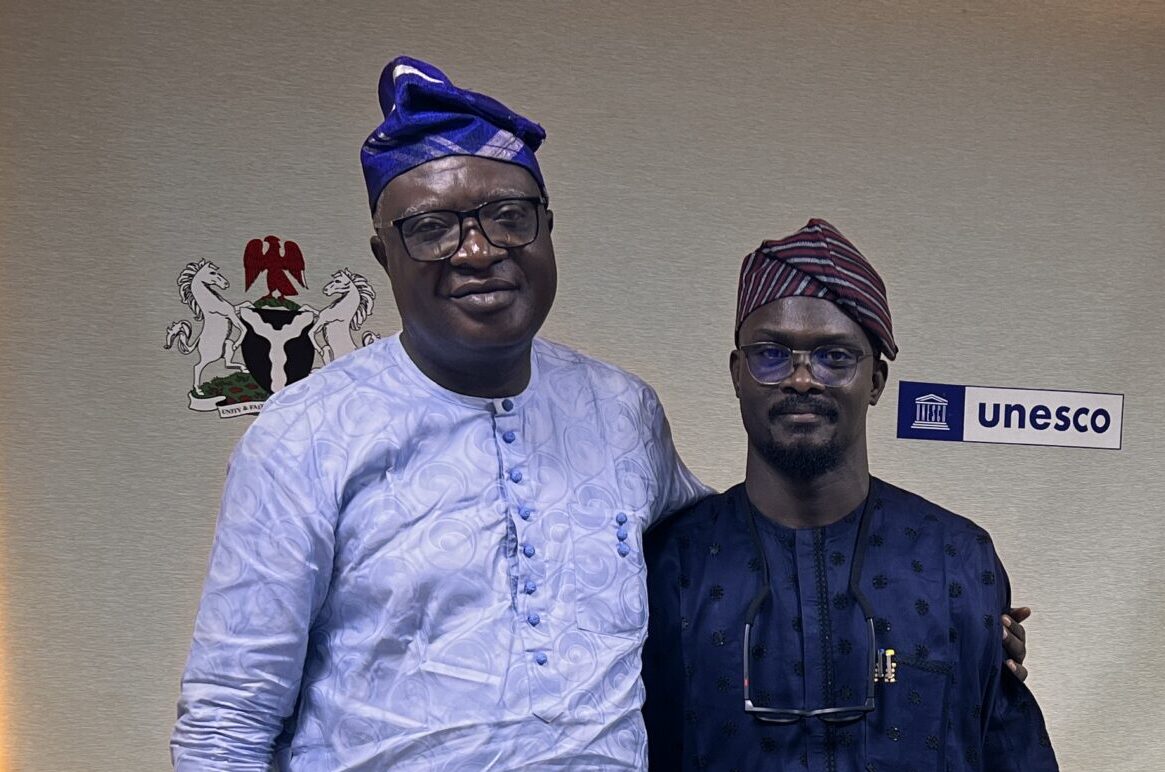
The President of the UNESCO‑REF, Prince Abdulsalami Ladigbolu‑Oramiyan, undertook a formal working visit to Dr. Lateef Olagunju, Secretary‑General of the Nigerian National Commission for UNESCO (NATCOM‑UNESCO), to advance dialogue on the Enhanced Institutional Mandate for Sustainable Development Goals (SDGs) attainment in Nigeria.
Aligning National Priorities with the 2030 Agenda
This high‑level engagement reaffirmed the shared commitment of both institutions to strengthen Nigeria’s role in UNESCO’s global mission, while aligning national priorities with the 2030 Agenda for Sustainable Development. Discussions focused on consolidating institutional frameworks, expanding youth empowerment initiatives, promoting gender equality, advancing digital transformation, and fostering inclusive education as strategic pathways toward achieving the SDGs.
UNESCO‑REF’s Global Relevance and Institutional Mandate
Prince Ladigbolu‑Oramiyan emphasized UNESCO REF’s readiness to collaborate closely with NATCOM‑UNESCO in mobilizing expertise, resources, and innovative programmes that directly benefit Nigerian communities. He underscored that the partnership represents a model of multi‑stakeholder cooperation, designed to accelerate measurable progress in sustainable development while reinforcing Nigeria’s leadership within UNESCO’s global network. He stated: “Our mandate is not only national but continental. By aligning Nigeria’s priorities with UNESCO’s vision, we are ensuring that Africa’s youth, women, and communities stand at the center of global development discourse.”
NATCOM‑UNESCO’s Strategic Vision
Dr. Olagunju welcomed the initiative, highlighting the importance of building synergies to ensure effective implementation of UNESCO‑mandated programmes. He noted that the enhanced institutional mandate would not only strengthen Nigeria’s capacity to deliver on the SDGs but also contribute to UNESCO’s broader vision of peace, human dignity, and sustainable development.
Commitment to Joint Action Frameworks
The visit concluded with a mutual commitment to establish joint action frameworks for programme implementation, expand stakeholder participation across government, civil society, and youth constituencies, and ensure that Nigeria’s engagement with UNESCO continues to serve as a benchmark for impactful, inclusive, and globally relevant development initiatives.