
UNESCO REF and Osun State Open Nominations for 3,000 Osun Indigenes to Fully Funded AI Research Programme, ARDAI TIER I

The DispatchUNESCO REF Media Centre · EISSN 3156-55575 min read

UNESCO REF Media Centre | News

UNESCO REF and Osun State Open Nominations for Three Thousand Osun Indigenes to a Fully Funded Artificial Intelligence Research Programme, ARDAI TIER I

The Government of Osun State and the Read and Earn Federation for UNESCO have opened nominations for three thousand indigenes of the State to undertake the Advanced Research Diploma in Artificial Intelligence (ARDAI TIER I), a fully funded professional programme of thirteen weeks commencing in December 2026.

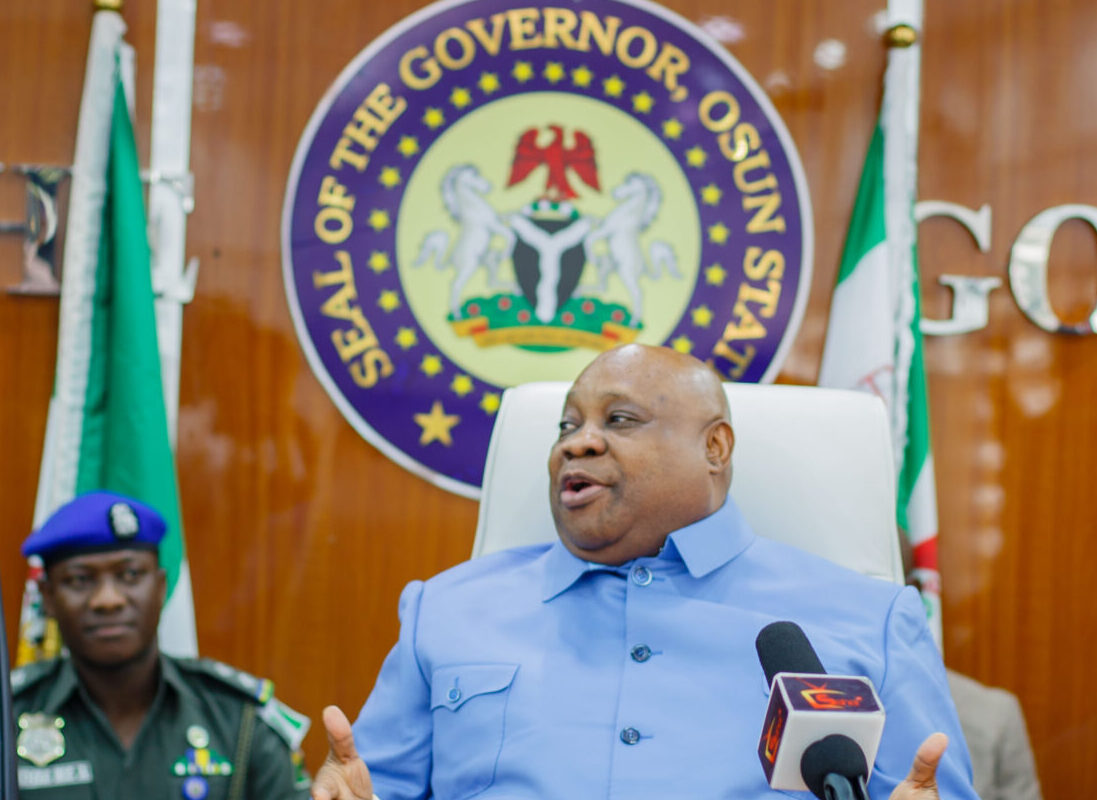
OSOGBO, Nigeria, 28 October 2026. The Government of Osun State, under the leadership of His Excellency, Ademola Jackson Nurudeen Adeleke, Executive Governor of the State, and the Read and Earn Federation for UNESCO (UNESCO REF) have jointly opened nominations for three thousand indigenes of Osun State to undertake the Advanced Research Diploma in Artificial Intelligence (ARDAI TIER I). The programme is fully funded, extends over thirteen weeks and commences in December 2026. It represents one of the most substantial single commitments yet made by a Nigerian State to the preparation of its young people for an economy increasingly shaped by artificial intelligence.

Global alignmentAlignement mondialThe global commitments this story advances. Open to see how.

The World Economic Forum’s Future of Jobs Report 2025 finds that employers expect 39 per cent of workers’ core skills to change by 2030, with artificial intelligence and big data among the fastest-growing skills. ARDAI TIER I responds to the international and national commitments that address this transition.

  • SDG4

    SDG 4, Quality Education (primary)

    ProvisionTarget 4.4: increase the number of youth and adults with relevant skills, including technical skills, for employment and entrepreneurship

    How ARDAI TIER I respondsA fully funded professional diploma in artificial intelligence for three thousand indigenes of Osun State

  • SDG8

    SDG 8, Decent Work and Economic Growth

    ProvisionTarget 8.6: reduce the proportion of youth not in employment, education or training

    How ARDAI TIER I respondsPrepares participants for better-remunerated work and technology-driven enterprise

  • SDG9

    SDG 9, Industry, Innovation and Infrastructure

    ProvisionTarget 9.5: enhance scientific research and upgrade technological capabilities

    How ARDAI TIER I respondsApplied artificial intelligence for health, agriculture, finance and governance

  • SDG17

    SDG 17, Partnerships for the Goals

    ProvisionTarget 17.17: effective public and civil society partnerships

    How ARDAI TIER I respondsA State Government and UNESCO REF partnership, financed through the EFFS

  • AU

    African Union Agenda 2063

    ProvisionAspiration 1: well-educated citizens and a skills revolution underpinned by science, technology and innovation

    How ARDAI TIER I respondsEquips young Africans to produce, not only consume, the new economy

  • NG

    National Digital Economy Policy and Strategy 2020 to 2030 (Nigeria)

    ProvisionDigital literacy and skills for the digital economy

    How ARDAI TIER I respondsAdvanced artificial intelligence skills delivered at State level

The nomination process is administered by the Office of the Special Adviser to the Governor on the Sustainable Development Goals, while the programme is financed through the Educational Financial Facility Scheme (EFFS) of UNESCO REF. Tuition, learning materials and certification are provided at no cost to participants. Candidates who satisfy the requirements of assessment will be conferred with the Advanced Research Diploma in Artificial Intelligence (ARDAI TIER I).

A deliberate investment in human capital

Un investissement délibéré dans le capital humain

Artificial intelligence, data science and automation are now reshaping the conduct of government, commerce, agriculture, health care and education. In this setting, the prosperity of a State depends less on the resources beneath its soil than on the knowledge, skills and enterprise of its people.

By resolving to prepare three thousand of its indigenes in a single cohort, the Government of Osun State positions its young people among the first in the Federation to be formally trained for this transition. The decision reflects the sustained priority the administration has accorded to youth empowerment and human capital development, and its considered view that the young people of Osun State should participate in the new economy as producers and innovators, and not merely as its users.

“Artificial intelligence is transforming virtually every sector. This programme will help our graduates compete globally, access better-paying jobs and build technology-driven businesses.”

Hon. Bankole Omisore, Special Adviser to the Governor of Osun State on the Sustainable Development Goals

About ARDAI TIER I

À propos de l’ARDAI TIER I

ARDAI TIER I is a programme of UNESCO REF delivered under its flagship framework, the Strategic Intervention Programme for Accelerated Learning and Productive Human Asset (SIP-ALPHA). It is a demanding professional programme which proceeds from the foundations of artificial intelligence to its applied use in the sectors of greatest consequence to Nigeria and to the African continent.

  • Structure. Thirteen weeks, 169 lessons and 169 laboratory work samples, ending in a capstone portfolio and a final examination.
  • Scope. Machine learning, natural language processing for African languages, computer vision, and the application of artificial intelligence to health, agriculture and climate, finance and economic development, and governance and public administration, together with AI safety, ethics and policy design.
  • Delivery. Fully online and self-paced, with narrated voice lectures on every lesson, so that participants can learn wherever they are.
  • Recognition. Distinction graduates are invited to submit their capstone work to The REF Review, the open-access journal of UNESCO REF.

A partnership in continuity

Un partenariat dans la continuité

The programme extends the cooperation already established between the Government of Osun State and UNESCO REF under The VOICE Initiative. It confirms the position of Osun State as a pioneer State in the delivery of UNESCO REF programmes, and as a State that has chosen to align its local development priorities with the 2030 Agenda for Sustainable Development of the United Nations.

Eligibility and nomination

Conditions d’admission et procédure de nomination

  • Origin. Indigenes or residents of Osun State.
  • Qualification. At least a bachelor’s degree, a Higher National Diploma (HND) or a recognised equivalent.
  • Pre-qualification. Candidates must first complete the pre-qualification process of the Office of the Special Adviser to the Governor on the Sustainable Development Goals, which administers nominations on behalf of the State.
  • Application. Pre-qualified candidates then complete the UNESCO REF Programme Application, selecting ARDAI TIER I, and receive a reference number by email on submission.

Places are limited to three thousand, and eligible candidates are encouraged to complete the process without delay.

ENDS

Notes to editorsNotes aux rédactions

About ARDAI TIER I. The Advanced Research Diploma in Artificial Intelligence (ARDAI TIER I) is a 13-week professional programme of UNESCO REF, delivered under its SIP-ALPHA framework and financed through the Educational Financial Facility Scheme (EFFS).

About the Osun State Office of the SDGs. The Office of the Special Adviser to the Governor on Sustainable Development Goals coordinates the State’s delivery of the 2030 Agenda and its partnerships for youth and human capital development.

About UNESCO REF. The Read and Earn Federation for UNESCO is a multidimensional and multisectoral development institution, established in 2009 within the provisions of UNESCO and constituted through the Nigerian National Commission for UNESCO. Its Educational Financial Facility Scheme (EFFS) finances access to higher learning and professional training for young Nigerians.

Media enquiries. UNESCO REF Media Centre, [email protected]
SourcesSources

Osun State and UNESCO REF Pilot The VOICE Initiative

The DispatchUNESCO REF Media Centre · EISSN 3156-55576 min read

UNESCO REF Media Centre | News

Osun State Partners UNESCO REF to Pilot The VOICE Initiative in Nigeria

Osun becomes the first sub-national government in Nigeria to implement the professional advancement programme for women with disabilities, a model set to scale to 120,000 women nationally and to all 54 African nations by 2030.

OSOGBO, Nigeria, 16 October 2026. The Government of Osun State has entered into partnership with the Read and Earn Federation for UNESCO (UNESCO REF), to pilot The VOICE Initiative in Nigeria. With this partnership, Osun State becomes the first sub-national government in the Federation to implement the Initiative, a professional advancement programme that prepares women with disabilities for dignified, independent and financially sustainable employment in the global digital economy.

Global alignmentAlignement mondialThe global commitments this story advances. Open to see how.

An estimated 1.3 billion people, or 16 per cent of the world’s population, experience significant disability, according to the World Health Organization. The VOICE Initiative responds directly to the international and national commitments that address their inclusion.

  • SDG10

    SDG 10, Reduced Inequalities (primary)

    ProvisionTarget 10.2: social, economic and political inclusion of all, irrespective of disability or sex

    How The VOICE Initiative respondsMoves women with disabilities into the formal digital economy

  • SDG8

    SDG 8, Decent Work

    ProvisionTarget 8.5: full and productive employment for all, including persons with disabilities

    How The VOICE Initiative respondsBuilt around one outcome: remote employment for every graduate

  • SDG4

    SDG 4, Quality Education

    ProvisionTarget 4.5: equal access to education for persons with disabilities

    How The VOICE Initiative respondsFully funded, accessible professional training

  • SDG5

    SDG 5, Gender Equality

    ProvisionWomen’s full participation in economic life

    How The VOICE Initiative respondsServes women exclusively

  • SDG1

    SDG 1, 16 and 17

    ProvisionNo poverty; peace and strong institutions; partnerships

    How The VOICE Initiative respondsHousehold income, human security, and a State and civil society partnership

  • UCRP

    UN Convention on the Rights of Persons with Disabilities

    ProvisionArticle 6 (women with disabilities), Article 24 (education), Article 27 (work and employment)

    How The VOICE Initiative respondsEqual access to skills and to work for women with disabilities

  • MP

    Maputo Protocol

    ProvisionArticle 23: protection of women with disabilities

    How The VOICE Initiative respondsEconomic empowerment of women with disabilities

  • AU

    African Union Protocol on the Rights of Persons with Disabilities in Africa, 2018

    ProvisionRights to education and to work

    How The VOICE Initiative respondsContinental rollout to all 54 African nations by 2030

  • NG

    Discrimination Against Persons with Disabilities (Prohibition) Act, 2018 (Nigeria)

    ProvisionInclusion of persons with disabilities in education and employment

    How The VOICE Initiative respondsState-level implementation, beginning in Osun

The State has mobilised its first cohort of 64 women for Phase 1 of the pilot, with a second cohort to follow in Phase 2. Data verification for the Phase 1 cohort begins on 21 October 2026, to be followed by a virtual orientation, a three-week induction and the six-week programme itself.

A commitment to every citizen

Un engagement envers chaque citoyen

Speaking for the Osun State Government, Hon. Bankole Omisore, Senior Special Assistant to the Governor on the Sustainable Development Goals, said the partnership reflects the priorities of the administration.

He stated that The VOICE Initiative aligns with the commitment and vision of His Excellency, Governor Ademola Jackson Nurudeen Adeleke, to ensure that every citizen of the State is well cared for.

The Initiative was launched on 1 October 2026 in commemoration of Nigeria’s Independence Anniversary, and Osun State serves as its official partner and first pilot state. The standard set in Osun will guide the national and continental rollout.

Two generations, one intervention

Deux générations, une seule intervention

The President of UNESCO REF, Prince Abdulsalami Ladigbolu-Oranmiyan, described the Initiative as an investment that reaches beyond the women enrolled.

“This programme is about two generations, through one intervention. When we equip a mother with a disability to earn a dignified income, we protect the schooling of her children. Our parents and our out-of-school children are not two separate challenges. They are one story, and The VOICE Initiative addresses both at once. Osun State has shown the courage to lead, and in doing so it has become the model for every other State of the Federation.”

Prince Abdulsalami Ladigbolu-Oranmiyan, President, UNESCO REF

The design rests on established research. Research cited by UNESCO REF finds that parental disability reduces children’s school attendance, with a larger effect where the mother has the disability, and that income controlled by women is more often spent on children’s welfare. Nigeria has an estimated 20 million out-of-school children and youth, according to data published by the UNESCO Institute for Statistics and the Global Education Monitoring Report.

The programme and its return to Government

Le programme et ses retombées pour le Gouvernement

The first course under the Initiative, AI Innovation and Digital Enterprise (TIER I), is delivered fully online through The Lichfield Academy over six weeks and 78 lessons. It is open to women with disabilities aged 18 and above who hold a first degree or its equivalent in any discipline, and requires no prior background in technology. The programme is built around a single outcome: that each graduate secures remote employment, locally or internationally, in the digital economy.

According to UNESCO REF, the Initiative is not a welfare scheme but a fiscal instrument that returns value to the public purse. Its projected benefits to Government include:

  • No cost to Government. Training is fully funded by UNESCO REF through its Educational Financial Facility Scheme (EFFS), at no cost to the State or Federal Government.
  • Personal income tax. Each Fellow in formal employment contributes to the tax base under the progressive rates of the Nigeria Tax Act, 2025.
  • Value Added Tax. Household spending by employed Fellows generates VAT revenue.
  • Local multiplier. Income earned, often from international employers, is spent within the State economy and circulates through local businesses.
  • Recovered productivity. The International Labour Organization estimates that low- and middle-income countries lose between 3 and 7 per cent of GDP through the exclusion of persons with disabilities from work.
  • Human security. A 2023 UNDP study found that about a quarter of voluntary recruits to violent extremist groups cited job opportunities as their main reason for joining. Dignified employment strengthens households and communities against that risk.

Full details of the programme, its curriculum and its policy papers are available on The VOICE Initiative page.

From Osun to Africa

D’Osun à l’Afrique

The Osun pilot opens a four-year programme running from 2026 to 2030. National upscaling to 120,000 women, 20,000 in each of Nigeria’s six geopolitical zones, is targeted for 2027 and will be led by Dr Safiyyah Hassan Shaibu, Strategic Ambassador for UNESCO REF SIP-ALPHA. The Initiative will then extend to ECOWAS member states in 2028 and to all 54 African nations by 2030.

ENDS

Notes to editorsNotes aux rédactions

About The VOICE Initiative. The VOICE Initiative (Visionary, Outcomes-Driven AI for Inclusion, Capacity for Empowerment) is a professional advancement programme for women with disabilities in Nigeria and Africa, established by UNESCO REF under its SIP-ALPHA framework. Its first course, AI Innovation and Digital Enterprise (TIER I), is delivered through The Lichfield Academy. Partners include The Lichfield Partners and Associates, the Maryam Babangida National Centre for Women Development, the Women Development Centre FCT, the UNESCO National Commission Nigeria and NEPAD_EY. Full details: unesco-ref.org/the-voice-initiative.

About UNESCO REF. The Read and Earn Federation for UNESCO (UNESCO REF) works to strengthen human and institutional capacity across Nigeria and Africa through education, research and professional development, in alignment with the 2030 Agenda for Sustainable Development.

Media enquiries. UNESCO REF Media Centre, [email protected]

SourcesSources

UNESCO REF President Received by General Yakubu Gowon, GCFR

Exclusive | Behind Closed Doors: UNESCO REF President in Private Audience with Former Head of State General Yakubu Gowon, GCFR

The DispatchUNESCO REF Media Centre · EISSN 3156-55575 min read

UNESCO REF Media Centre | Exclusive Report

Away from the cameras, the founder of the National Youth Service Corps and the President of UNESCO REF considered how the institution General Gowon created more than half a century ago could be called to a new national purpose. The full account appears in the February 2027 edition of the UNESCO REF Exclusive Reports.

Exclusive. This is a preview. The complete account of the audience is published in the February 2027 edition of the UNESCO REF Exclusive Reports, available to accredited readers.

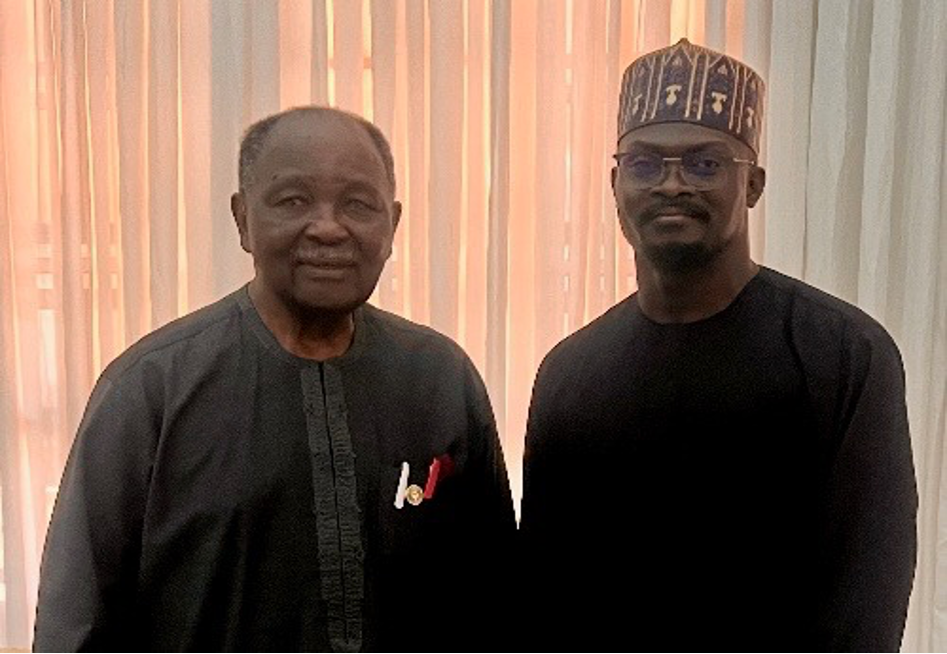
ABUJA, Nigeria, 10 October 2026. Some of the most consequential conversations in public life take place in rooms without cameras. In one such room, the President of the Read and Earn Federation for UNESCO (UNESCO REF), Prince Abdulsalami Ladigbolu-Oranmiyan, was received in private audience by General Yakubu Gowon, GCFR, Nigeria’s Head of State from 1966 to 1975 and the founder of the National Youth Service Corps (NYSC). Their conversation turned on a single question: how the institution General Gowon created to bind a nation together might now be called to equip a new generation to feed it.

Global alignmentAlignement mondialThe global commitments this story advances. Open to see how.
  • SDG2

    SDG 2, Zero Hunger

    ProvisionTarget 2.3: double agricultural productivity and the incomes of small-scale producers

    How the dialogue respondsPositions corps members as agents of agricultural transformation

  • SDG8

    SDG 8, Decent Work

    ProvisionTarget 8.6: reduce youth not in employment, education or training

    How the dialogue respondsSkills and enterprise pathways during and after service

  • SDG4

    SDG 4, Quality Education

    ProvisionTarget 4.4: relevant skills for employment and entrepreneurship

    How the dialogue respondsLinks national service to skills development

  • SDG16

    SDG 16, Peace, Justice and Strong Institutions

    ProvisionStrong, inclusive institutions and national cohesion

    How the dialogue respondsBuilds on the NYSC’s founding mission of national unity

  • SDG17

    SDG 17, Partnerships

    ProvisionTarget 17.17: public and civil society partnerships

    How the dialogue respondsEngagement between UNESCO REF and the founder of a national institution

  • AU

    African Union Agenda 2063

    ProvisionAspiration 6: development driven by the potential of African youth

    How the dialogue respondsYouth service as a vehicle for national development

  • AYC

    African Youth Charter

    ProvisionYouth participation, education and employment

    How the dialogue respondsYoung graduates at the centre of national service and enterprise

The engagement is the subject of “Behind Closed Doors”, the February 2027 edition of the UNESCO REF Exclusive Reports, the series published by the UNESCO REF Editorial Board as the primary diplomatic record of the Federation. This preview sets out the context and the themes of the audience. The complete account is reserved for the edition itself.

A statesman and his institution

Un homme d’État et son institution

Few Nigerians have shaped the institutions of the Federation as lastingly as General Gowon. In 1973, in the aftermath of the civil war, his administration established the National Youth Service Corps, sending young graduates to serve in States other than their own so that a generation might come to know, and belong to, the whole country.

More than five decades later the NYSC endures, present in every State of the Federation and in the Federal Capital Territory, and still a rite of passage for young graduates. In December 2024, in recognition of his contribution to national unity, the Federal Government renamed the University of Abuja in his honour.

The question on the table

La question posée

The audience took up a question that has occupied UNESCO REF in its work with young Nigerians: whether the reach, discipline and national presence of the NYSC can be harnessed for a further national purpose, beyond the civic duty for which it was founded.

UNESCO REF regards each year’s cohort of corps members as a strategic national asset: educated, mobile and present in every community. Directed towards agriculture, enterprise and service delivery, such a cohort could become one of the most effective means available to the nation for advancing food security and the Sustainable Development Goals at the grassroots.

From civic duty to strategic instrument

Du devoir civique à l’instrument stratégique

The conversation drew on work already under way. UNESCO REF engages young graduates through the Young Women in Agriculture (YWA) programme, the GET EDUCATED pathway for youth aged 18 to 35, and the modular water purification pilot inaugurated at the NYSC Federal Capital Territory site under SIP-ALPHA Category 11. Each offers an early indication of what the scheme’s national infrastructure can carry.

To consult the founder of the NYSC on its future was a gesture of respect as much as of strategy. It placed UNESCO REF’s ambitions for young Nigerians within the lineage of an institution built on the conviction that service to the nation is itself a form of education.

Inside the Exclusive Report

Au cœur du Rapport exclusif

The February 2027 edition gives the full account of the audience, prepared under the Editorial Board’s standards for the series. In line with those standards:

  • Sourcing. Each account is drawn from a principal or official present at the engagement.
  • Verification. Names, offices, places and dates are checked against the institutional record.
  • Review. The complete text is reviewed in full by the UNESCO REF Editorial Board before release.
  • Distribution. Complete accounts are released to accredited readers with each edition.

Researchers, institutions and members of the press may request access from the Editorial Board at [email protected].

Also in the Exclusive Reports

Également dans les Rapports exclusifs

“Behind Closed Doors” sits within a register of editions documenting the Federation’s engagements with Nigeria’s leaders and traditional institutions, among them:

  • The Signature Edition, December 2026: the advocacy visit of Dr Mrs Elizabeth Egbetokun to the Olubadan of Ibadan on Young Women in Agriculture.
  • January 2027: Prince Abdulsalami Ladigbolu-Oranmiyan on the past, present and future of a national institution.
  • March 2027: the private conversations behind the UNESCO REF and POWA 12 Million YWA National Launch.
  • May 2027: “Seeds of Policy”, a private audience with Chief Audu Ogbeh on food security and youth development.

How to cite

Comment citer

UNESCO REF Editorial Board, “Behind Closed Doors”, Exclusive Reports, UNESCO REF Media Centre, February 2027, EISSN 3156-5557, Abuja, Federal Republic of Nigeria.

Read the Exclusive Report. Visit the UNESCO REF Exclusive Reports for the full account and the complete register of editions: unesco-ref.org/execlusive-report.

ENDS

Notes to editorsNotes aux rédactions

About the Exclusive Reports. The Exclusive Reports are the primary diplomatic record of the Read and Earn Federation for UNESCO (UNESCO REF), published two to four times a year by the UNESCO REF Editorial Board through the UNESCO REF Media Centre (EISSN 3156-5557).

About the NYSC. The National Youth Service Corps was established in 1973 under the administration of General Yakubu Gowon, GCFR to promote national unity and integration through a one-year national service by Nigerian graduates.

About UNESCO REF. The Read and Earn Federation for UNESCO (UNESCO REF) works to strengthen human and institutional capacity across Nigeria and Africa through education, research and professional development, in alignment with the 2030 Agenda for Sustainable Development.

Media enquiries. UNESCO REF Media Centre, [email protected]

SourcesSources