Young Women in Agriculture: UNESCO REF Meets the Minister of Women Affairs

UNESCO REF President and YWA National Advocate Hold Working Visit with Minister of Women Affairs on Food Security through Young Women in Agriculture

The DispatchUNESCO REF Media Centre · EISSN 3156-55574 min read

UNESCO REF Media Centre | Young Women in Agriculture

The Federal Ministry of Women Affairs and UNESCO REF agree joint action frameworks to roll out the Young Women in Agriculture programme and the national campaign to mobilise 12 million young women.

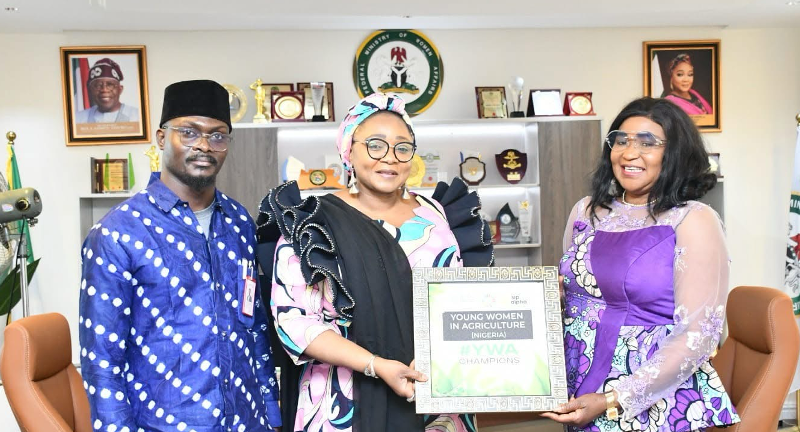
ABUJA, Nigeria. In furtherance of the national effort to secure Nigeria’s food future through the empowerment of its young women, the President of the Read and Earn Federation for UNESCO (UNESCO REF), Prince Abdulsalami Ladigbolu-Oranmiyan, accompanied by Dr Mrs Elizabeth Egbetokun, National Advocate of the UNESCO REF Young Women in Agriculture (YWA) programme and then National President of the Police Officers’ Wives Association (POWA), paid a working visit to the Honourable Minister of Women Affairs, Hajiya Imaan Sulaiman-Ibrahim. The meeting finalised the modalities for implementing YWA and for the National 12 Million Mobilisation Campaign.

Global alignmentAlignement mondialThe global commitments this story advances. Open to see how.
  • SDG2

    SDG 2, Zero Hunger (primary)

    ProvisionTarget 2.3: double the productivity and incomes of small-scale producers, in particular women

    How the partnership respondsNational mobilisation of young women in agriculture

  • SDG5

    SDG 5, Gender Equality

    ProvisionTarget 5.5: women’s full participation and leadership; Target 5.a: equal rights to economic resources

    How the partnership respondsWomen’s empowerment built into agricultural policy

  • SDG1

    SDG 1, No Poverty

    ProvisionTarget 1.4: equal rights to economic resources

    How the partnership respondsIncome opportunities for young women

  • SDG17

    SDG 17, Partnerships

    ProvisionTarget 17.17: public and civil society partnerships

    How the partnership respondsJoint action frameworks between a federal ministry and UNESCO REF

  • MP

    Maputo Protocol

    ProvisionArticle 15: right to food security

    How the partnership respondsWomen at the centre of national food security

  • AU

    African Union Agenda 2063

    ProvisionAspiration 6: development driven by women and youth

    How the partnership respondsYoung women as drivers of agricultural transformation

  • RHA

    Renewed Hope Agenda

    ProvisionFood security as a national priority

    How the partnership respondsSupports the Federal Government’s food security agenda

The engagement brought together the federal ministry charged with the advancement of Nigerian women and the civil society institution leading one of the country’s largest mobilisations of women in agriculture. Its purpose was practical: to agree how the two institutions would work together to translate national policy into opportunity for young women in every geopolitical zone.

A national priority

Une priorité nationale

The visit took place against the Federal Government’s declaration of food security as a national priority under the administration of President Bola Ahmed Tinubu, and alongside the First Lady’s Food Bank Initiative, which addresses hunger among vulnerable groups. The YWA programme places young women at the centre of that national effort, with a target of 12 million women, two million in each of Nigeria’s six geopolitical zones.

The case for doing so is compelling. The Food and Agriculture Organization of the United Nations reports a 24 per cent gender gap in productivity between women and men farmers on farms of equal size, and finds that closing the gender gaps in agrifood systems would raise global GDP by nearly US$1 trillion and reduce the number of food-insecure people by 45 million. In Nigeria, where the Cadre Harmonisé analysis projected that about 34.7 million people would face food insecurity in the 2026 lean season, the empowerment of women farmers is a matter of national resilience.

Perspectives of the delegation

Points de vue de la délégation

Prince Ladigbolu-Oranmiyan presented the YWA programme and the 12 Million Mobilisation Campaign as national platforms for empowerment and resilience, capable of positioning Nigeria as a continental leader in food security. He anchored both initiatives in the Sustainable Development Goals, in particular Goal 1 on ending poverty and Goal 2 on ending hunger.

Dr Mrs Egbetokun underscored the importance of integrating women’s empowerment and youth mobilisation into agricultural policy. She welcomed the Ministry’s readiness to support the expansion of training, the mobilisation of resources and outreach to communities across the Federation.

Agreed outcomes

Résultats convenus

The meeting concluded with three commitments:

  • Joint action frameworks to guide the rollout of the YWA programme across the States.
  • Strengthened institutional collaboration between UNESCO REF and the Federal Ministry of Women Affairs.
  • Partner mobilisation in support of the YWA programme and the 12 Million Mobilisation Campaign.

Significance

Portée

The engagement marks the alignment of a federal ministry with a civil society programme of national scale. By bringing the Ministry’s policy mandate together with UNESCO REF’s delivery architecture and POWA’s grassroots reach, the partnership creates a pathway through which the empowerment of young women can contribute directly to Nigeria’s food security.

ENDS

Notes to editorsNotes aux rédactions

About Young Women in Agriculture (YWA). YWA is a UNESCO REF flagship programme under the SIP-ALPHA framework that equips young women aged 18 to 35 with agribusiness education, certification and income opportunities, with a national target of 12 million women.

About UNESCO REF. The Read and Earn Federation for UNESCO (UNESCO REF) works to strengthen human and institutional capacity across Nigeria and Africa through education, research and professional development, in alignment with the 2030 Agenda for Sustainable Development.

Media enquiries. UNESCO REF Media Centre, [email protected]

SourcesSources

UNESCO REF and the Nigeria Police Force: Youth for National Cohesion

UNESCO REF President’s Working Visit to the Nigeria Police Force: Advancing National Cohesion through Youth Engagement

The DispatchUNESCO REF Media Centre · EISSN 3156-55573 min read

UNESCO REF Media Centre | UNESCO REF Nigeria Police Youths Summit

Meeting the Force Public Relations Officer at a time of national protest, the President of UNESCO REF finalised plans for the first UNESCO REF Nigeria Police Youths Summit on International Youth Day.

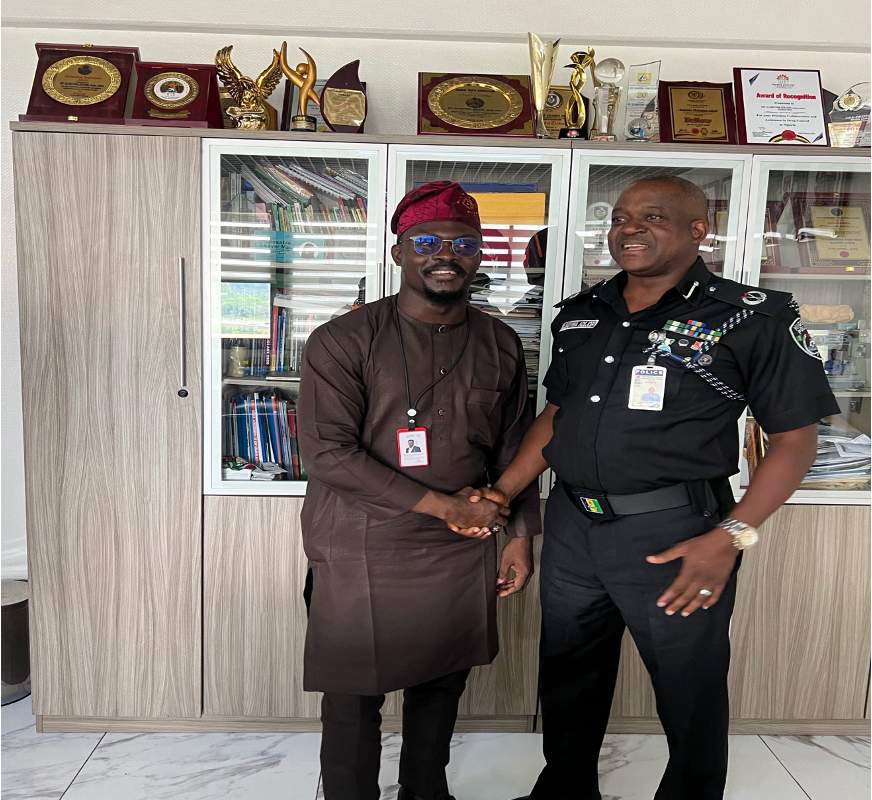
ABUJA, Nigeria, August 2024. At a moment of heightened national tension, the President of the Read and Earn Federation for UNESCO (UNESCO REF), Prince Abdulsalami Ladigbolu-Oranmiyan, paid a working visit to the Force Public Relations Officer of the Nigeria Police Force, ACP Olumuyiwa Adejobi, to finalise preparations for the first UNESCO REF Nigeria Police Youths Summit. The Summit was scheduled for 12 August 2024, United Nations International Youth Day.

Global alignmentAlignement mondialThe global commitments this story advances. Open to see how.
  • SDG16

    SDG 16, Peace, Justice and Strong Institutions (primary)

    ProvisionTarget 16.7: responsive, inclusive and participatory decision-making

    How the Summit respondsGives young people a direct voice with the security institutions

  • SDG17

    SDG 17, Partnerships

    ProvisionTarget 17.17: public and civil society partnerships

    How the Summit respondsA partnership between the Nigeria Police Force and UNESCO REF

  • UNSC

    UN Security Council Resolution 2250 (2015)

    ProvisionYouth, Peace and Security: participation and partnerships

    How the Summit respondsYouth engagement in national security dialogue

  • IYD

    United Nations International Youth Day

    ProvisionAnnual observance on 12 August

    How the Summit respondsSummit held on International Youth Day 2024

  • AYC

    African Youth Charter

    ProvisionYouth participation in decision-making

    How the Summit respondsStructured youth and police dialogue

The visit took place during the #EndBadGovernance protests of August 2024, when young Nigerians took to the streets in several States to voice grievances over economic hardship and governance. The protests brought the relationship between the nation’s youth and its security institutions into sharp public focus, and underscored the urgency of structured, good-faith dialogue between them.

Choosing dialogue over distance

Choisir le dialogue plutôt que la distance

Both parties agreed that the moment called for engagement rather than estrangement. The planned Summit would offer young people a direct and respectful channel to the leadership of the Nigeria Police Force, and offer the Force an opportunity to listen, explain and commit.

“A national platform for reconciliation and partnership.”

Prince Abdulsalami Ladigbolu-Oranmiyan, President, UNESCO REF, describing the Summit

ACP Adejobi affirmed the readiness of the Nigeria Police Force to partner UNESCO REF on youth-focused programmes, and welcomed the Summit as a contribution to public trust.

Purpose of the Summit

Objet du Sommet

The Summit was conceived around three objectives: to rebuild trust between the police and Nigerian youth, to advance civic education on rights, responsibilities and lawful engagement, and to create inclusive avenues through which young people could participate in shaping the policing of their communities.

What followed

La suite

The UNESCO REF Nigeria Police Youths Summit convened as planned on 12 August 2024 at the Nigeria Police Force Resource Centre, Abuja. More than 400 delegates from the 36 States and the Federal Capital Territory engaged the Inspector-General of Police and two federal Ministers, and the Summit closed with five recommendations for a new compact between youth and the security institutions.

ENDS

Notes to editorsNotes aux rédactions

About the Summit. The UNESCO REF Nigeria Police Youths Summit was held on 12 August 2024 at the Nigeria Police Force Resource Centre, Abuja, with more than 400 delegates from the 36 states and the Federal Capital Territory.

About UNESCO REF. The Read and Earn Federation for UNESCO (UNESCO REF) works to strengthen human and institutional capacity across Nigeria and Africa through education, research and professional development, in alignment with the 2030 Agenda for Sustainable Development.

Media enquiries. UNESCO REF Media Centre, [email protected]

SourcesSources

Ooni of Ife Named Royal Father of UNESCO REF YWA Champions

The Royal Seal: His Imperial Majesty Ooni Ojaja II Accepts Nomination as Royal Father of the UNESCO REF YWA Champions

The DispatchUNESCO REF Media Centre · EISSN 3156-55574 min read

UNESCO REF Media Centre | Young Women in Agriculture

The Ooni of Ife lends the authority of one of Africa’s most revered thrones to the national campaign that empowers young women to lead in food production, innovation and community resilience.

ILE-IFE, Nigeria. In an act that unites the authority of one of Africa’s most venerable thrones with a national ambition for food security, His Imperial Majesty Oba Adeyeye Enitan Babatunde Ogunwusi, Ojaja II, the Ooni of Ife, has formally accepted nomination as Royal Father of the UNESCO REF Young Women in Agriculture (YWA) Champions.

Global alignmentAlignement mondialThe global commitments this story advances. Open to see how.
  • SDG2

    SDG 2, Zero Hunger (primary)

    ProvisionTarget 2.3: double the productivity and incomes of small-scale producers, in particular women

    How the royal patronage respondsTraining, certification and income for young women in agriculture

  • SDG5

    SDG 5, Gender Equality

    ProvisionTarget 5.5: women’s leadership; Target 5.a: equal rights to economic resources

    How the royal patronage respondsYoung women as leaders of food production

  • SDG1

    SDG 1, No Poverty

    ProvisionTarget 1.4: equal rights to economic resources

    How the royal patronage respondsIncome opportunities for participants

  • SDG8

    SDG 8, Decent Work

    ProvisionTarget 8.6: reduce youth not in employment, education or training

    How the royal patronage respondsAgribusiness employment for women aged 18 to 35

  • MP

    Maputo Protocol

    ProvisionArticle 15: right to food security

    How the royal patronage respondsWomen at the centre of national food security

  • AU

    African Union Agenda 2063

    ProvisionAspiration 6: development driven by women and youth

    How the royal patronage respondsYoung women as drivers of agricultural transformation

  • UNESCO

    UNESCO 2003 Convention for the Safeguarding of the Intangible Cultural Heritage

    ProvisionThe role of communities and traditional knowledge

    How the royal patronage respondsTraditional authority mobilised for sustainable development

Ile-Ife holds a singular place in Yoruba civilisation as its ancestral cradle, and the Ooni’s throne commands reverence across Nigeria and the African diaspora. By extending royal patronage to the YWA Champions, the young women leading Nigeria’s agricultural transformation, His Imperial Majesty lends the programme a cultural legitimacy that no policy instrument alone can confer.

A covenant of heritage and progress

Une alliance entre patrimoine et progrès

Across Nigeria, traditional institutions remain among the most trusted authorities in community life. Their endorsement opens doors to land, to community mobilisation and to the social acceptance on which the participation of young women in agriculture so often depends. The Ooni’s patronage therefore offers the Champions belonging, dignity and protection, and summons communities to stand behind their work.

The role sits within the wider national effort on food security led by the Federal Government under President Bola Ahmed Tinubu, and complements the First Lady’s Food Bank Initiative, which addresses hunger among vulnerable groups.

Royal words of paternal commitment

Paroles royales d’engagement paternel

“As Royal Father to the Champions, I embrace these daughters of our land with pride and responsibility. Their hands will till the soil, their vision will feed the nation, and their courage will shape the future.”

His Imperial Majesty Ooni Ojaja II, Ooni of Ife

The voice of the institution

La voix de l’institution

“The Ooni’s acceptance as Royal Father of the Champions is a cultural and institutional platform of immense power.”

Prince Abdulsalami Ladigbolu-Oranmiyan, President, UNESCO REF

Prince Ladigbolu-Oranmiyan observed that the royal role would give beneficiaries belonging, dignity and protection, mobilise communities across the nation and accelerate progress towards the Sustainable Development Goals.

Champions of the future

Les championnes de demain

YWA Champions receive training, mentorship and access to modern agricultural technologies, and carry these into their communities as producers, entrepreneurs and leaders. Their mission is to reduce poverty, strengthen food security and promote inclusive economic growth.

The economic case is well established. The Food and Agriculture Organization of the United Nations reports a 24 per cent gender gap in productivity between women and men farmers on farms of equal size, and estimates that closing the gender gaps in agrifood systems would raise global GDP by nearly US$1 trillion and reduce the number of food-insecure people by 45 million.

Symbolism and strategy

Symbolique et stratégie

The patronage of the Ooni of Ife demonstrates that Nigeria’s cultural heritage and its development ambitions are not separate endeavours but mutually reinforcing ones. Where tradition lends its authority to progress, communities follow. It is in that spirit that UNESCO REF receives His Imperial Majesty’s acceptance with profound gratitude.

ENDS

Notes to editorsNotes aux rédactions

About Young Women in Agriculture (YWA). YWA is a UNESCO REF flagship programme under the SIP-ALPHA framework that equips young women aged 18 to 35 with agribusiness education, certification and income opportunities, with a national target of 12 million women.

About UNESCO REF. The Read and Earn Federation for UNESCO (UNESCO REF) works to strengthen human and institutional capacity across Nigeria and Africa through education, research and professional development, in alignment with the 2030 Agenda for Sustainable Development.

Media enquiries. UNESCO REF Media Centre, [email protected]

SourcesSources

UNESCO REF and NATCOM-UNESCO: A Stronger SDGs Mandate

UNESCO REF President Pays Working Visit to the Secretary-General of the Nigerian National Commission for UNESCO on an Enhanced Mandate for the SDGs

The DispatchUNESCO REF Media Centre · EISSN 3156-55574 min read

UNESCO REF Media Centre | Institutional Partnership

UNESCO REF and NATCOM-UNESCO commit to joint action frameworks that align Nigeria’s national priorities with the 2030 Agenda and strengthen the country’s leadership in UNESCO’s global mission.

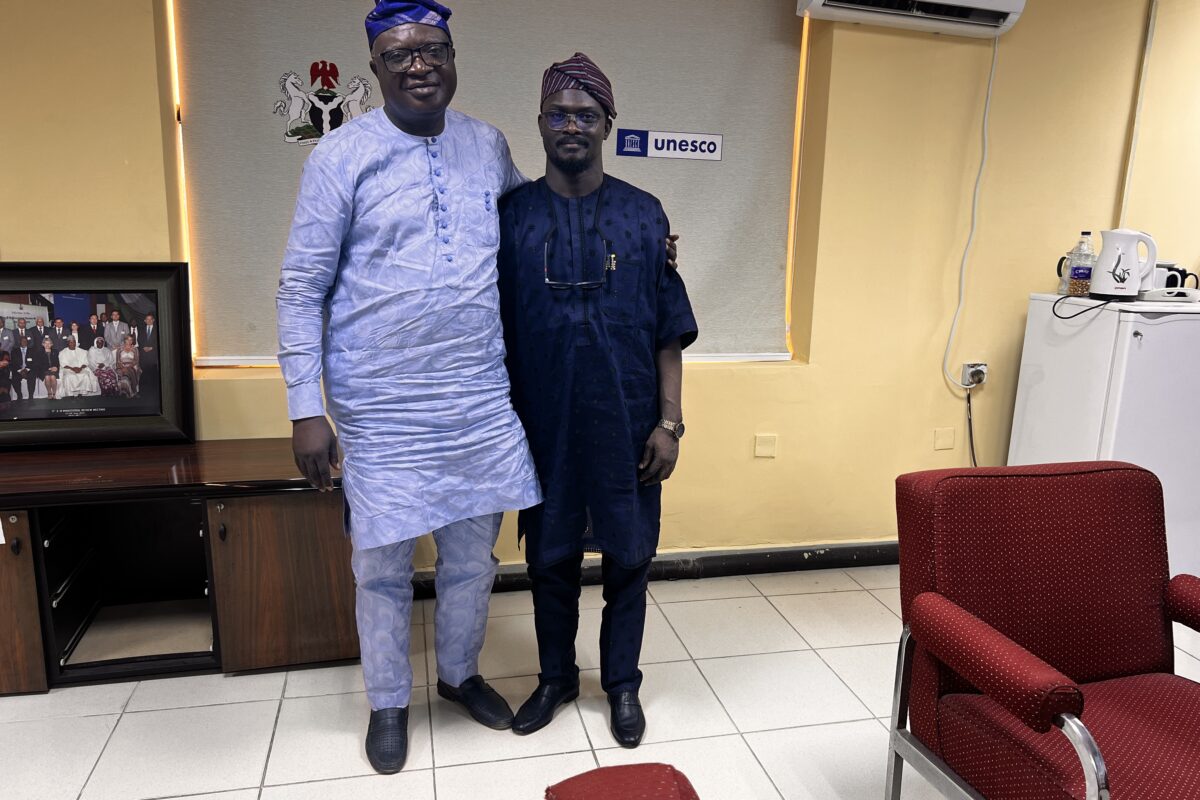
ABUJA, Nigeria. The President of the Read and Earn Federation for UNESCO (UNESCO REF), Prince Abdulsalami Ladigbolu-Oranmiyan, has paid a formal working visit to Dr Idowu Olagunju, Secretary-General of the Nigerian National Commission for UNESCO (NATCOM-UNESCO). The meeting advanced dialogue on an enhanced institutional mandate for the attainment of the Sustainable Development Goals in Nigeria and on strengthening the country’s leadership within UNESCO’s global mission.

Global alignmentAlignement mondialThe global commitments this story advances. Open to see how.
  • SDG17

    SDG 17, Partnerships (primary)

    ProvisionTarget 17.14: policy coherence; Target 17.17: effective partnerships

    How the partnership respondsJoint action frameworks with the national commission

  • SDG4

    SDG 4, Quality Education

    ProvisionInclusive and equitable quality education for all

    How the partnership respondsInclusive education among the agreed priorities

  • SDG5

    SDG 5, Gender Equality

    ProvisionTarget 5.5: women’s full participation

    How the partnership respondsGender equality among the agreed priorities

  • SDG8

    SDG 8 and SDG 9

    ProvisionYouth employment; technology and innovation

    How the partnership respondsYouth empowerment and digital transformation

  • UNESCO

    UNESCO Constitution, Article VII

    ProvisionNational commissions associate national bodies with UNESCO’s work

    How the partnership respondsEngages civil society with Nigeria’s national commission

  • AU

    African Union Agenda 2063

    ProvisionAspiration 6: people-driven development

    How the partnership respondsAfrica’s youth and women at the centre of development discourse

National commissions occupy a distinctive place in the architecture of UNESCO. Under Article VII of the Organization’s Constitution, each Member State is invited to associate its principal bodies in education, science, culture and communication with the work of UNESCO, ordinarily through a national commission. NATCOM-UNESCO is that bridge for Nigeria, and engagement with it is central to aligning the work of civil society institutions with the nation’s commitments to the Organization.

Aligning national priorities with the 2030 Agenda

Aligner les priorités nationales sur le Programme 2030

The meeting reaffirmed the shared commitment of both institutions to strengthening Nigeria’s role in UNESCO’s global mission and to aligning national priorities with the 2030 Agenda for Sustainable Development. Discussions turned on five areas of common purpose:

  • The consolidation of institutional frameworks for SDG delivery.
  • The expansion of youth empowerment initiatives.
  • The promotion of gender equality.
  • The advancement of digital transformation.
  • The fostering of inclusive and equitable education.

UNESCO REF’s institutional mandate

Le mandat institutionnel de l’UNESCO REF

Prince Ladigbolu-Oranmiyan affirmed UNESCO REF’s readiness to work closely with NATCOM-UNESCO to mobilise expertise, resources and innovative programmes for the benefit of Nigerian communities. He described the partnership as a model of multi-stakeholder cooperation, capable of accelerating measurable progress on sustainable development and of reinforcing Nigeria’s standing within UNESCO’s global network.

“Our mandate is not only national but continental. By aligning Nigeria’s priorities with UNESCO’s vision, we are ensuring that Africa’s youth, women, and communities stand at the center of global development discourse.”

Prince Abdulsalami Ladigbolu-Oranmiyan, President, UNESCO REF

That continental perspective is reflected in UNESCO REF’s programmes, among them The VOICE Initiative, whose roadmap extends from Nigeria to all 54 African nations by 2030, and the Young Women in Agriculture programme, mobilising 12 million young women across the six geopolitical zones.

NATCOM-UNESCO’s strategic vision

La vision stratégique de la NATCOM-UNESCO

Dr Olagunju welcomed the initiative and emphasised the importance of building synergies for the effective delivery of UNESCO-mandated programmes. He observed that an enhanced institutional mandate would strengthen Nigeria’s capacity to deliver the Sustainable Development Goals and would support UNESCO’s broader vision of peace, human dignity and sustainable development.

Commitment to joint action

Engagement en faveur d’une action conjointe

The visit concluded with three shared commitments:

  • To establish joint action frameworks for programme implementation.
  • To widen stakeholder participation across government, civil society and youth groups.
  • To make Nigeria’s engagement with UNESCO a benchmark for impactful, inclusive and globally relevant development.

With fewer than five years remaining before the 2030 deadline, such coordination between national institutions and civil society is no longer optional. It is the condition on which the attainment of the Goals in Nigeria will depend.

ENDS

Notes to editorsNotes aux rédactions

About NATCOM-UNESCO. The Nigerian National Commission for UNESCO links Nigerian government and civil society institutions with the work of UNESCO in education, science, culture and communication.

About UNESCO REF. The Read and Earn Federation for UNESCO (UNESCO REF) works to strengthen human and institutional capacity across Nigeria and Africa through education, research and professional development, in alignment with the 2030 Agenda for Sustainable Development.

Media enquiries. UNESCO REF Media Centre, [email protected]

SourcesSources

Prof. Hafsat Ganduje on Women and Nigeria’s Food Security

Prof. Hafsat Ganduje: “Women Are the Backbone of Our Nation’s Food System”, A Clarion Call for the 12 Million Young Women in Agriculture

The DispatchUNESCO REF Media Centre · EISSN 3156-55576 min read

UNESCO REF Media Centre | Opinion and Leadership | Young Women in Agriculture

At the national flag-off of the UNESCO REF and POWA 12 Million Young Women in Agriculture Mobilisation Campaign, Prof. Hafsat Ganduje framed the campaign as a covenant of dignity, opportunity and security for Nigerian families, and called on every State of the Federation to take part.

Read this story and more from the Opinion and Leadership series at the UNESCO REF Media Centre.

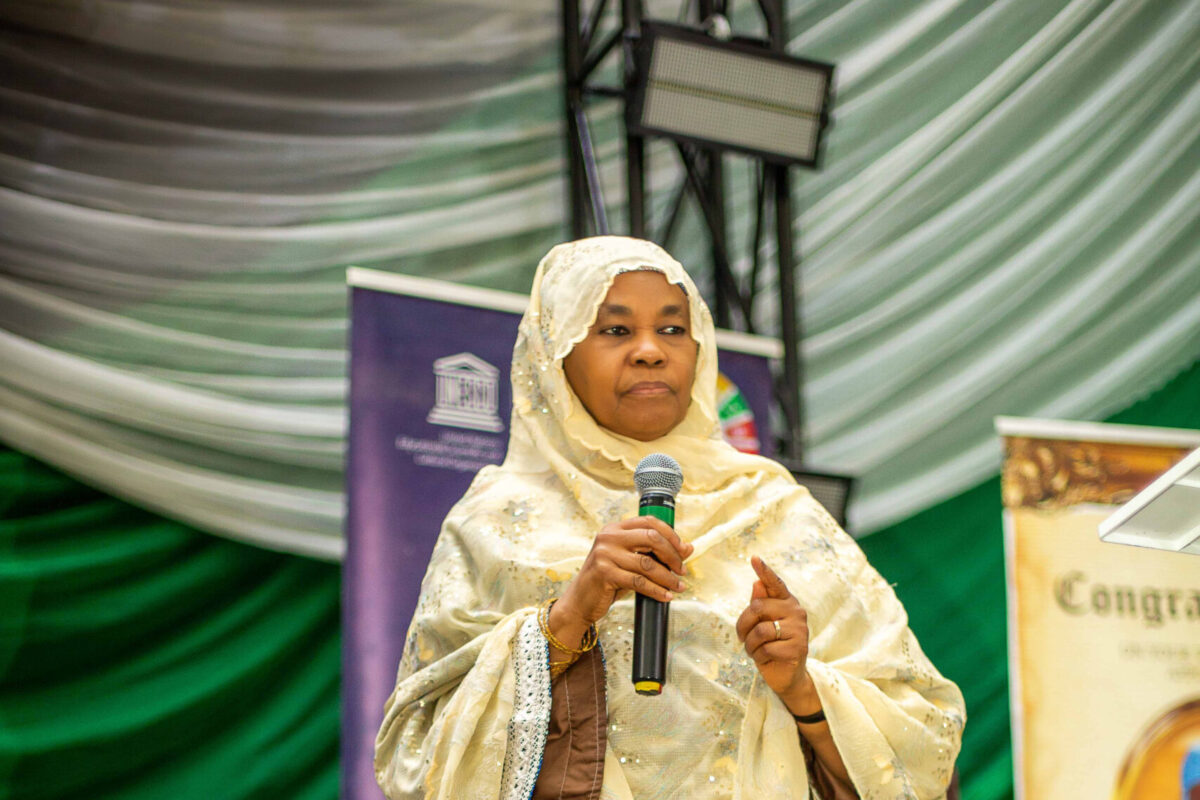
ABUJA, Nigeria, 10 March 2025. Prof. Hafsat Ganduje, a distinguished and long-standing advocate for the empowerment of Nigerian women, has issued a clarion call to the nation: women, she declared, are the backbone of our nation’s food system. She was speaking in Abuja at the national flag-off of the 12 Million Young Women in Agriculture Mobilisation Campaign, convened by the Read and Earn Federation for UNESCO (UNESCO REF) and the Police Officers’ Wives Association (POWA) to mark International Women’s Day.

Global alignmentAlignement mondialThe global commitments this story advances. Open to see how.
  • SDG2

    SDG 2, Zero Hunger (primary)

    ProvisionTarget 2.3: double the productivity and incomes of small-scale producers, in particular women

    How the campaign respondsTraining, certification and income for young women in agriculture

  • SDG5

    SDG 5, Gender Equality

    ProvisionTarget 5.5: women’s leadership; Target 5.a: equal rights to economic resources

    How the campaign respondsYoung women as leaders of food production

  • SDG1

    SDG 1, No Poverty

    ProvisionTarget 1.4: equal rights to economic resources

    How the campaign respondsIncome opportunities for participants

  • SDG8

    SDG 8, Decent Work

    ProvisionTarget 8.6: reduce youth not in employment, education or training

    How the campaign respondsAgribusiness employment for women aged 18 to 35

  • MP

    Maputo Protocol

    ProvisionArticle 15: right to food security

    How the campaign respondsWomen at the centre of national food security

  • AU

    African Union Agenda 2063

    ProvisionAspiration 6: development driven by women and youth

    How the campaign respondsYoung women as drivers of agricultural transformation

  • SDG1

    SDG 1, No Poverty

    ProvisionTarget 1.4: equal rights to economic resources

    How the campaign respondsIncome and enterprise for young women in agriculture

  • SDG17

    SDG 17, Partnerships

    ProvisionTarget 17.17: public and civil society partnerships

    How the campaign respondsA national call to every State to join the campaign

  • IWD

    International Women’s Day

    ProvisionAnnual observance on 8 March

    How the campaign respondsCampaign launched to mark International Women’s Day 2025

Her words gave voice to a truth long evident in Nigeria’s fields, markets and kitchens, yet too rarely reflected in policy, finance and public recognition. The flag-off launched one of the most ambitious mobilisations of women in the country’s agricultural history: a campaign to reach 12 million young women, two million in each of the six geopolitical zones, under the theme “Enhancing the Economic Value of Nigerian Women through the Agricultural Value Chain.”

A covenant, not merely a programme

Une alliance, et non un simple programme

“Women are the backbone of our nation’s food system.”

Prof. Hafsat Ganduje

Prof. Ganduje placed the campaign in its proper frame. It is, in her account, far more than an agricultural programme: it is a covenant of dignity, opportunity and security for families across the Federation. Dignity, because it recognises the labour that women already give to the nation’s food supply. Opportunity, because it equips young women with the skills, certification and technologies that turn subsistence into enterprise. Security, because a household in which women earn and produce is a household better able to feed itself.

She stressed the grassroots character of the campaign, recognising that its success will be decided not in conference halls but in communities, where young women farm, process and trade.

A call to every State

Un appel à chaque État

Central to Prof. Ganduje’s message was an appeal to every State of the Federation to take part. The campaign’s architecture depends on that response. A national target of 12 million can only be reached through State governments, local institutions and community leaders who identify participants, provide access to land and inputs, and sustain the effort beyond its launch.

The appeal builds on partnerships the programme had already established at State level, including the collaboration agreed with the Ogun State Government in September 2023 and the engagement with the Bauchi State Government in April 2024, which extended the programme into the North East.

The campaign at a glance

La campagne en bref

ElementDetail
Target12 million young women aged 18 to 35
DistributionTwo million in each of Nigeria’s six geopolitical zones
ThemeEnhancing the Economic Value of Nigerian Women through the Agricultural Value Chain
ConvenorsUNESCO REF, through its Young Women in Agriculture (YWA) programme, and POWA
National AdvocateDr Mrs Elizabeth Egbetokun
PathwayTraining, certification and access to modern agricultural technologies, leading to income and enterprise
Flag-offAbuja, 10 March 2025, marking International Women’s Day

Why women, why now

Pourquoi les femmes, pourquoi maintenant

The evidence supports Prof. Ganduje’s call. Women form a large share of the agricultural workforce across Africa, yet they farm at a structural disadvantage. The Food and Agriculture Organization of the United Nations reports a 24 per cent gender gap in productivity between women and men farmers on farms of equal size, and finds that women in agricultural wage employment earn 82 cents for every dollar earned by men.

The prize for closing these gaps is considerable. FAO estimates that it would raise global GDP by nearly US$1 trillion and reduce the number of food-insecure people by 45 million. For Nigeria, where food prices and food insecurity weigh heavily on households, equipping young women to produce, process and market food is among the most direct routes to national food security and household resilience.

Significance

Portée

Prof. Ganduje’s intervention lent the campaign the voice of a respected national advocate at the moment of its launch. More importantly, it framed the campaign in the terms by which it should be judged: dignity for the women it serves, opportunity for their families and security for the nation. Her call to every State remains the measure of the campaign’s progress.

Read more at the Media Centre

En savoir plus au Centre des médias

Visitors are warmly invited to read this story and to follow the Opinion and Leadership series and the progress of the 12 Million campaign at the UNESCO REF Media Centre:

Visit the UNESCO REF Media Centre for this story and the latest updates on the 12 Million Young Women in Agriculture campaign: unesco-ref.org/media/#ganduje-opinion.

ENDS

Notes to editorsNotes aux rédactions

About Young Women in Agriculture (YWA). YWA is a UNESCO REF flagship programme under the SIP-ALPHA framework that equips young women aged 18 to 35 with agribusiness education, certification and income opportunities, with a national target of 12 million women.

About UNESCO REF. The Read and Earn Federation for UNESCO (UNESCO REF) works to strengthen human and institutional capacity across Nigeria and Africa through education, research and professional development, in alignment with the 2030 Agenda for Sustainable Development.

Media enquiries. UNESCO REF Media Centre, [email protected]

SourcesSources