Osun State Partners UNESCO REF to Pilot The VOICE Initiative in Nigeria


UNESCO REF MEDIA CENTRE | NEWS

Osun becomes the first sub-national government in Nigeria to implement the professional advancement programme for women with disabilities, a model set to scale to 120,000 women nationally and to all 54 African nations by 2030.

UNESCO REF Media Centre | Osogbo, Nigeria | 16 October 2026

OSOGBO, Nigeria, 16 October 2026. The Government of Osun State has entered into partnership with the Read and Earn Federation, for UNESCO (UNESCO REF), to pilot The VOICE Initiative in Nigeria. With this partnership, Osun State becomes the first sub-national government in the Federation to implement the Initiative, a professional advancement programme that prepares women with disabilities for dignified, independent and financially sustainable employment in the global digital economy.

The State has mobilised its first cohort of 64 women for Phase 1 of the pilot, with a second cohort to follow in Phase 2. Data verification for the Phase 1 cohort begins on 21 October 2026, to be followed by a virtual orientation, a three-week induction and the six-week programme itself.

A commitment to every citizen

Un engagement envers chaque citoyen

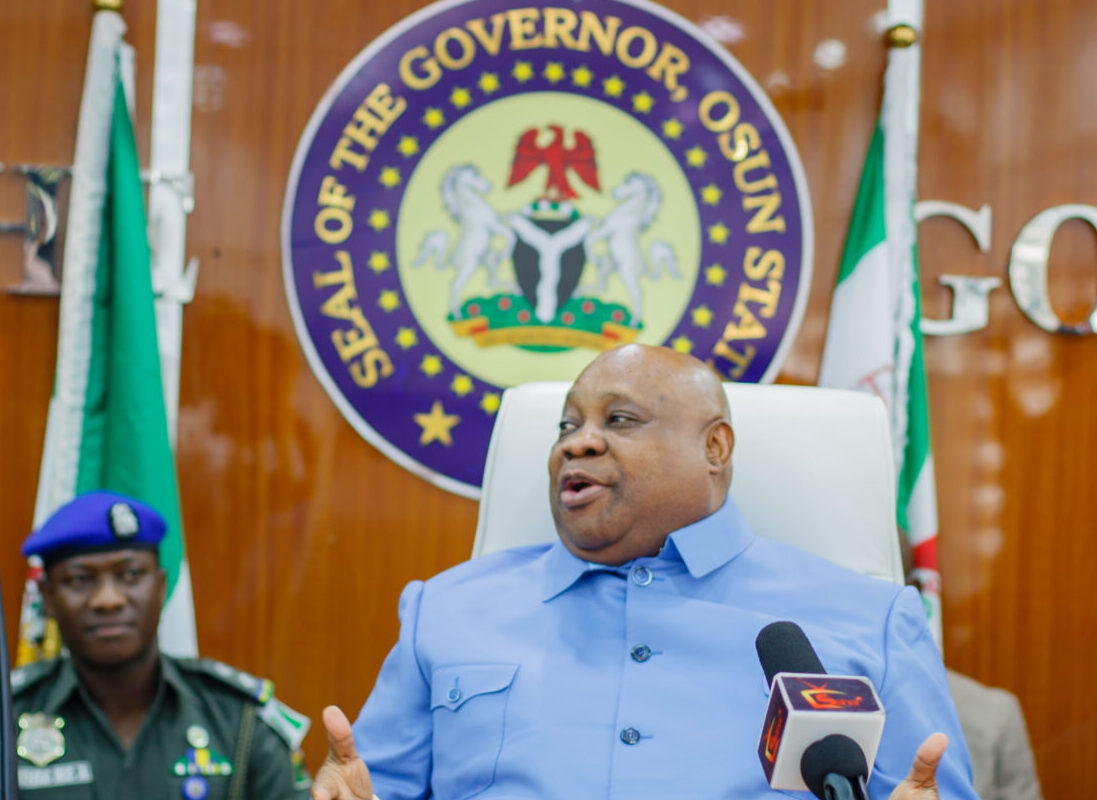
Speaking for the Osun State Government, Hon. Bankole Omisore, Senior Special Assistant to the Governor on the Sustainable Development Goals, said the partnership reflects the priorities of the administration.

He stated that The VOICE Initiative aligns with the commitment and vision of His Excellency, Governor Ademola Jackson Nurudeen Adeleke, to ensure that every citizen of the State is well cared for.

The Initiative was launched on 1 October 2026 in commemoration of Nigeria’s Independence Anniversary, and Osun State serves as its official partner and first pilot state. The standard set in Osun will guide the national and continental rollout.

Two generations, one intervention

Deux générations, une seule intervention

The President of UNESCO REF, Prince Abdulsalami Ladigbolu-Oranmiyan, described the Initiative as an investment that reaches beyond the women enrolled.

“This programme is about two generations, through one intervention. When we equip a mother with a disability to earn a dignified income, we protect the schooling of her children. Our parents and our out-of-school children are not two separate challenges. They are one story, and The VOICE Initiative addresses both at once. Osun State has shown the courage to lead, and in doing so it has become the model for every other State of the Federation.”

Prince Abdulsalami Ladigbolu-Oranmiyan, President, UNESCO REF

The design rests on established research. Research cited by UNESCO REF finds that parental disability reduces children’s school attendance, with a larger effect where the mother has the disability, and that income controlled by women is more often spent on children’s welfare. Nigeria has an estimated 20 million out-of-school children and youth, according to data published by the UNESCO Institute for Statistics and the Global Education Monitoring Report.

The programme and its return to Government

Le programme et ses retombées pour le Gouvernement

The first course under the Initiative, AI Innovation and Digital Enterprise (TIER I), is delivered fully online through The Lichfield Academy over six weeks and 78 lessons. It is open to women with disabilities aged 18 and above who hold a first degree or its equivalent in any discipline, and requires no prior background in technology. The programme is built around a single outcome: that each graduate secures remote employment, locally or internationally, in the digital economy.

According to UNESCO REF, the Initiative is not a welfare scheme but a fiscal instrument that returns value to the public purse. Its projected benefits to Government include:

  • No cost to Government. Training is fully funded by UNESCO REF through its Educational Financial Facility Scheme (EFFS), at no cost to the State or Federal Government.
  • Personal income tax. Each Fellow in formal employment contributes to the tax base under the progressive rates of the Nigeria Tax Act, 2025.
  • Value Added Tax. Household spending by employed Fellows generates VAT revenue.
  • Local multiplier. Income earned, often from international employers, is spent within the State economy and circulates through local businesses.
  • Recovered productivity. The International Labour Organization estimates that low- and middle-income countries lose between 3 and 7 per cent of GDP through the exclusion of persons with disabilities from work.
  • Human security. A 2023 UNDP study found that about a quarter of voluntary recruits to violent extremist groups cited job opportunities as their main reason for joining. Dignified employment strengthens households and communities against that risk.

Full details of the programme, its curriculum and its policy papers are available on The VOICE Initiative page.

Global alignment

Alignement mondial

An estimated 1.3 billion people, or 16 per cent of the world’s population, experience significant disability, according to the World Health Organization. The VOICE Initiative responds directly to the international and national commitments that address their inclusion.

FrameworkProvisionHow The VOICE Initiative responds
SDG 10, Reduced Inequalities (primary)Target 10.2: social, economic and political inclusion of all, irrespective of disability or sexMoves women with disabilities into the formal digital economy
SDG 8, Decent WorkTarget 8.5: full and productive employment for all, including persons with disabilitiesBuilt around one outcome: remote employment for every graduate
SDG 4, Quality EducationTarget 4.5: equal access to education for persons with disabilitiesFully funded, accessible professional training
SDG 5, Gender EqualityWomen’s full participation in economic lifeServes women exclusively
SDG 1, 16 and 17No poverty; peace and strong institutions; partnershipsHousehold income, human security, and a State and civil society partnership
UN Convention on the Rights of Persons with DisabilitiesArticle 6 (women with disabilities), Article 24 (education), Article 27 (work and employment)Equal access to skills and to work for women with disabilities
Maputo ProtocolArticle 23: protection of women with disabilitiesEconomic empowerment of women with disabilities
African Union Protocol on the Rights of Persons with Disabilities in Africa, 2018Rights to education and to workContinental rollout to all 54 African nations by 2030
Discrimination Against Persons with Disabilities (Prohibition) Act, 2018 (Nigeria)Inclusion of persons with disabilities in education and employmentState-level implementation, beginning in Osun

From Osun to Africa

D’Osun à l’Afrique

The Osun pilot opens a four-year programme running from 2026 to 2030. National upscaling to 120,000 women, 20,000 in each of Nigeria’s six geopolitical zones, is targeted for 2027 and will be led by Dr Safiyyah Hassan Shaibu, Strategic Ambassador for UNESCO REF SIP-ALPHA. The Initiative will then extend to ECOWAS member states in 2028 and to all 54 African nations by 2030.

ENDS

Notes to editors

Notes aux rédactions

About The VOICE Initiative. The VOICE Initiative (Visionary, Outcomes-Driven AI for Inclusion, Capacity for Empowerment) is a professional advancement programme for women with disabilities in Nigeria and Africa, established by UNESCO REF under its SIP-ALPHA framework. Its first course, AI Innovation and Digital Enterprise (TIER I), is delivered through The Lichfield Academy. Partners include The Lichfield Partners and Associates, the Maryam Babangida National Centre for Women Development, the Women Development Centre FCT, the UNESCO National Commission Nigeria and NEPAD_EY. Full details: unesco-ref.org/the-voice-initiative.

About UNESCO REF. The Read and Earn Federation, for UNESCO (UNESCO REF) works to strengthen human and institutional capacity across Nigeria and Africa through education, research and professional development, in alignment with the 2030 Agenda for Sustainable Development.

Media enquiries. UNESCO REF Media Centre, [email protected],

Sources

Sources

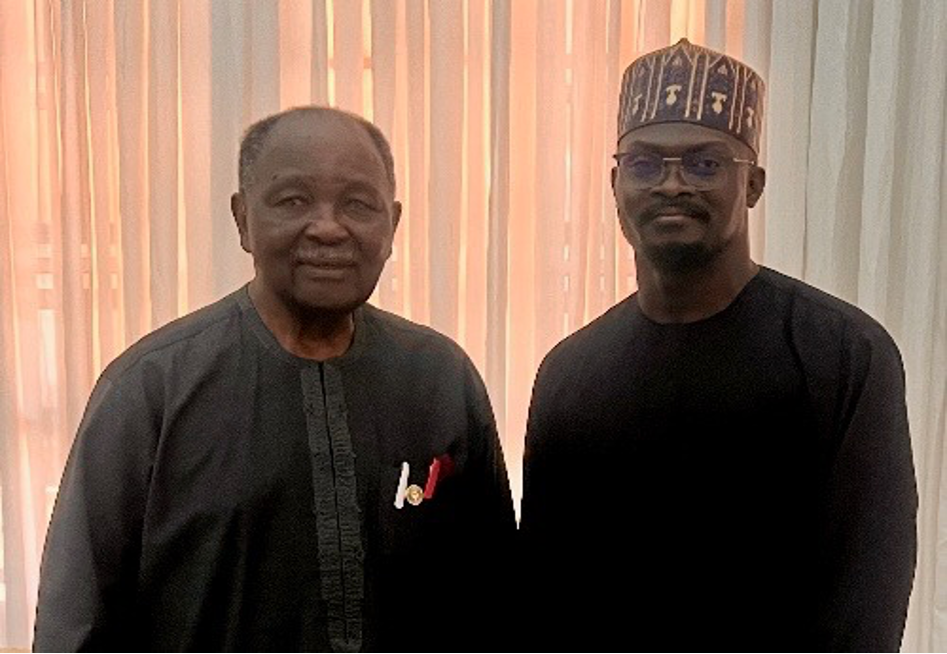
Behind Close Doors, The Private Audience between UNESCO REF President and Former Head of State General Yakubu Gowon.

In a high‑level dialogue between UNESCO REF President Prince Ladigbolu – Oranmiyan and Nigeria former Head of State, General Yakubu Gowon, the National Youth Service Corps (NYSC) was spotlighted as more than a civic duty; it was positioned as a strategic tool for youth advancement and agricultural transformation. What was said, what was planned, and what it means for Nigeria signals a turning point in national development.

UNESCO REF President Concludes Strategic Working Visit to National Library of Nigeria  

UNESCO REF Media Centre | News

UNESCO REF and the National Library of Nigeria finalise the framework for Anchored in Evidence: Digital Voices for a Stable Society, a fully sponsored programme training 600 young bloggers, content creators and online journalists to anchor public communication in verified fact.

UNESCO REF Media Centre | Abuja, Nigeria | 28 September 2026

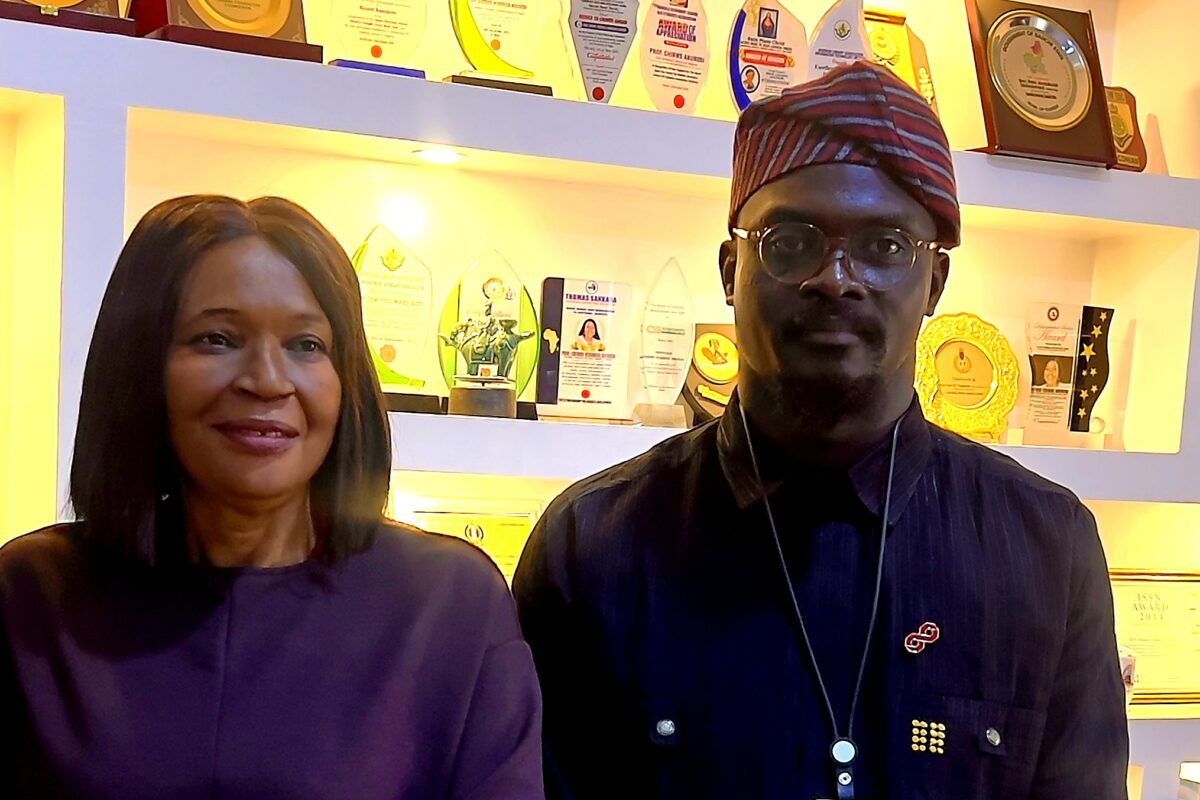
ABUJA, Nigeria, 28 September 2026. The President of the Read and Earn Federation, for UNESCO (UNESCO REF), Prince Abdulsalami Ladigbolu-Oranmiyan, today concluded a strategic working visit to the National Library of Nigeria in Abuja. The visit was hosted by the National Librarian and Chief Executive Officer of the National Library of Nigeria, Prof. Chinwe Veronica Anunobi.

The working session finalised the modalities of a strategic partnership between the two institutions under Anchored in Evidence: Digital Voices for a Stable Society, a professional programme that places the nation’s foremost repository of knowledge at the centre of Nigeria’s digital conversation.

The programme

Le programme

Anchored in Evidence is a three-week, fully online professional training programme, fully sponsored by UNESCO REF under its Educational Financial Facility Scheme (EFFS). Its pilot cohort will comprise 600 young Nigerians drawn from all six geopolitical zones of the Federation.

The programme equips bloggers, digital content creators and online journalists with three core capacities:

  • Evidence-based digital communication. The discipline of verifying claims before publishing them.
  • Responsible national imaging. Communicating about Nigeria accurately, fairly and with a sense of public responsibility.
  • The Library as primary source. The habit of consulting the National Library of Nigeria for empirical fact, rather than relying on unverified social media trends.

The working session

La séance de travail

Discussions between Prince Ladigbolu-Oranmiyan and Prof. Anunobi covered four areas:

  1. The partnership framework between UNESCO REF and the National Library of Nigeria.
  2. Modalities for the identification, mobilisation and enrolment of participants.
  3. The pilot region strategy for the initial cohort of 600 trainees.
  4. The media awareness plan to secure the visibility and credibility of the programme launch.

Prince Ladigbolu-Oranmiyan emphasised that the programme requires no financial commitment from the National Library of Nigeria, as it is fully funded by UNESCO REF. He noted that the collaboration will equip young Nigerians with critical digital skills while reinforcing the Library’s role as a trusted custodian of knowledge and fact in the digital age.

Prof. Anunobi welcomed the partnership, highlighting its alignment with the Library’s ongoing digital transformation agenda and with its mission to serve as Nigeria’s foremost repository of credible information.

The visit concluded with mutual agreement on the importance of institutional synergy in addressing misinformation and in promoting a culture of responsible communication.

Why it matters

Les enjeux

The programme responds to a challenge that is now recognised as global. The World Economic Forum’s Global Risks Report 2025 ranked misinformation and disinformation as the most severe global risk over the next two years, for the second consecutive year.

Those who shape the digital conversation are often the least equipped to verify it. A 2024 UNESCO survey of digital content creators, published as Behind the Screens, found that 62 per cent do not systematically verify information before sharing it. The same study found strong demand for training: more than 9,000 creators enrolled in the free course UNESCO launched in response.

Anchored in Evidence answers that demand in Nigeria, one of the youngest populations in the world, by pairing digital creators with an institution whose statutory mandate is to collect, preserve and make available the nation’s recorded knowledge.

Global alignment

Alignement mondial

FrameworkProvisionHow Anchored in Evidence responds
SDG 16, Peace, Justice and Strong Institutions (primary)Target 16.10: public access to information and protection of fundamental freedomsConnects the public conversation to a national repository of verified information
SDG 4, Quality EducationTarget 4.4: youth with relevant skills, including ICT skills; Target 4.7: knowledge for global citizenshipFully sponsored professional training in evidence-based digital communication
SDG 8, Decent WorkTarget 8.6: reduce the share of youth not in employment, education or trainingBuilds professional standards in the creator and digital media economy
SDG 17, Partnerships for the GoalsTarget 17.17: effective public and civil society partnershipsA partnership between a federal institution and UNESCO REF, at no cost to Government
United Nations Global Principles for Information Integrity, 2024Trust, resilience and public empowerment in the information ecosystemTrains the producers of public information to verify before they publish
UNESCO Guidelines for the Governance of Digital Platforms, 2023Media and information literacy as a pillar of a healthy information environmentApplies media and information literacy to professional content creation
IFLA-UNESCO Public Library Manifesto, 2022Libraries as gateways to knowledge and to reliable informationPositions the National Library as the primary source for digital voices
African Union Digital Transformation Strategy for Africa, 2020 to 2030Digital skills and a trusted digital environmentBuilds digital capacity among young Africans
Agenda 2063, Aspiration 6Development driven by the potential of African people, especially youthEngages 600 young Nigerians across all six geopolitical zones
National Library of Nigeria ActMandate to collect, preserve and make available Nigeria’s recorded knowledgeTurns that mandate into a daily reference point for the digital public

Next steps

Prochaines étapes

With the modalities agreed, the two institutions will proceed to the identification, mobilisation and enrolment of the pilot cohort and to the media awareness campaign for the launch. The pilot cohort of 600 participants will serve as the model for future expansion, demonstrating the contribution of evidence-based digital voices to national stability.

ENDS

Notes to editors

Notes aux rédactions

About Anchored in Evidence. Anchored in Evidence: Digital Voices for a Stable Society is a three-week professional training programme for bloggers, digital content creators and online journalists, delivered online in partnership with the National Library of Nigeria and fully sponsored by UNESCO REF under its Educational Financial Facility Scheme (EFFS).

About the National Library of Nigeria. The National Library of Nigeria is the federal institution charged with collecting, preserving and making available the recorded knowledge of the nation.

About UNESCO REF. The Read and Earn Federation, for UNESCO (UNESCO REF) works to strengthen human and institutional capacity across Nigeria and Africa through education, research and professional development, in alignment with the 2030 Agenda for Sustainable Development.

Media enquiries. UNESCO REF Media Centre, [email protected], +234 (0) 916 4212 902, www.unesco-ref.org

Sources

Sources

UNESCO: 9,000 content creators sign up for training on how to avoid spreading misinformation, Kolsquare.

Leadership: President of UNESCO REF

Office of the National Librarian, National Library of Nigeria

Global Risks Report 2025, World Economic Forum

Behind the Screens: the credibility challenge of digital content creators, United Nations University

UNESCO survey: two thirds of digital content creators skip fact-checking, IT Edge News


NAOWA President Accepts Appointment as Strategic Ambassador for UNESCO REF SIP-ALPHA

UNESCO REF Media Centre | Institutional Partnership

Dr Safiyyah Hassan Shaibu, 25th President of the Nigerian Army Officers’ Wives Association (NAOWA), brings six decades of grassroots presence into the UNESCO REF Strategic Intervention Programmes for Accelerated Learning and Productive Human Asset (SIP-ALPHA), aligned with the 2030 Agenda and the African Union’s Agenda 2063.

UNESCO REF Media Centre | Abuja, Nigeria | 17 October 2026 | Ref: UNESCO REF/MEDIA/2026/NAOWA SIP ALPHA AMB 01

ABUJA, Nigeria, 17 October 2026. The Read and Earn Federation, for UNESCO (UNESCO REF) announces that Dr Safiyyah Hassan Shaibu, 25th President of the Nigerian Army Officers’ Wives Association (NAOWA) and wife of the Chief of Army Staff, Lieutenant General Waidi Shaibu, has formally accepted her nomination as Strategic Ambassador for the UNESCO REF Strategic Intervention Programmes for Accelerated Learning and Productive Human Asset (SIP-ALPHA) in Nigeria.

The acceptance was conveyed by official correspondence dated 28 July 2026, under NAOWA reference NAOWA/NAT/G1/300/63. It is a considered institutional decision, taken, in Dr Shaibu’s own words, after having “carefully considered the objectives, scope and strategic vision of the SIP-ALPHA Initiative.”

The woman behind the mandate

La femme derrière le mandat

At her first Executive Meeting as 25th President of NAOWA, held in Abuja in February 2026, Dr Shaibu set out the principle that has guided her tenure: “When a woman is empowered, a family is strengthened; when families are stable, the military community is stronger.” She reminded members that the association was built on service and sacrifice, and that its decisions would affect thousands of families across formations and commands nationwide.

Her record since then reflects that conviction. Under her leadership, NAOWA has inaugurated new schools in Zaria, Badagry and at Bola Ahmed Tinubu Barracks in Abuja, begun construction of primary and secondary schools at Bola Ahmed Tinubu Barracks, and organised the 2026 NAOWA 21st Century Teacher Transformation Training. Its Youth Empowerment Project has trained 394 young people in ICT and fashion design, and more than 15,000 relief packages have reached members, widows and places of worship.

The institution she leads

L’institution qu’elle dirige

NAOWA began in the 1950s as the Army Wives Association and took its present name in 1963. For more than six decades it has operated community health centres, schools, day-care centres, skills acquisition and vocational centres and the Girl Child Education Programme, across a network that follows the Nigerian Army into garrison towns throughout the Federation.

It reaches communities where institutional presence is often thin, and it does so as a non-governmental organisation that receives no subvention from federal or state government. Scholars of Nigerian civil society have described it as the most powerful women’s organisation in the country.

The home front and the national mandate

Le front intérieur et le mandat national

Lieutenant General Waidi Shaibu was appointed Chief of Army Staff by President Bola Ahmed Tinubu on 30 October 2025. A field commander whose career spans counter-insurgency operations in the North East, he received the Service and Sacrifice Award at the 2026 Armed Forces Celebration and Remembrance Day ceremony at the State House, Abuja.

Behind every theatre of operations is a home front, and behind every soldier is a family sustained by sacrifice. Dr Shaibu has lived that reality. Her decision to commit NAOWA’s network to a development framework aligned with the United Nations agenda carries the lived experience of military families across the Federation.

A convergence of two institutions

La convergence de deux institutions

The road to the appointment began on 18 May 2026, when the President of UNESCO REF, Prince Abdulsalami Ladigbolu-Oranmiyan, held a high-level consultative engagement with Dr Shaibu at NAOWA headquarters in Abuja. The meeting examined institutional pathways for advancing the United Nations Sustainable Development Goals in Nigeria through the SIP-ALPHA framework.

Two institutions met. One brought seventeen years of multi-sectoral development architecture, through which, according to UNESCO REF, 1.2 million Nigerian youths have been mobilised. The other brought six decades of grassroots presence and community trust earned through consistent service. Each recognised in the other what neither possessed alone. On 28 July 2026, the conversation became a formal institutional covenant.

In her own words

Dans ses propres mots

“Having carefully considered the objectives, scope and strategic vision of the SIP-ALPHA Initiative, particularly its alignment with the United Nations Sustainable Development Goals and the African Union Agenda 2063, I further recognise its strong emphasis on sustainable development, food security, education, youth advancement, health resilience and community empowerment. It is therefore with great pleasure that I formally accept this nomination and appointment as Strategic Ambassador for SIP-ALPHA.

I look forward to collaborating closely with UNESCO REF, development partners and other relevant stakeholders in achieving the objectives of SIP-ALPHA for the benefit of our nation and future generations.”

Dr Safiyyah Hassan Shaibu, 25th President, Nigerian Army Officers’ Wives Association, Abuja, 28 July 2026

The UNESCO REF President responds

La réponse du Président de l’UNESCO REF

“Dr Safiyyah Hassan Shaibu’s formal acceptance of this nomination is one of the most consequential institutional developments in UNESCO REF’s seventeen-year history. NAOWA does not lend its name; it lends its capacity, its networks and its communities. As Strategic Ambassador for SIP-ALPHA, she brings to our framework the institutional discipline of an organisation forged in service, the grassroots reach of a network that no programme map can fully capture, and the moral authority of women’s leadership at its most credible.

Nigeria’s development cannot be delivered from Abuja alone. It must be assembled, community by community, in every barracks, every garrison town and every local government area of this Federation. That assembly now has a new and formidable architect.”

Prince Abdulsalami Ladigbolu-Oranmiyan, President and Secretary General, UNESCO REF

What the appointment means

La portée de la nomination

SIP-ALPHA is UNESCO REF’s most ambitious institutional architecture: a governance innovation that moves development delivery from siloed programmes to an integrated, systems-based approach across education, agriculture, health resilience, youth empowerment and sustainable community development.

As Strategic Ambassador, Dr Shaibu brings NAOWA’s national footprint into SIP-ALPHA’s implementation architecture, with the aim of accelerating delivery across all 774 local government areas of the Federation. Her mandate already extends to two flagship programmes:

  • Young Women in Agriculture (YWA). A national mobilisation campaign targeting 12 million young women in agriculture (read more). Food security is a pressing national priority: the Cadre Harmonisé analysis projected that about 34.7 million Nigerians would face food insecurity in the June to August 2026 lean season.
  • The VOICE Initiative. UNESCO REF’s professional advancement programme for women with disabilities, launched on 1 October 2026 with the Osun State Government as first pilot state. Dr Shaibu will lead its national upscaling to 120,000 women across the six geopolitical zones and its extension across Africa (read more).

The contribution to the Sustainable Development Goals is direct. The deeper contribution is the trust of a nation’s military families, now extended into the architecture of its development future.

Global alignment

Alignement mondial

FrameworkProvisionHow the appointment responds
SDG 1, No PovertyTarget 1.4: equal rights to economic resources for the poor and vulnerableExtends SIP-ALPHA into military communities and garrison towns
SDG 2, Zero HungerTarget 2.3: double the productivity and incomes of small-scale food producers, in particular womenLeads the Young Women in Agriculture campaign for 12 million women
SDG 4, Quality EducationTargets 4.1 and 4.4: quality schooling and relevant skills for youthBuilds on NAOWA schools, teacher training and youth skills programmes
SDG 5, Gender EqualityTarget 5.5: women’s full participation and leadershipPlaces women’s leadership at the head of national programme delivery
SDG 8, Decent WorkTarget 8.6: reduce youth not in employment, education or trainingYouth advancement and skills acquisition across the Federation
SDG 17, PartnershipsTarget 17.17: effective public and civil society partnershipsA covenant between UNESCO REF and NAOWA
UN Security Council Resolution 1325Women, Peace and Security: women’s role in peacebuilding and community resilienceMobilises the wives and families of the military as agents of development and stability
African Union Agenda 2063Aspiration 6: development driven by the potential of African women and youthCited by Dr Shaibu in her letter of acceptance
Maputo ProtocolArticle 15: right to food security; Article 13: economic and social welfare rightsWomen-led food security and economic empowerment
Renewed Hope Agenda, Federal Government of NigeriaFood security, human capital and inclusive growthDelivery through all 774 local government areas

ENDS

Notes to editors

Notes aux rédactions

About SIP-ALPHA. The Strategic Intervention Programmes for Accelerated Learning and Productive Human Asset (SIP-ALPHA) is UNESCO REF’s integrated development framework, delivering education, agriculture, health resilience, youth empowerment and community development programmes in alignment with the 2030 Agenda for Sustainable Development and the African Union’s Agenda 2063.

About NAOWA. The Nigerian Army Officers’ Wives Association is a non-profit, non-governmental organisation founded in the 1950s and constituted under its present name in 1963. It operates schools, community health centres, skills acquisition centres and welfare programmes for military families and host communities across Nigeria.

About UNESCO REF. The Read and Earn Federation, for UNESCO (UNESCO REF) works to strengthen human and institutional capacity across Nigeria and Africa through education, research and professional development.

Media enquiries. UNESCO REF Media Centre, [email protected], +234 (0) 916 4212 902, www.unesco-ref.org

Ref: UNESCO REF/MEDIA/2026/NAOWA SIP ALPHA AMB 01

Sources

Sources


UNESCO REF Media Centre | New Publication. The Needful Now Nigeria’s Youth, Security, and the Covenant of August 2024. An in-depth UNESCO REF analysis examining how Nigeria’s youth led movement of August 2024 redefined the relationship between citizens, the state, and the promise of security governance.

The Needful Now: How Nigeria Built a Covenant Between Its Badge and Its Youth

From the streets of August 2024 to the halls of Louis Edet House, an investigation into how a country in crisis chose dialogue over confrontation.

This report examines the civic demands raised, the institutional responses that followed, and the accountability framework required to honour a generation’s covenant with its country. It traces an extraordinary sequence of events that transformed public anger into structured partnership between Nigeria’s security institutions and its young citizens.

“The UNESCO REF Nigeria Police Youth Summit is not merely an event, but a national platform for reconciliation and partnership, a covenant between the Police and our youth to build trust, respect, and shared responsibility.”

PRINCE ABDULSALAMI LADIGBOLU-ORANMIYANPRESIDENT, UNESCO REF  ·  LOUIS EDET HOUSE, ABUJA

From the three words that detonated a fuel crisis on inauguration morning, through the southwest advocacy fields, the ten days of rage on Nigerian streets, one unscheduled conversation at police headquarters, and the unprecedented gathering on International Youth Day, this is the investigation of how a country in crisis chose dialogue over confrontation and made history because of it. READ MORE.


1 2 3 … 5