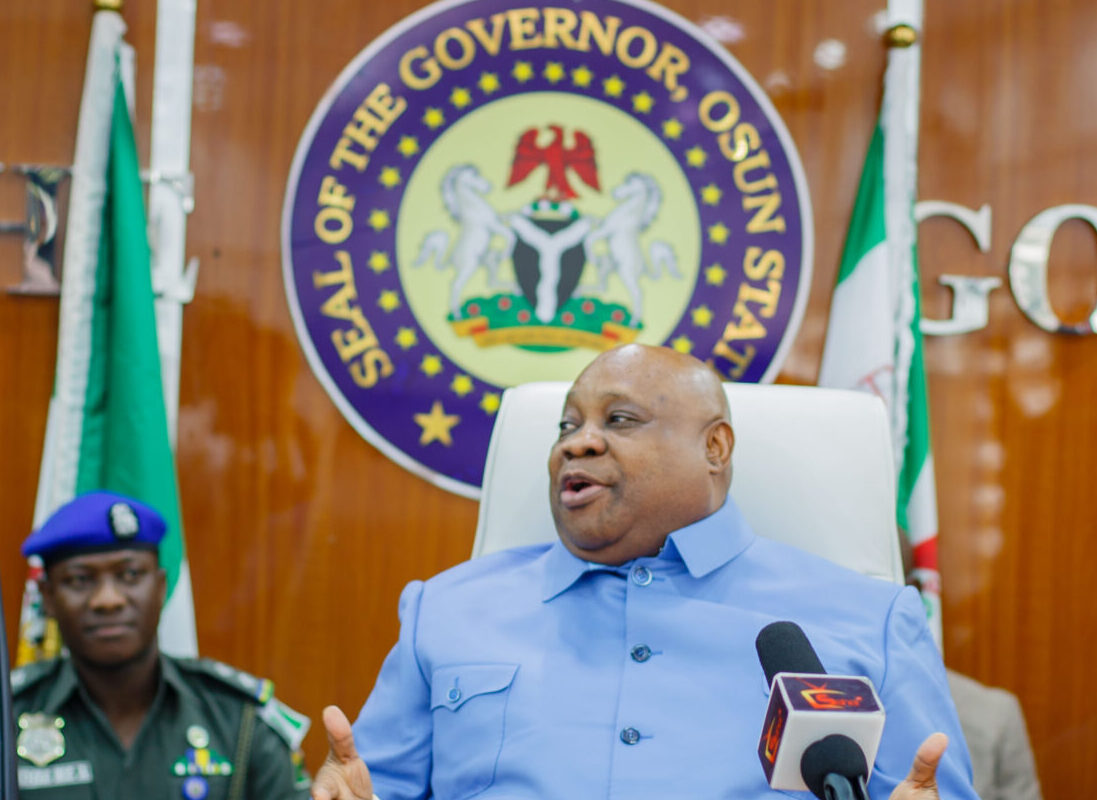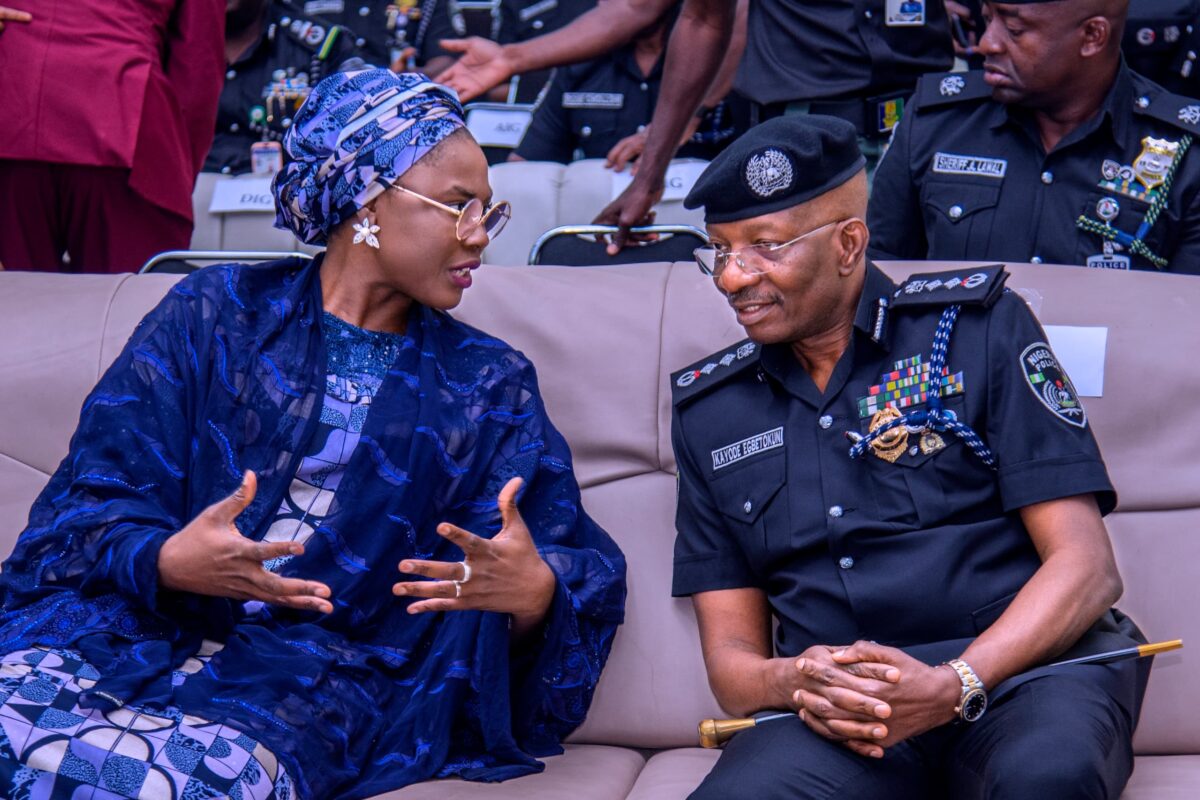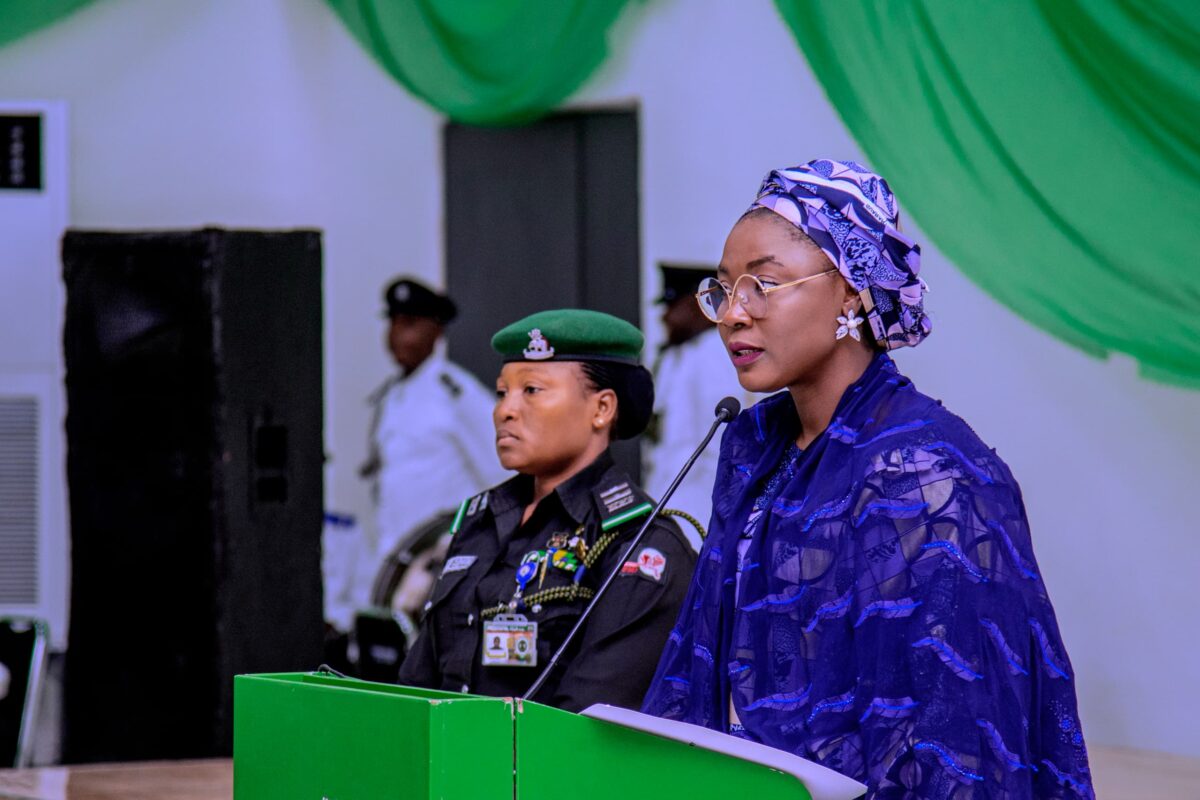
Dr Jamila Bio Ibrahim, Honourable Minister of Youth Development, representing President Bola Ahmed Tinubu, GCFR, at the UNESCO REF Nigeria Police Youths Summit

UNESCO REF Media Centre Releases New In-Depth and Special Report on the Nigeria Police and Nigerian Youth

UNESCO REF Media Centre Releases New In-Depth and Special Report on the Nigeria Police and Nigerian Youth

The DispatchUNESCO REF Media Centre · EISSN 3156-55575 min read

UNESCO REF Media Centre | In-Depth and Special Reports

The latest In-Depth and Special Report of the UNESCO REF Media Centre is now open to the public. It documents how the UNESCO REF Nigeria Police Youths Summit brought the Nigeria Police Force and the young people of Nigeria into a shared commitment to national security, and what was promised on the record when they met.

Pictured. Dr Jamila Bio Ibrahim, Honourable Minister of Youth Development, representing President Bola Ahmed Tinubu, GCFR, at the UNESCO REF Nigeria Police Youths Summit, Abuja, 12 August 2024. Photograph: Nigeria Police Force.

ABUJA, Nigeria, 1 November 2026. The UNESCO REF Media Centre has released a new file in its In-Depth and Special Reports series. The report examines the UNESCO REF Nigeria Police Youths Summit, convened with the Nigeria Police Force at the Police Resource Centre, Jabi, Abuja, on 12 August 2024, the United Nations International Youth Day, together with the national conditions that brought the summit into being and the commitments made to young Nigerians on that day.

Global alignmentAlignement mondialThe global commitments this report documents. Open to see how.
  • SDG16

    SDG 16, Peace, Justice and Strong Institutions

    ProvisionTarget 16.7: responsive, inclusive, participatory and representative decision-making at all levels

    How the report respondsDocuments the direct dialogue between youth delegates and the leadership of the Nigeria Police Force

  • SDG8

    SDG 8, Decent Work and Economic Growth

    ProvisionTarget 8.6: reduce the proportion of youth not in employment, education or training

    How the report respondsRecords the federal commitments made to young Nigerians on the day of the summit

  • SDG2

    SDG 2, Zero Hunger

    ProvisionTarget 2.1: end hunger and ensure access to sufficient food

    How the report respondsSets the summit against record food inflation and notes the announcement of farm patrols to protect food production

  • SDG17

    SDG 17, Partnerships for the Goals

    ProvisionTarget 17.17: effective public and civil society partnerships

    How the report respondsTraces the partnership between UNESCO REF and the Nigeria Police Force from working visit to summit

  • 2250

    UN Security Council Resolution 2250

    ProvisionYouth, Peace and Security: participation, protection and partnerships

    How the report respondsTreats young people as partners in national security rather than as its subjects

  • AU

    African Union Agenda 2063

    ProvisionAspiration 3: good governance, respect for human rights and the rule of law

    How the report respondsRecords the commitment to rights protection within police training

  • AYC

    African Youth Charter

    ProvisionArticle 11: youth participation in decision-making

    How the report respondsGives young Nigerians a recorded voice before the national security leadership

More than four hundred delegates attended the summit, held under the theme Enhancing the Nigerian Youth’s Value for National Security Intelligence. President Bola Ahmed Tinubu, GCFR, addressed the gathering through the Honourable Minister of Youth Development, Dr Jamila Bio Ibrahim. The Inspector-General of Police, Dr Kayode Adeolu Egbetokun, attended in person, and the Honourable Minister of Police Affairs, Senator Ibrahim Gaidam, and the National Security Adviser, Mallam Nuhu Ribadu, were represented. Every tier of the national security architecture was present in a single room with the young people it serves.

Why this report matters

Pourquoi ce rapport compte

The report covers the four hundred and forty-one days between the inauguration of 29 May 2023 and the summit of 12 August 2024. In that period the price of petrol nearly tripled within days, the naira fell sharply after the unification of the exchange rate, and food inflation reached a record 40.87 percent in June 2024. The #EndBadGovernance protests of 1 to 10 August 2024 followed.

Against that background, the Nigeria Police Force and UNESCO REF chose dialogue. The report shows how a working visit by the President of UNESCO REF to Louis Edet House, Nigeria Police Force Headquarters, during the protests became, within days, a national summit between the police leadership and the young. It is the first full account of that sequence on the public record.

Inside the report

Au cœur du rapport

The file is presented in six parts, preceded by a statement of Key Judgements and followed by indicators, an exhibit register and a graded source annex.

  • The Shock. The reforms of May and June 2023 and their immediate effect on prices across five Nigerian cities.
  • The Gathering Storm. The responses of the State, fourteen months of accumulated grievance, and the field work of UNESCO REF in the South-West before the streets filled.
  • The Streets. The ten days of protest, the presidential broadcast of 4 August 2024 and the toll that followed.
  • The Bridge. The working visit to Louis Edet House and the statement of the Force on partnership with young people.
  • The Summit. The addresses delivered on 12 August 2024 on behalf of the President, the Minister of Police Affairs and the National Security Adviser, and by the Inspector-General and the keynote speaker.
  • The Covenant. The open dialogue with the Inspector-General, the written resolutions of youth delegates and the commitments made on the record.

Voices on the record

Les voix au dossier

“Our youths are partners of today.”

Dr Jamila Bio Ibrahim, Honourable Minister of Youth Development, on behalf of President Bola Ahmed Tinubu, GCFR, as reported by PRNigeria

“The message of the peaceful protesters was heard by the Government loud and clear.”

Ministry of Police Affairs, summary of the address of the Honourable Minister, 12 August 2024

“The UNESCO REF Nigeria Police Youths Summit is not merely an event, but a national platform for reconciliation and partnership, a covenant between the Police and our youth to build trust, respect, and shared responsibility.”

Prince Abdulsalami Ladigbolu-Oranmiyan, President, UNESCO REF, Convener

How the report was prepared

Méthode du rapport

The report draws on three classes of evidence: official statistics and official statements of government bodies; independent national and international press, including the Voice of America, The Guardian, ThisDay, Leadership, BusinessDay, PRNigeria and Arise News; and the first-hand documentation of the UNESCO REF Media Centre. Each key judgement carries a stated level of confidence that reflects the quality and independence of the evidence behind it.

The report makes no judgement on the durability of the commitments made at the summit. Where a commitment has not yet been independently reported as fulfilled, it is listed as an indicator to watch, and the UNESCO REF Media Centre will revise the file as each becomes measurable.

Read the full report

Lire le rapport complet

The report is published in full, with its exhibits, source annex and a ready citation. Policymakers, security and youth institutions, researchers, journalists and young Nigerians are invited to read it in full and to share it within their networks.

Read the In-Depth and Special Report →
Lire le rapport approfondi et spécial

How to cite

Comment citer

UNESCO REF Media Centre, In-Depth and Special Reports, The Dispatch, EISSN 3156-5557, Abuja, Federal Republic of Nigeria. The full citation for the report appears on its closing page.

ENDS

Notes to editorsNotes aux rédactions

About the In-Depth and Special Reports. The In-Depth and Special Reports are the long-form investigative files of the UNESCO REF Media Centre, published in The Dispatch (EISSN 3156-5557). Each file sets out its key judgements, evidence, exhibits and graded sources in full.

About the summit. The UNESCO REF Nigeria Police Youths Summit was convened by UNESCO REF with the Nigeria Police Force at the Police Resource Centre, Jabi, Abuja, on 12 August 2024, the United Nations International Youth Day, under the theme Enhancing the Nigerian Youth’s Value for National Security Intelligence.

About UNESCO REF. The Read and Earn Federation for UNESCO (UNESCO REF) works to strengthen human and institutional capacity across Nigeria and Africa through education, research and professional development, in alignment with the 2030 Agenda for Sustainable Development.

Photographs. All photographs of the summit are credited to the Nigeria Police Force.

Media enquiries. UNESCO REF Media Centre, [email protected]

SourcesSources

UNESCO REF and Osun State Open Nominations for 3,000 Osun Indigenes to Fully Funded AI Research Programme, ARDAI TIER I

The DispatchUNESCO REF Media Centre · EISSN 3156-55575 min read

UNESCO REF Media Centre | News

UNESCO REF and Osun State Open Nominations for Three Thousand Osun Indigenes to a Fully Funded Artificial Intelligence Research Programme, ARDAI TIER I

The Government of Osun State and the Read and Earn Federation for UNESCO have opened nominations for three thousand indigenes of the State to undertake the Advanced Research Diploma in Artificial Intelligence (ARDAI TIER I), a fully funded professional programme of thirteen weeks commencing in December 2026.

OSOGBO, Nigeria, 28 October 2026. The Government of Osun State, under the leadership of His Excellency, Ademola Jackson Nurudeen Adeleke, Executive Governor of the State, and the Read and Earn Federation for UNESCO (UNESCO REF) have jointly opened nominations for three thousand indigenes of Osun State to undertake the Advanced Research Diploma in Artificial Intelligence (ARDAI TIER I). The programme is fully funded, extends over thirteen weeks and commences in December 2026. It represents one of the most substantial single commitments yet made by a Nigerian State to the preparation of its young people for an economy increasingly shaped by artificial intelligence.

Global alignmentAlignement mondialThe global commitments this story advances. Open to see how.

The World Economic Forum’s Future of Jobs Report 2025 finds that employers expect 39 per cent of workers’ core skills to change by 2030, with artificial intelligence and big data among the fastest-growing skills. ARDAI TIER I responds to the international and national commitments that address this transition.

  • SDG4

    SDG 4, Quality Education (primary)

    ProvisionTarget 4.4: increase the number of youth and adults with relevant skills, including technical skills, for employment and entrepreneurship

    How ARDAI TIER I respondsA fully funded professional diploma in artificial intelligence for three thousand indigenes of Osun State

  • SDG8

    SDG 8, Decent Work and Economic Growth

    ProvisionTarget 8.6: reduce the proportion of youth not in employment, education or training

    How ARDAI TIER I respondsPrepares participants for better-remunerated work and technology-driven enterprise

  • SDG9

    SDG 9, Industry, Innovation and Infrastructure

    ProvisionTarget 9.5: enhance scientific research and upgrade technological capabilities

    How ARDAI TIER I respondsApplied artificial intelligence for health, agriculture, finance and governance

  • SDG17

    SDG 17, Partnerships for the Goals

    ProvisionTarget 17.17: effective public and civil society partnerships

    How ARDAI TIER I respondsA State Government and UNESCO REF partnership, financed through the EFFS

  • AU

    African Union Agenda 2063

    ProvisionAspiration 1: well-educated citizens and a skills revolution underpinned by science, technology and innovation

    How ARDAI TIER I respondsEquips young Africans to produce, not only consume, the new economy

  • NG

    National Digital Economy Policy and Strategy 2020 to 2030 (Nigeria)

    ProvisionDigital literacy and skills for the digital economy

    How ARDAI TIER I respondsAdvanced artificial intelligence skills delivered at State level

The nomination process is administered by the Office of the Special Adviser to the Governor on the Sustainable Development Goals, while the programme is financed through the Educational Financial Facility Scheme (EFFS) of UNESCO REF. Tuition, learning materials and certification are provided at no cost to participants. Candidates who satisfy the requirements of assessment will be conferred with the Advanced Research Diploma in Artificial Intelligence (ARDAI TIER I).

A deliberate investment in human capital

Un investissement délibéré dans le capital humain

Artificial intelligence, data science and automation are now reshaping the conduct of government, commerce, agriculture, health care and education. In this setting, the prosperity of a State depends less on the resources beneath its soil than on the knowledge, skills and enterprise of its people.

By resolving to prepare three thousand of its indigenes in a single cohort, the Government of Osun State positions its young people among the first in the Federation to be formally trained for this transition. The decision reflects the sustained priority the administration has accorded to youth empowerment and human capital development, and its considered view that the young people of Osun State should participate in the new economy as producers and innovators, and not merely as its users.

“Artificial intelligence is transforming virtually every sector. This programme will help our graduates compete globally, access better-paying jobs and build technology-driven businesses.”

Hon. Bankole Omisore, Special Adviser to the Governor of Osun State on the Sustainable Development Goals

About ARDAI TIER I

À propos de l’ARDAI TIER I

ARDAI TIER I is a programme of UNESCO REF delivered under its flagship framework, the Strategic Intervention Programme for Accelerated Learning and Productive Human Asset (SIP-ALPHA). It is a demanding professional programme which proceeds from the foundations of artificial intelligence to its applied use in the sectors of greatest consequence to Nigeria and to the African continent.

  • Structure. Thirteen weeks, 169 lessons and 169 laboratory work samples, ending in a capstone portfolio and a final examination.
  • Scope. Machine learning, natural language processing for African languages, computer vision, and the application of artificial intelligence to health, agriculture and climate, finance and economic development, and governance and public administration, together with AI safety, ethics and policy design.
  • Delivery. Fully online and self-paced, with narrated voice lectures on every lesson, so that participants can learn wherever they are.
  • Recognition. Distinction graduates are invited to submit their capstone work to The REF Review, the open-access journal of UNESCO REF.

A partnership in continuity

Un partenariat dans la continuité

The programme extends the cooperation already established between the Government of Osun State and UNESCO REF under The VOICE Initiative. It confirms the position of Osun State as a pioneer State in the delivery of UNESCO REF programmes, and as a State that has chosen to align its local development priorities with the 2030 Agenda for Sustainable Development of the United Nations.

Eligibility and nomination

Conditions d’admission et procédure de nomination

  • Origin. Indigenes or residents of Osun State.
  • Qualification. At least a bachelor’s degree, a Higher National Diploma (HND) or a recognised equivalent.
  • Pre-qualification. Candidates must first complete the pre-qualification process of the Office of the Special Adviser to the Governor on the Sustainable Development Goals, which administers nominations on behalf of the State.
  • Application. Pre-qualified candidates then complete the UNESCO REF Programme Application, selecting ARDAI TIER I, and receive a reference number by email on submission.

Places are limited to three thousand, and eligible candidates are encouraged to complete the process without delay.

ENDS

Notes to editorsNotes aux rédactions

About ARDAI TIER I. The Advanced Research Diploma in Artificial Intelligence (ARDAI TIER I) is a 13-week professional programme of UNESCO REF, delivered under its SIP-ALPHA framework and financed through the Educational Financial Facility Scheme (EFFS).

About the Osun State Office of the SDGs. The Office of the Special Adviser to the Governor on Sustainable Development Goals coordinates the State’s delivery of the 2030 Agenda and its partnerships for youth and human capital development.

About UNESCO REF. The Read and Earn Federation for UNESCO is a multidimensional and multisectoral development institution, established in 2009 within the provisions of UNESCO and constituted through the Nigerian National Commission for UNESCO. Its Educational Financial Facility Scheme (EFFS) finances access to higher learning and professional training for young Nigerians.

Media enquiries. UNESCO REF Media Centre, [email protected]

SourcesSources

Osun State and UNESCO REF Pilot The VOICE Initiative

The DispatchUNESCO REF Media Centre · EISSN 3156-55576 min read

UNESCO REF Media Centre | News

Osun State Partners UNESCO REF to Pilot The VOICE Initiative in Nigeria

Osun becomes the first sub-national government in Nigeria to implement the professional advancement programme for women with disabilities, a model set to scale to 120,000 women nationally and to all 54 African nations by 2030.

OSOGBO, Nigeria, 16 October 2026. The Government of Osun State has entered into partnership with the Read and Earn Federation for UNESCO (UNESCO REF), to pilot The VOICE Initiative in Nigeria. With this partnership, Osun State becomes the first sub-national government in the Federation to implement the Initiative, a professional advancement programme that prepares women with disabilities for dignified, independent and financially sustainable employment in the global digital economy.

Global alignmentAlignement mondialThe global commitments this story advances. Open to see how.

An estimated 1.3 billion people, or 16 per cent of the world’s population, experience significant disability, according to the World Health Organization. The VOICE Initiative responds directly to the international and national commitments that address their inclusion.

  • SDG10

    SDG 10, Reduced Inequalities (primary)

    ProvisionTarget 10.2: social, economic and political inclusion of all, irrespective of disability or sex

    How The VOICE Initiative respondsMoves women with disabilities into the formal digital economy

  • SDG8

    SDG 8, Decent Work

    ProvisionTarget 8.5: full and productive employment for all, including persons with disabilities

    How The VOICE Initiative respondsBuilt around one outcome: remote employment for every graduate

  • SDG4

    SDG 4, Quality Education

    ProvisionTarget 4.5: equal access to education for persons with disabilities

    How The VOICE Initiative respondsFully funded, accessible professional training

  • SDG5

    SDG 5, Gender Equality

    ProvisionWomen’s full participation in economic life

    How The VOICE Initiative respondsServes women exclusively

  • SDG1

    SDG 1, 16 and 17

    ProvisionNo poverty; peace and strong institutions; partnerships

    How The VOICE Initiative respondsHousehold income, human security, and a State and civil society partnership

  • UCRP

    UN Convention on the Rights of Persons with Disabilities

    ProvisionArticle 6 (women with disabilities), Article 24 (education), Article 27 (work and employment)

    How The VOICE Initiative respondsEqual access to skills and to work for women with disabilities

  • MP

    Maputo Protocol

    ProvisionArticle 23: protection of women with disabilities

    How The VOICE Initiative respondsEconomic empowerment of women with disabilities

  • AU

    African Union Protocol on the Rights of Persons with Disabilities in Africa, 2018

    ProvisionRights to education and to work

    How The VOICE Initiative respondsContinental rollout to all 54 African nations by 2030

  • NG

    Discrimination Against Persons with Disabilities (Prohibition) Act, 2018 (Nigeria)

    ProvisionInclusion of persons with disabilities in education and employment

    How The VOICE Initiative respondsState-level implementation, beginning in Osun

The State has mobilised its first cohort of 64 women for Phase 1 of the pilot, with a second cohort to follow in Phase 2. Data verification for the Phase 1 cohort begins on 21 October 2026, to be followed by a virtual orientation, a three-week induction and the six-week programme itself.

A commitment to every citizen

Un engagement envers chaque citoyen

Speaking for the Osun State Government, Hon. Bankole Omisore, Senior Special Assistant to the Governor on the Sustainable Development Goals, said the partnership reflects the priorities of the administration.

He stated that The VOICE Initiative aligns with the commitment and vision of His Excellency, Governor Ademola Jackson Nurudeen Adeleke, to ensure that every citizen of the State is well cared for.

The Initiative was launched on 1 October 2026 in commemoration of Nigeria’s Independence Anniversary, and Osun State serves as its official partner and first pilot state. The standard set in Osun will guide the national and continental rollout.

Two generations, one intervention

Deux générations, une seule intervention

The President of UNESCO REF, Prince Abdulsalami Ladigbolu-Oranmiyan, described the Initiative as an investment that reaches beyond the women enrolled.

“This programme is about two generations, through one intervention. When we equip a mother with a disability to earn a dignified income, we protect the schooling of her children. Our parents and our out-of-school children are not two separate challenges. They are one story, and The VOICE Initiative addresses both at once. Osun State has shown the courage to lead, and in doing so it has become the model for every other State of the Federation.”

Prince Abdulsalami Ladigbolu-Oranmiyan, President, UNESCO REF

The design rests on established research. Research cited by UNESCO REF finds that parental disability reduces children’s school attendance, with a larger effect where the mother has the disability, and that income controlled by women is more often spent on children’s welfare. Nigeria has an estimated 20 million out-of-school children and youth, according to data published by the UNESCO Institute for Statistics and the Global Education Monitoring Report.

The programme and its return to Government

Le programme et ses retombées pour le Gouvernement

The first course under the Initiative, AI Innovation and Digital Enterprise (TIER I), is delivered fully online through The Lichfield Academy over six weeks and 78 lessons. It is open to women with disabilities aged 18 and above who hold a first degree or its equivalent in any discipline, and requires no prior background in technology. The programme is built around a single outcome: that each graduate secures remote employment, locally or internationally, in the digital economy.

According to UNESCO REF, the Initiative is not a welfare scheme but a fiscal instrument that returns value to the public purse. Its projected benefits to Government include:

  • No cost to Government. Training is fully funded by UNESCO REF through its Educational Financial Facility Scheme (EFFS), at no cost to the State or Federal Government.
  • Personal income tax. Each Fellow in formal employment contributes to the tax base under the progressive rates of the Nigeria Tax Act, 2025.
  • Value Added Tax. Household spending by employed Fellows generates VAT revenue.
  • Local multiplier. Income earned, often from international employers, is spent within the State economy and circulates through local businesses.
  • Recovered productivity. The International Labour Organization estimates that low- and middle-income countries lose between 3 and 7 per cent of GDP through the exclusion of persons with disabilities from work.
  • Human security. A 2023 UNDP study found that about a quarter of voluntary recruits to violent extremist groups cited job opportunities as their main reason for joining. Dignified employment strengthens households and communities against that risk.

Full details of the programme, its curriculum and its policy papers are available on The VOICE Initiative page.

From Osun to Africa

D’Osun à l’Afrique

The Osun pilot opens a four-year programme running from 2026 to 2030. National upscaling to 120,000 women, 20,000 in each of Nigeria’s six geopolitical zones, is targeted for 2027 and will be led by Dr Safiyyah Hassan Shaibu, Strategic Ambassador for UNESCO REF SIP-ALPHA. The Initiative will then extend to ECOWAS member states in 2028 and to all 54 African nations by 2030.

ENDS

Notes to editorsNotes aux rédactions

About The VOICE Initiative. The VOICE Initiative (Visionary, Outcomes-Driven AI for Inclusion, Capacity for Empowerment) is a professional advancement programme for women with disabilities in Nigeria and Africa, established by UNESCO REF under its SIP-ALPHA framework. Its first course, AI Innovation and Digital Enterprise (TIER I), is delivered through The Lichfield Academy. Partners include The Lichfield Partners and Associates, the Maryam Babangida National Centre for Women Development, the Women Development Centre FCT, the UNESCO National Commission Nigeria and NEPAD_EY. Full details: unesco-ref.org/the-voice-initiative.

About UNESCO REF. The Read and Earn Federation for UNESCO (UNESCO REF) works to strengthen human and institutional capacity across Nigeria and Africa through education, research and professional development, in alignment with the 2030 Agenda for Sustainable Development.

Media enquiries. UNESCO REF Media Centre, [email protected]

SourcesSources

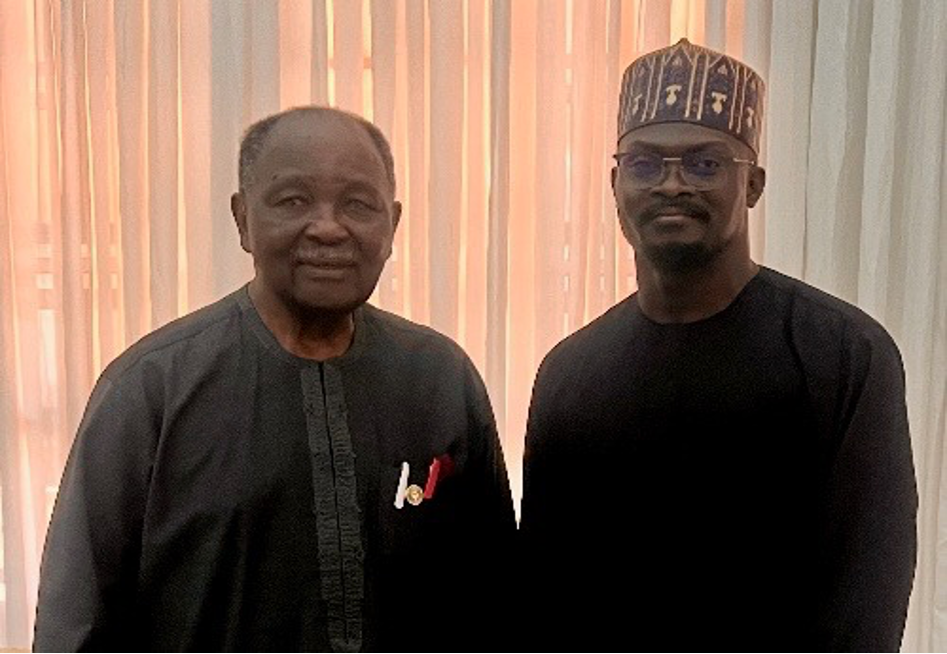
UNESCO REF President Received by General Yakubu Gowon, GCFR

Exclusive | Behind Closed Doors: UNESCO REF President in Private Audience with Former Head of State General Yakubu Gowon, GCFR

The DispatchUNESCO REF Media Centre · EISSN 3156-55575 min read

UNESCO REF Media Centre | Exclusive Report

Away from the cameras, the founder of the National Youth Service Corps and the President of UNESCO REF considered how the institution General Gowon created more than half a century ago could be called to a new national purpose. The full account appears in the February 2027 edition of the UNESCO REF Exclusive Reports.

Exclusive. This is a preview. The complete account of the audience is published in the February 2027 edition of the UNESCO REF Exclusive Reports, available to accredited readers.

ABUJA, Nigeria, 10 October 2026. Some of the most consequential conversations in public life take place in rooms without cameras. In one such room, the President of the Read and Earn Federation for UNESCO (UNESCO REF), Prince Abdulsalami Ladigbolu-Oranmiyan, was received in private audience by General Yakubu Gowon, GCFR, Nigeria’s Head of State from 1966 to 1975 and the founder of the National Youth Service Corps (NYSC). Their conversation turned on a single question: how the institution General Gowon created to bind a nation together might now be called to equip a new generation to feed it.

Global alignmentAlignement mondialThe global commitments this story advances. Open to see how.
  • SDG2

    SDG 2, Zero Hunger

    ProvisionTarget 2.3: double agricultural productivity and the incomes of small-scale producers

    How the dialogue respondsPositions corps members as agents of agricultural transformation

  • SDG8

    SDG 8, Decent Work

    ProvisionTarget 8.6: reduce youth not in employment, education or training

    How the dialogue respondsSkills and enterprise pathways during and after service

  • SDG4

    SDG 4, Quality Education

    ProvisionTarget 4.4: relevant skills for employment and entrepreneurship

    How the dialogue respondsLinks national service to skills development

  • SDG16

    SDG 16, Peace, Justice and Strong Institutions

    ProvisionStrong, inclusive institutions and national cohesion

    How the dialogue respondsBuilds on the NYSC’s founding mission of national unity

  • SDG17

    SDG 17, Partnerships

    ProvisionTarget 17.17: public and civil society partnerships

    How the dialogue respondsEngagement between UNESCO REF and the founder of a national institution

  • AU

    African Union Agenda 2063

    ProvisionAspiration 6: development driven by the potential of African youth

    How the dialogue respondsYouth service as a vehicle for national development

  • AYC

    African Youth Charter

    ProvisionYouth participation, education and employment

    How the dialogue respondsYoung graduates at the centre of national service and enterprise

The engagement is the subject of “Behind Closed Doors”, the February 2027 edition of the UNESCO REF Exclusive Reports, the series published by the UNESCO REF Editorial Board as the primary diplomatic record of the Federation. This preview sets out the context and the themes of the audience. The complete account is reserved for the edition itself.

A statesman and his institution

Un homme d’État et son institution

Few Nigerians have shaped the institutions of the Federation as lastingly as General Gowon. In 1973, in the aftermath of the civil war, his administration established the National Youth Service Corps, sending young graduates to serve in States other than their own so that a generation might come to know, and belong to, the whole country.

More than five decades later the NYSC endures, present in every State of the Federation and in the Federal Capital Territory, and still a rite of passage for young graduates. In December 2024, in recognition of his contribution to national unity, the Federal Government renamed the University of Abuja in his honour.

The question on the table

La question posée

The audience took up a question that has occupied UNESCO REF in its work with young Nigerians: whether the reach, discipline and national presence of the NYSC can be harnessed for a further national purpose, beyond the civic duty for which it was founded.

UNESCO REF regards each year’s cohort of corps members as a strategic national asset: educated, mobile and present in every community. Directed towards agriculture, enterprise and service delivery, such a cohort could become one of the most effective means available to the nation for advancing food security and the Sustainable Development Goals at the grassroots.

From civic duty to strategic instrument

Du devoir civique à l’instrument stratégique

The conversation drew on work already under way. UNESCO REF engages young graduates through the Young Women in Agriculture (YWA) programme, the GET EDUCATED pathway for youth aged 18 to 35, and the modular water purification pilot inaugurated at the NYSC Federal Capital Territory site under SIP-ALPHA Category 11. Each offers an early indication of what the scheme’s national infrastructure can carry.

To consult the founder of the NYSC on its future was a gesture of respect as much as of strategy. It placed UNESCO REF’s ambitions for young Nigerians within the lineage of an institution built on the conviction that service to the nation is itself a form of education.

Inside the Exclusive Report

Au cœur du Rapport exclusif

The February 2027 edition gives the full account of the audience, prepared under the Editorial Board’s standards for the series. In line with those standards:

  • Sourcing. Each account is drawn from a principal or official present at the engagement.
  • Verification. Names, offices, places and dates are checked against the institutional record.
  • Review. The complete text is reviewed in full by the UNESCO REF Editorial Board before release.
  • Distribution. Complete accounts are released to accredited readers with each edition.

Researchers, institutions and members of the press may request access from the Editorial Board at [email protected].

Also in the Exclusive Reports

Également dans les Rapports exclusifs

“Behind Closed Doors” sits within a register of editions documenting the Federation’s engagements with Nigeria’s leaders and traditional institutions, among them:

  • The Signature Edition, December 2026: the advocacy visit of Dr Mrs Elizabeth Egbetokun to the Olubadan of Ibadan on Young Women in Agriculture.
  • January 2027: Prince Abdulsalami Ladigbolu-Oranmiyan on the past, present and future of a national institution.
  • March 2027: the private conversations behind the UNESCO REF and POWA 12 Million YWA National Launch.
  • May 2027: “Seeds of Policy”, a private audience with Chief Audu Ogbeh on food security and youth development.

How to cite

Comment citer

UNESCO REF Editorial Board, “Behind Closed Doors”, Exclusive Reports, UNESCO REF Media Centre, February 2027, EISSN 3156-5557, Abuja, Federal Republic of Nigeria.

Read the Exclusive Report. Visit the UNESCO REF Exclusive Reports for the full account and the complete register of editions: unesco-ref.org/execlusive-report.

ENDS

Notes to editorsNotes aux rédactions

About the Exclusive Reports. The Exclusive Reports are the primary diplomatic record of the Read and Earn Federation for UNESCO (UNESCO REF), published two to four times a year by the UNESCO REF Editorial Board through the UNESCO REF Media Centre (EISSN 3156-5557).

About the NYSC. The National Youth Service Corps was established in 1973 under the administration of General Yakubu Gowon, GCFR to promote national unity and integration through a one-year national service by Nigerian graduates.

About UNESCO REF. The Read and Earn Federation for UNESCO (UNESCO REF) works to strengthen human and institutional capacity across Nigeria and Africa through education, research and professional development, in alignment with the 2030 Agenda for Sustainable Development.

Media enquiries. UNESCO REF Media Centre, [email protected]

SourcesSources

UNESCO REF Working Visit to National Library of Nigeria

UNESCO REF President Concludes Strategic Working Visit to National Library of Nigeria

The DispatchUNESCO REF Media Centre · EISSN 3156-55575 min read

UNESCO REF Media Centre | News

UNESCO REF and the National Library of Nigeria finalise the framework for Anchored in Evidence: Digital Voices for a Stable Society, a fully sponsored programme training 600 young bloggers, content creators and online journalists to anchor public communication in verified fact.

ABUJA, Nigeria, 28 September 2026. The President of the Read and Earn Federation for UNESCO (UNESCO REF), Prince Abdulsalami Ladigbolu-Oranmiyan, today concluded a strategic working visit to the National Library of Nigeria in Abuja. The visit was hosted by the National Librarian and Chief Executive Officer of the National Library of Nigeria, Prof. Chinwe Veronica Anunobi.

Global alignmentAlignement mondialThe global commitments this story advances. Open to see how.
  • SDG16

    SDG 16, Peace, Justice and Strong Institutions (primary)

    ProvisionTarget 16.10: public access to information and protection of fundamental freedoms

    How Anchored in Evidence respondsConnects the public conversation to a national repository of verified information

  • SDG4

    SDG 4, Quality Education

    ProvisionTarget 4.4: youth with relevant skills, including ICT skills; Target 4.7: knowledge for global citizenship

    How Anchored in Evidence respondsFully sponsored professional training in evidence-based digital communication

  • SDG8

    SDG 8, Decent Work

    ProvisionTarget 8.6: reduce the share of youth not in employment, education or training

    How Anchored in Evidence respondsBuilds professional standards in the creator and digital media economy

  • SDG17

    SDG 17, Partnerships for the Goals

    ProvisionTarget 17.17: effective public and civil society partnerships

    How Anchored in Evidence respondsA partnership between a federal institution and UNESCO REF, at no cost to Government

  • UNGP

    United Nations Global Principles for Information Integrity, 2024

    ProvisionTrust, resilience and public empowerment in the information ecosystem

    How Anchored in Evidence respondsTrains the producers of public information to verify before they publish

  • UNESCO

    UNESCO Guidelines for the Governance of Digital Platforms, 2023

    ProvisionMedia and information literacy as a pillar of a healthy information environment

    How Anchored in Evidence respondsApplies media and information literacy to professional content creation

  • UNESCO

    IFLA-UNESCO Public Library Manifesto, 2022

    ProvisionLibraries as gateways to knowledge and to reliable information

    How Anchored in Evidence respondsPositions the National Library as the primary source for digital voices

  • AU

    African Union Digital Transformation Strategy for Africa, 2020 to 2030

    ProvisionDigital skills and a trusted digital environment

    How Anchored in Evidence respondsBuilds digital capacity among young Africans

  • AA

    Agenda 2063, Aspiration 6

    ProvisionDevelopment driven by the potential of African people, especially youth

    How Anchored in Evidence respondsEngages 600 young Nigerians across all six geopolitical zones

  • NG

    National Library of Nigeria Act

    ProvisionMandate to collect, preserve and make available Nigeria’s recorded knowledge

    How Anchored in Evidence respondsTurns that mandate into a daily reference point for the digital public

The working session finalised the modalities of a strategic partnership between the two institutions under Anchored in Evidence: Digital Voices for a Stable Society, a professional programme that places the nation’s foremost repository of knowledge at the centre of Nigeria’s digital conversation.

The programme

Le programme

Anchored in Evidence is a three-week, fully online professional training programme, fully sponsored by UNESCO REF under its Educational Financial Facility Scheme (EFFS). Its pilot cohort will comprise 600 young Nigerians drawn from all six geopolitical zones of the Federation.

The programme equips bloggers, digital content creators and online journalists with three core capacities:

  • Evidence-based digital communication. The discipline of verifying claims before publishing them.
  • Responsible national imaging. Communicating about Nigeria accurately, fairly and with a sense of public responsibility.
  • The Library as primary source. The habit of consulting the National Library of Nigeria for empirical fact, rather than relying on unverified social media trends.

The working session

La séance de travail

Discussions between Prince Ladigbolu-Oranmiyan and Prof. Anunobi covered four areas:

  1. The partnership framework between UNESCO REF and the National Library of Nigeria.
  2. Modalities for the identification, mobilisation and enrolment of participants.
  3. The pilot region strategy for the initial cohort of 600 trainees.
  4. The media awareness plan to secure the visibility and credibility of the programme launch.

Prince Ladigbolu-Oranmiyan emphasised that the programme requires no financial commitment from the National Library of Nigeria, as it is fully funded by UNESCO REF. He noted that the collaboration will equip young Nigerians with critical digital skills while reinforcing the Library’s role as a trusted custodian of knowledge and fact in the digital age.

Prof. Anunobi welcomed the partnership, highlighting its alignment with the Library’s ongoing digital transformation agenda and with its mission to serve as Nigeria’s foremost repository of credible information.

The visit concluded with mutual agreement on the importance of institutional synergy in addressing misinformation and in promoting a culture of responsible communication.

Why it matters

Les enjeux

The programme responds to a challenge that is now recognised as global. The World Economic Forum’s Global Risks Report 2025 ranked misinformation and disinformation as the most severe global risk over the next two years, for the second consecutive year.

Those who shape the digital conversation are often the least equipped to verify it. A 2024 UNESCO survey of digital content creators, published as Behind the Screens, found that 62 per cent do not systematically verify information before sharing it. The same study found strong demand for training: more than 9,000 creators enrolled in the free course UNESCO launched in response.

Anchored in Evidence answers that demand in Nigeria, one of the youngest populations in the world, by pairing digital creators with an institution whose statutory mandate is to collect, preserve and make available the nation’s recorded knowledge.

Next steps

Prochaines étapes

With the modalities agreed, the two institutions will proceed to the identification, mobilisation and enrolment of the pilot cohort and to the media awareness campaign for the launch. The pilot cohort of 600 participants will serve as the model for future expansion, demonstrating the contribution of evidence-based digital voices to national stability.

ENDS

Notes to editorsNotes aux rédactions

About Anchored in Evidence. Anchored in Evidence: Digital Voices for a Stable Society is a three-week professional training programme for bloggers, digital content creators and online journalists, delivered online in partnership with the National Library of Nigeria and fully sponsored by UNESCO REF under its Educational Financial Facility Scheme (EFFS).

About the National Library of Nigeria. The National Library of Nigeria is the federal institution charged with collecting, preserving and making available the recorded knowledge of the nation.

About UNESCO REF. The Read and Earn Federation for UNESCO (UNESCO REF) works to strengthen human and institutional capacity across Nigeria and Africa through education, research and professional development, in alignment with the 2030 Agenda for Sustainable Development.

Media enquiries. UNESCO REF Media Centre, [email protected]

SourcesSources

NAOWA President Appointed Strategic Ambassador for UNESCO REF SIP‑ALPHA

NAOWA President Accepts Appointment as Strategic Ambassador for UNESCO REF SIP-ALPHA

The DispatchUNESCO REF Media Centre · EISSN 3156-55577 min read

UNESCO REF Media Centre | Institutional Partnership

Dr Safiyyah Hassan Shaibu, 25th President of the Nigerian Army Officers’ Wives Association (NAOWA), brings six decades of grassroots presence into the UNESCO REF Strategic Intervention Programmes for Accelerated Learning and Productive Human Asset (SIP-ALPHA), aligned with the 2030 Agenda and the African Union’s Agenda 2063.

ABUJA, Nigeria, 14 August 2026. The Read and Earn Federation for UNESCO (UNESCO REF) announces that Dr Safiyyah Hassan Shaibu, 25th President of the Nigerian Army Officers’ Wives Association (NAOWA) and wife of the Chief of Army Staff, Lieutenant General Waidi Shaibu, has formally accepted her nomination as Strategic Ambassador for the UNESCO REF Strategic Intervention Programmes for Accelerated Learning and Productive Human Asset (SIP-ALPHA) in Nigeria.

Global alignmentAlignement mondialThe global commitments this story advances. Open to see how.
  • SDG1

    SDG 1, No Poverty

    ProvisionTarget 1.4: equal rights to economic resources for the poor and vulnerable

    How the appointment respondsExtends SIP-ALPHA into military communities and garrison towns

  • SDG2

    SDG 2, Zero Hunger

    ProvisionTarget 2.3: double the productivity and incomes of small-scale food producers, in particular women

    How the appointment respondsLeads the Young Women in Agriculture campaign for 12 million women

  • SDG4

    SDG 4, Quality Education

    ProvisionTargets 4.1 and 4.4: quality schooling and relevant skills for youth

    How the appointment respondsBuilds on NAOWA schools, teacher training and youth skills programmes

  • SDG5

    SDG 5, Gender Equality

    ProvisionTarget 5.5: women’s full participation and leadership

    How the appointment respondsPlaces women’s leadership at the head of national programme delivery

  • SDG8

    SDG 8, Decent Work

    ProvisionTarget 8.6: reduce youth not in employment, education or training

    How the appointment respondsYouth advancement and skills acquisition across the Federation

  • SDG17

    SDG 17, Partnerships

    ProvisionTarget 17.17: effective public and civil society partnerships

    How the appointment respondsA covenant between UNESCO REF and NAOWA

  • UNSC

    UN Security Council Resolution 1325

    ProvisionWomen, Peace and Security: women’s role in peacebuilding and community resilience

    How the appointment respondsMobilises the wives and families of the military as agents of development and stability

  • AU

    African Union Agenda 2063

    ProvisionAspiration 6: development driven by the potential of African women and youth

    How the appointment respondsCited by Dr Shaibu in her letter of acceptance

  • MP

    Maputo Protocol

    ProvisionArticle 15: right to food security; Article 13: economic and social welfare rights

    How the appointment respondsWomen-led food security and economic empowerment

  • NG

    Renewed Hope Agenda, Federal Government of Nigeria

    ProvisionFood security, human capital and inclusive growth

    How the appointment respondsDelivery through all 774 local government areas

The acceptance was conveyed by official correspondence dated 28 July 2026, under NAOWA reference NAOWA/NAT/G1/300/63. It is a considered institutional decision, taken, in Dr Shaibu’s own words, after having “carefully considered the objectives, scope and strategic vision of the SIP-ALPHA Initiative.”

The woman behind the mandate

La femme derrière le mandat

At her first Executive Meeting as 25th President of NAOWA, held in Abuja in February 2026, Dr Shaibu set out the principle that has guided her tenure: “When a woman is empowered, a family is strengthened; when families are stable, the military community is stronger.” She reminded members that the association was built on service and sacrifice, and that its decisions would affect thousands of families across formations and commands nationwide.

Her record since then reflects that conviction. Under her leadership, NAOWA has inaugurated new schools in Zaria, Badagry and at Bola Ahmed Tinubu Barracks in Abuja, begun construction of primary and secondary schools at Bola Ahmed Tinubu Barracks, and organised the 2026 NAOWA 21st Century Teacher Transformation Training. Its Youth Empowerment Project has trained 394 young people in ICT and fashion design, and more than 15,000 relief packages have reached members, widows and places of worship.

The institution she leads

L’institution qu’elle dirige

NAOWA began in the 1950s as the Army Wives Association and took its present name in 1963. For more than six decades it has operated community health centres, schools, day-care centres, skills acquisition and vocational centres and the Girl Child Education Programme, across a network that follows the Nigerian Army into garrison towns throughout the Federation.

It reaches communities where institutional presence is often thin, and it does so as a non-governmental organisation that receives no subvention from federal or state government. Scholars of Nigerian civil society have described it as the most powerful women’s organisation in the country.

The home front and the national mandate

Le front intérieur et le mandat national

Lieutenant General Waidi Shaibu was appointed Chief of Army Staff by President Bola Ahmed Tinubu on 30 October 2025. A field commander whose career spans counter-insurgency operations in the North East, he received the Service and Sacrifice Award at the 2026 Armed Forces Celebration and Remembrance Day ceremony at the State House, Abuja.

Behind every theatre of operations is a home front, and behind every soldier is a family sustained by sacrifice. Dr Shaibu has lived that reality. Her decision to commit NAOWA’s network to a development framework aligned with the United Nations agenda carries the lived experience of military families across the Federation.

A convergence of two institutions

La convergence de deux institutions

The road to the appointment began on 18 May 2026, when the President of UNESCO REF, Prince Abdulsalami Ladigbolu-Oranmiyan, held a high-level consultative engagement with Dr Shaibu at NAOWA headquarters in Abuja. The meeting examined institutional pathways for advancing the United Nations Sustainable Development Goals in Nigeria through the SIP-ALPHA framework.

Two institutions met. One brought seventeen years of multi-sectoral development architecture, through which, according to UNESCO REF, 1.2 million Nigerian youths have been mobilised. The other brought six decades of grassroots presence and community trust earned through consistent service. Each recognised in the other what neither possessed alone. On 28 July 2026, the conversation became a formal institutional covenant.

In her own words

Dans ses propres mots

“Having carefully considered the objectives, scope and strategic vision of the SIP-ALPHA Initiative, particularly its alignment with the United Nations Sustainable Development Goals and the African Union Agenda 2063, I further recognise its strong emphasis on sustainable development, food security, education, youth advancement, health resilience and community empowerment. It is therefore with great pleasure that I formally accept this nomination and appointment as Strategic Ambassador for SIP-ALPHA.

I look forward to collaborating closely with UNESCO REF, development partners and other relevant stakeholders in achieving the objectives of SIP-ALPHA for the benefit of our nation and future generations.”

Dr Safiyyah Hassan Shaibu, 25th President, Nigerian Army Officers’ Wives Association, Abuja, 28 July 2026

The UNESCO REF President responds

La réponse du Président de l’UNESCO REF

“Dr Safiyyah Hassan Shaibu’s formal acceptance of this nomination is one of the most consequential institutional developments in UNESCO REF’s seventeen-year history. NAOWA does not lend its name; it lends its capacity, its networks and its communities. As Strategic Ambassador for SIP-ALPHA, she brings to our framework the institutional discipline of an organisation forged in service, the grassroots reach of a network that no programme map can fully capture, and the moral authority of women’s leadership at its most credible.

Nigeria’s development cannot be delivered from Abuja alone. It must be assembled, community by community, in every barracks, every garrison town and every local government area of this Federation. That assembly now has a new and formidable architect.”

Prince Abdulsalami Ladigbolu-Oranmiyan, President, UNESCO REF

What the appointment means

La portée de la nomination

SIP-ALPHA is UNESCO REF’s most ambitious institutional architecture: a governance innovation that moves development delivery from siloed programmes to an integrated, systems-based approach across education, agriculture, health resilience, youth empowerment and sustainable community development.

As Strategic Ambassador, Dr Shaibu brings NAOWA’s national footprint into SIP-ALPHA’s implementation architecture, with the aim of accelerating delivery across all 774 local government areas of the Federation. Her mandate already extends to two flagship programmes:

  • Young Women in Agriculture (YWA). A national mobilisation campaign targeting 12 million young women in agriculture (read more). Food security is a pressing national priority: the Cadre Harmonisé analysis projected that about 34.7 million Nigerians would face food insecurity in the June to August 2026 lean season.
  • The VOICE Initiative. UNESCO REF’s professional advancement programme for women with disabilities, launched on 1 October 2026 with the Osun State Government as first pilot state. Dr Shaibu will lead its national upscaling to 120,000 women across the six geopolitical zones and its extension across Africa (read more).

The contribution to the Sustainable Development Goals is direct. The deeper contribution is the trust of a nation’s military families, now extended into the architecture of its development future.

ENDS

Notes to editorsNotes aux rédactions

About SIP-ALPHA. The Strategic Intervention Programmes for Accelerated Learning and Productive Human Asset (SIP-ALPHA) is UNESCO REF’s integrated development framework, delivering education, agriculture, health resilience, youth empowerment and community development programmes in alignment with the 2030 Agenda for Sustainable Development and the African Union’s Agenda 2063.

About NAOWA. The Nigerian Army Officers’ Wives Association is a non-profit, non-governmental organisation founded in the 1950s and constituted under its present name in 1963. It operates schools, community health centres, skills acquisition centres and welfare programmes for military families and host communities across Nigeria.

About UNESCO REF. The Read and Earn Federation for UNESCO (UNESCO REF) works to strengthen human and institutional capacity across Nigeria and Africa through education, research and professional development.

Media enquiries. UNESCO REF Media Centre, [email protected]

Ref: UNESCO REF/MEDIA/2026/NAOWA SIP ALPHA AMB 01

SourcesSources

The Needful Now: Nigeria Police and Youth Special Report

The Needful Now: How Nigeria Built a Covenant Between Its Badge and Its Youth

The DispatchUNESCO REF Media Centre · EISSN 3156-55578 min read

UNESCO REF Media Centre | Special Report | Lead Investigation

From the streets of August 2024 to the halls of Louis Edet House: an investigation into how a country under strain chose dialogue over confrontation, and how the UNESCO REF Nigeria Police Youths Summit turned public anger into a structured partnership between Nigeria’s security institutions and its young citizens.

Special Report. This is a summary of the Lead Investigation. Read the complete report, Annex A of the UNESCO REF Special Reports.

ABUJA, Nigeria. In the space of fourteen months, Nigeria passed from economic shock to street protest to something few had predicted: a national conversation between its police and its young people. This report examines the civic demands that were raised, the institutional responses that followed and the accountability framework now required to honour what was promised. It traces the sequence of events that culminated on 12 August 2024, International Youth Day, in the UNESCO REF Nigeria Police Youths Summit.

Global alignmentAlignement mondialThe global commitments this story advances. Open to see how.
  • SDG16

    SDG 16, Peace, Justice and Strong Institutions (primary)

    ProvisionTarget 16.6: accountable institutions; Target 16.7: inclusive, participatory decision-making

    How the Summit respondsYouth advisory councils, independent oversight and public reporting

  • UNSC

    UN Security Council Resolution 2250 (2015)

    ProvisionYouth, Peace and Security: participation, protection, prevention, partnerships

    How the Summit respondsYoung people treated as partners in national security

  • UNSC

    UN Security Council Resolution 2419 (2018)

    ProvisionRole of youth in negotiating and implementing peace

    How the Summit respondsYouth voice built into a standing dialogue mechanism

  • SDG8

    SDG 8, Decent Work

    ProvisionTarget 8.6: youth not in employment, education or training

    How the Summit respondsEconomic empowerment treated as a security strategy

  • SDG17

    SDG 17, Partnerships

    ProvisionTarget 17.17: public and civil society partnerships

    How the Summit respondsA partnership between the Nigeria Police Force and UNESCO REF

  • AYC

    African Youth Charter

    ProvisionYouth participation in decision-making

    How the Summit respondsStructured dialogue between youth and the Force

  • AU

    African Union Agenda 2063

    ProvisionAspiration 6: development driven by the potential of African youth

    How the Summit respondsYouth at the centre of the national security conversation

  • IYD

    United Nations International Youth Day

    ProvisionAnnual observance on 12 August

    How the Summit respondsSummit convened on International Youth Day 2024

“The UNESCO REF Nigeria Police Youths Summit is not merely an event, but a national platform for reconciliation and partnership, a covenant between the Police and our youth to build trust, respect, and shared responsibility.”

Prince Abdulsalami Ladigbolu-Oranmiyan, President, UNESCO REF, Louis Edet House, Abuja

Three words at Eagle Square

Trois mots sur Eagle Square

The story begins on the morning of 29 May 2023, at Eagle Square, Abuja. In his inaugural address, President Bola Ahmed Tinubu announced the end of the petrol subsidy in three words: “Subsidy is gone.” Within days, pump prices multiplied, and the subsequent floating of the naira added a currency shock to a fuel shock.

For millions of households, the effect was immediate: higher transport fares, higher food prices and shrinking incomes. Young Nigerians, facing rising costs for data, transport and starting a business, felt the pressure most acutely.

The spiral

La spirale

Over the months that followed, inflation climbed above 33 per cent, with food prices rising faster still. The Special Report records fourteen months of sustained pressure on households, in which the frustrations of the young accumulated without a channel through which they could be heard by the institutions of the State.

An answer in the fields

Une réponse dans les champs

Even before the streets erupted, UNESCO REF was advancing a structural response. In May and June 2024, Prince Abdulsalami Ladigbolu-Oranmiyan and Dr Mrs Elizabeth Egbetokun, National Advocate of the Young Women in Agriculture programme and National President of the Police Officers’ Wives Association, undertook an advocacy tour of the South West, presenting the agricultural value chain as a durable path to livelihoods for young Nigerians.

“The agricultural value chain is not a fallback. It is the structural answer to a structural problem.”

Prince Abdulsalami Ladigbolu-Oranmiyan, June 2024

Ten days in August

Dix jours d’août

On 1 August 2024, young Nigerians took to the streets under the banner #EndBadGovernance. For ten days, protests unfolded in cities across the Federation, from Lagos and Abuja to Kano, Kaduna, Port Harcourt, Enugu, Ibadan, Owerri and Benin City. The Special Report records loss of life, citing Amnesty International, and heavy economic losses at the height of the unrest.

The Honourable Minister of Police Affairs, Senator Ibrahim Gaidam, acknowledged that the protests carried genuine grievances, even as some sought to exploit them. The question before the nation was whether those grievances would be met with force alone, or with a hearing.

A conversation at Louis Edet House

Une conversation à Louis Edet House

The answer began with an unscheduled conversation. While the protests were still under way, the President of UNESCO REF paid a working visit to Louis Edet House, the headquarters of the Nigeria Police Force on Shehu Shagari Way, Abuja, where he met the Force Public Relations Officer, Muyiwa Adejobi. From that meeting came an agreement to convene a national summit of youth and police on 12 August 2024, International Youth Day.

“We are not here today because of the protests of August.”

Muyiwa Adejobi, Force Public Relations Officer

The remark captured an important truth: the protests had made the need visible, but the need itself was long-standing. The full substance of the Louis Edet House conversation has not been published.

The Summit

Le Sommet

ElementDetail
Date12 August 2024, United Nations International Youth Day
VenueNigeria Police Force Resource Centre, Abuja
ConvenorsUNESCO REF and the Nigeria Police Force
DelegatesMore than 400, from all 36 States and the Federal Capital Territory
Principal participantsInspector-General of Police, Dr Kayode Adeolu Egbetokun, PhD, NPM; Dr Jamila Bio Ibrahim, Minister of Youth Development, representing President Tinubu; Senator Ibrahim Gaidam, Minister of Police Affairs; Professor Olanrewaju Fagbohun, SAN, guest keynote
FormatAddresses, an open dialogue with the Inspector-General and thematic breakout sessions

The gathering opened with performances by members of the National Youth Service Corps and continued through a full day of engagement.

On the record

Les déclarations officielles

“The Nigeria Police Force is fully committed to protecting the rights and welfare of our youths.”

Dr Kayode Adeolu Egbetokun, Inspector-General of Police

“There is a trust gap between the security agencies and the youth.”

Senator Ibrahim Gaidam, Minister of Police Affairs

“Trust is not announced. It is demonstrated. Over time.”

Professor Olanrewaju Fagbohun, SAN

“This summit is not a courtesy gathering.”

Dr Jamila Bio Ibrahim, Minister of Youth Development

Delivering the message of President Tinubu, Dr Ibrahim set out commitments under the youth pillar of the Renewed Hope Agenda: NYSC enterprise funding of up to N10 million per beneficiary, support for 5,000 graduate ventures, the National Youth Skills Programme, a commitment to 30 per cent youth inclusion and a planned Young Leaders Institute.

The dialogue

Le dialogue

The most consequential hour of the day was unscripted. Delegates questioned the Inspector-General directly. A delegate from Lagos asked about the policing of protests; the Inspector-General replied that the role of the police is to manage protests, not to prevent them. A delegate from Abuja raised misconduct; he acknowledged it and said his administration was removing corrupt officers. Halimat Chagua, a delegate from the North East, asked about the security of farmers; he pointed to dedicated farm patrols during planting and harvest seasons.

Not every delegate left satisfied, and the Special Report says so. But the exchange itself, conducted in public between the head of the Force and the young people it serves, marked a departure. Breakout sessions on crime prevention, conflict resolution, social media engagement and community policing turned the exchange into proposals.

The Abuja Communique and the accountability framework

Le Communiqué d’Abuja et le cadre de redevabilité

The Summit closed with Abuja Communique No. 01 and five recommendations. The Special Report sets out the framework against which their implementation should be judged:

RecommendationWhat implementation looks like
1. Youth advisory councilsCouncils at federal, State and local levels with real influence on security policy, beginning with State pilots
2. Secure intelligence networksTechnology-enabled channels for community intelligence, with anonymity, encryption and due process
3. Trust through transparencyIndependent oversight, accessible complaint procedures and public reporting
4. Economic empowerment as securitySkills, jobs and enterprise support in high-risk communities
5. Continuous dialogueQuarterly national convenings and regular regional dialogues

“Security in Nigeria is not achieved by force alone.”

Mallam Nuhu Ribadu, National Security Adviser

“Every generation of Nigerian youth has been asked to wait.”

Ibrahim Danladi, delegate, Borno State

Why it matters

Les enjeux

The relationship between young people and the institutions charged with their security is a question of national stability. A 2023 study by the United Nations Development Programme found that about a quarter of voluntary recruits to violent extremist groups in sub-Saharan Africa cited job opportunities as their main reason for joining. Trust, inclusion and economic opportunity for the young are therefore central to security policy, not peripheral to it.

That is the covenant the title of this report describes: an undertaking by the badge to listen and to answer, and by the youth to engage and to build. Its value will be measured not by the day on which it was made, but by the years in which it is kept.

Read the full investigation

Lire l’enquête complète

This summary draws on the Lead Investigation published by the UNESCO REF Media Centre. Readers are warmly invited to read the complete account, with its chronology, data and full record of the dialogue:

Read the Special Report. The complete investigation is available at the UNESCO REF Media Centre: unesco-ref.org/special-reports.

ENDS

Notes to editorsNotes aux rédactions

About the Special Reports. The UNESCO REF Special Reports are in-depth investigations published by the UNESCO REF Media Centre. “The Needful Now” is Annex A of the series, in the National Security strand of the Lead Investigation Series. Coordination: Ibrahim Danladi. Media and Outreach: Ms Bupwatda.

About UNESCO REF. The Read and Earn Federation for UNESCO (UNESCO REF) works to strengthen human and institutional capacity across Nigeria and Africa through education, research and professional development, in alignment with the 2030 Agenda for Sustainable Development.

Media enquiries. UNESCO REF Media Centre, [email protected]

SourcesSources

UNESCO REF Pilots Modular Water Purification in Nigeria

UNESCO REF, Nigerian Diaspora and US Technology Partner Pilot Modular Water Purification System under SIP-ALPHA Category 11

The DispatchUNESCO REF Media Centre · EISSN 3156-55575 min read

UNESCO REF Media Centre | SIP-ALPHA Category 11

A solar-hybrid, modular purification system inaugurated at the NYSC Federal Capital Territory site is the first validation site of a national framework for safe drinking water, local skills and Nigerian-owned infrastructure.

ABUJA, Nigeria, 6 July 2026. In a development that places Nigerian ingenuity and diaspora expertise at the service of public health, the Read and Earn Federation for UNESCO (UNESCO REF) has inaugurated a modular water purification system developed in partnership with Nigerian professionals in the diaspora and a technology company based in the United States. Implemented under Category 11 of the UNESCO REF Strategic Intervention Programmes for Accelerated Learning and Productive Human Asset (SIP-ALPHA), the system is now undergoing operational and public health validation as the first site of a national framework for safe drinking water.

Global alignmentAlignement mondialThe global commitments this story advances. Open to see how.
  • SDG6

    SDG 6, Clean Water and Sanitation (primary)

    ProvisionTarget 6.1: universal and equitable access to safe and affordable drinking water

    How the pilot respondsModular purification at community water points, schools and health centres

  • SDG3

    SDG 3, Good Health and Well-being

    ProvisionTarget 3.3: combat water-borne diseases; Target 3.9: reduce illness from water contamination

    How the pilot respondsTargets cholera, typhoid, hepatitis A and diarrhoeal disease

  • SDG9

    SDG 9, Industry, Innovation and Infrastructure

    ProvisionTarget 9.1: resilient infrastructure; Target 9.5: technological capability

    How the pilot respondsLocally maintained, solar-hybrid infrastructure

  • SDG8

    SDG 8, Decent Work

    ProvisionTarget 8.6: youth employment and training

    How the pilot respondsApprenticeships and local enterprise in assembly and spare parts

  • SDG7

    SDG 7, Affordable and Clean Energy

    ProvisionTarget 7.2: increase the share of renewable energy

    How the pilot respondsSolar-hybrid power

  • SDG17

    SDG 17, Partnerships

    ProvisionTarget 17.6: technology cooperation; Target 17.17: partnerships

    How the pilot respondsDiaspora, United States partner, government and evaluators in one governance structure

  • AU

    African Union Agenda 2063

    ProvisionAspiration 1: a prosperous Africa with access to safe water

    How the pilot respondsNigerian-owned water infrastructure

The initiative rests on a conviction that has guided UNESCO REF since its establishment: that durable development is built, not donated. Rather than importing finished solutions, the programme combines international technology with Nigerian skills, Nigerian supply chains and Nigerian ownership, so that every installation strengthens national capability as well as public health.

A public health imperative

Un impératif de santé publique

Access to safe drinking water remains one of the defining development challenges of our time. According to the World Health Organization and UNICEF, one in four people worldwide, some 2.1 billion, still lacked safely managed drinking water in 2024, and 106 million drew their water directly from untreated surface sources. The burden falls most heavily on children, women and the poorest communities, for whom waterborne disease remains a leading and wholly preventable cause of illness and death.

For Nigeria, the stakes are both human and economic. Outbreaks of cholera, typhoid and diarrhoeal disease strain health systems, keep children out of school and erode household incomes. A reliable, locally maintained supply of safe water is therefore not a single-sector intervention but a foundation for progress in health, education and productivity alike.

Why the National Youth Service Corps

Pourquoi le Service national de la jeunesse

The pilot is sited at the National Youth Service Corps (NYSC) Federal Capital Territory site. The choice is deliberate. With a presence in all 36 States and the Federal Capital Territory, the NYSC offers a ready national architecture through which a validated model can be replicated at scale, while its camps bring together young graduates who can themselves become ambassadors of safe water practice in the communities they serve.

Engineered for Nigerian conditions

Conçu pour les réalités nigérianes

The system has been designed to perform reliably where grid power is intermittent and specialist support is distant. Its treatment chain and operating model are as follows:

  • Multi-stage treatment. Sediment and carbon pre-filtration, followed by ultrafiltration or reverse osmosis, UV-C disinfection and covered storage.
  • Energy resilience. Solar-hybrid power, reducing operating cost and dependence on the national grid.
  • Remote monitoring. Continuous oversight of performance and water quality.
  • Local maintainability. Locally sourced components, modular cartridges and field-repair protocols that reduce reliance on external suppliers.
  • Deployment settings. Community water points, NYSC orientation camps, schools and primary health centres.

Evidence, skills and accountability

Données probantes, compétences et redevabilité

The programme is committed to measurable outcomes. Its public health objectives include reductions in cholera, typhoid, hepatitis A and diarrhoeal disease, to be assessed through independent midline and endline evaluations. Results will be reported against recognised national and international standards before any claim of impact is made.

Equally central is the transfer of skills. A training curriculum developed with Nigerian technical institutes, supported by apprenticeships and local enterprise in assembly and spare parts, is intended to create a skilled workforce and a domestic supply chain that outlive the pilot itself.

Governance has been structured for transparency. A National Programme Office will operate under the oversight of an International Steering Committee comprising UNESCO REF, representatives of the Nigerian diaspora, the United States technology partner, relevant federal ministries and independent evaluators. Non-sensitive programme data will be published on public dashboards.

Voices of the partnership

Les voix du partenariat

“We are not delivering aid. We are building sovereign infrastructure.”

Prince Abdulsalami Ladigbolu-Oranmiyan, President, UNESCO REF

“It must build capability, never dependency.”

Jonathan David, Chief Executive Officer, United States technology partner

Taken together, the two statements capture the philosophy of the programme: international partnership in service of national self-reliance.

An open invitation

Une invitation ouverte

UNESCO REF invites federal and state ministries, technical institutes, United Nations agencies, development finance institutions, researchers, the private sector and civil society to join the national framework as host sites, curriculum partners, data partners, financiers or independent validators. Each additional partner extends the reach of safe water to communities that have waited too long for it.

ENDS

Notes to editorsNotes aux rédactions

About SIP-ALPHA. The Strategic Intervention Programmes for Accelerated Learning and Productive Human Asset (SIP-ALPHA) is UNESCO REF’s integrated development framework. Category 11 addresses water and public health infrastructure.

About UNESCO REF. The Read and Earn Federation for UNESCO (UNESCO REF) works to strengthen human and institutional capacity across Nigeria and Africa through education, research and professional development, in alignment with the 2030 Agenda for Sustainable Development.

Media enquiries. UNESCO REF Media Centre, [email protected]

SourcesSources

UNESCO REF 2026 Call for Volunteers

UNESCO REF Call for Volunteers 2026: Join a Network of Change-Makers Shaping Nigeria’s Future

The DispatchUNESCO REF Media Centre · EISSN 3156-55573 min read

UNESCO REF Media Centre | Call for Volunteers

UNESCO REF invited qualified applicants worldwide to volunteer their expertise to its programmes, with remote roles available and selected assignments requiring presence in Nigeria.

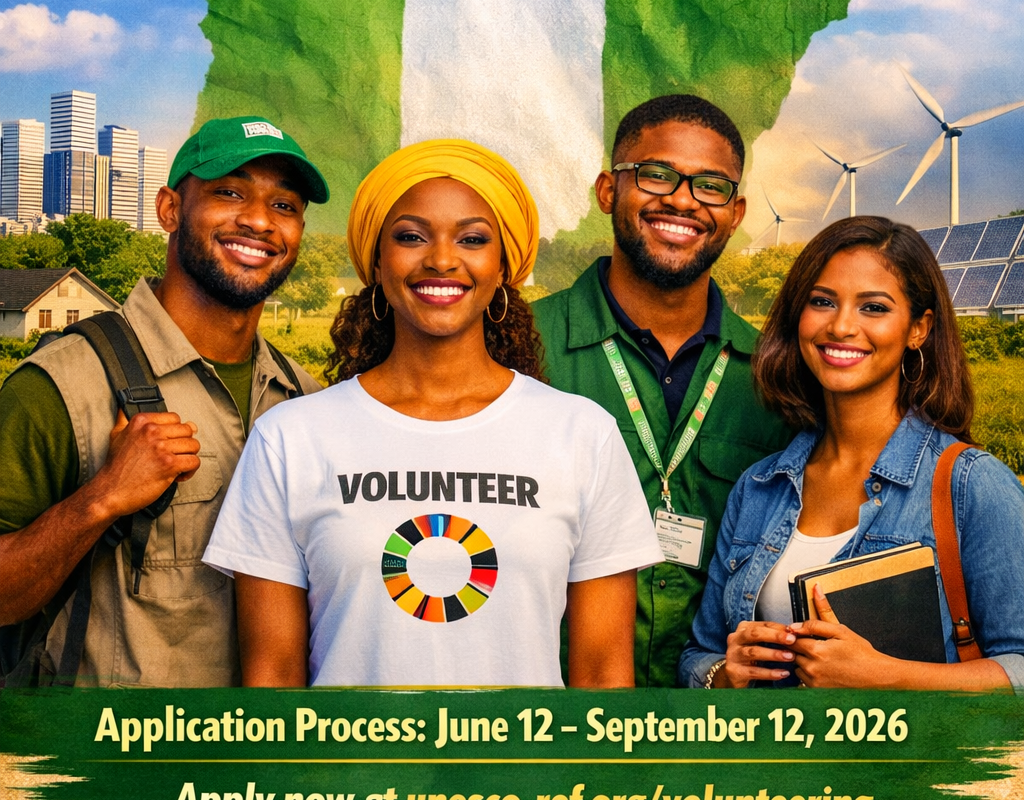
This call is now closed. Applications ran from 12 June to 12 September 2026. Details of future calls will be published on the Volunteering page.

ABUJA, Nigeria, 12 June 2026. The Read and Earn Federation for UNESCO (UNESCO REF) has opened its 2026 Call for Volunteers, inviting accomplished professionals, scholars and emerging leaders from Nigeria, the diaspora and the wider international community to place their expertise at the service of the nation’s development. Successful applicants will join a distinguished network of change-makers contributing to education, agriculture, health, digital transformation and community development across the Federation.

Global alignmentAlignement mondialThe global commitments this story advances. Open to see how.
  • SDG17

    SDG 17, Partnerships (primary)

    ProvisionTarget 17.17: effective public, private and civil society partnerships

    How the call respondsBrings global expertise into Nigerian programmes

  • UNGA

    UN General Assembly resolution 70/129 (2015)

    ProvisionIntegrating volunteering into the 2030 Agenda

    How the call respondsStructured volunteer engagement aligned with the SDGs

  • SDG4

    SDG 4 and SDG 8

    ProvisionEducation, skills and decent work

    How the call respondsVolunteers support training and employment programmes

  • AU

    African Union Agenda 2063

    ProvisionAspiration 6: people-driven development

    How the call respondsEngages Africans at home and in the diaspora

Volunteerism has long been recognised by the United Nations as a powerful means of implementing the 2030 Agenda for Sustainable Development. In 2015, the United Nations General Assembly, by resolution 70/129, called for volunteering to be integrated into the planning and delivery of the Sustainable Development Goals. The UNESCO REF Call for Volunteers answers that call by connecting individual talent with institutional programmes that deliver measurable change in Nigerian communities.

The call at a glance

L’appel en bref

  • Application window. Opens 12 June 2026 and closes 12 September 2026.
  • Eligibility. Open to qualified applicants worldwide, regardless of nationality.
  • Modes of service. Remote options are available for selected roles; certain assignments require physical presence in Nigeria.
  • How to apply. Review the volunteering process on the Volunteering page and register through the application portal.

Where volunteers serve

Domaines d’engagement

Volunteers are deployed across UNESCO REF’s flagship programmes, among them Young Women in Agriculture, which is mobilising 12 million young women for food security; The VOICE Initiative, which prepares women with disabilities for employment in the digital economy; the Educational Financial Facility Scheme, which opens accredited international education to young Nigerians; and the ARDAI TIER I programme in artificial intelligence.

Roles span programme coordination, research and evaluation, curriculum and training, communications, partnerships and community mobilisation. Each assignment is designed to make use of the volunteer’s professional expertise and to leave a lasting contribution.

Why it matters

Les enjeux

Nigeria’s development challenges are matched by an extraordinary reservoir of talent, at home and in its global diaspora. Structured volunteering allows that talent to be mobilised quickly and purposefully, bringing specialist knowledge to communities and strengthening the institutions that serve them. For volunteers, it offers the opportunity to contribute to nationally significant programmes aligned with the Sustainable Development Goals.

ENDS

Notes to editorsNotes aux rédactions

About UNESCO REF. The Read and Earn Federation for UNESCO (UNESCO REF) works to strengthen human and institutional capacity across Nigeria and Africa through education, research and professional development, in alignment with the 2030 Agenda for Sustainable Development.

Media enquiries. UNESCO REF Media Centre, [email protected]

SourcesSources

Child Labour in Nigeria: A Pipeline to Terrorism

Child Labour: Nigeria’s Forgotten Pipeline to Terrorism

The DispatchUNESCO REF Media Centre · EISSN 3156-55576 min read

UNESCO REF Media Centre | Opinion

Nearly 25 million Nigerian children are in child labour. Every one of them is a child diverted from the classroom, and some will be diverted into conflict. Protecting them is not only a moral duty. It is a matter of national security.

Democracy Day and a sobering reality

La Journée de la Démocratie face à une réalité préoccupante

Campaign illustration titled Stop Child Labour, Let Them Learn, Let Them Dream, showing children carrying heavy loads, breaking stones and welding beside a closed school
UNESCO REF CampaignStop Child Labour. Let them learn, let them dream.Campaign artwork for the World Day Against Child Labour. Each child pictured at work is a child absent from a classroom, and a future the nation cannot afford to lose.

Nigeria marks Democracy Day on the same date the world observes the World Day Against Child Labour. The coincidence should prompt reflection. Child labour is not merely an economic or social problem. It is a national security crisis.

Global alignmentAlignement mondialThe global commitments this story advances. Open to see how.
  • SDG8

    SDG 8, Decent Work (primary)

    ProvisionTarget 8.7: end child labour in all its forms by 2025, including the recruitment and use of child soldiers

    What it demands of NigeriaRecover lost ground on a deadline the world has missed

  • SDG4

    SDG 4, Quality Education

    ProvisionTarget 4.1: free, equitable and quality primary and secondary education for all

    What it demands of NigeriaReturn out-of-school children to learning

  • SDG16

    SDG 16, Peace, Justice and Strong Institutions

    ProvisionTarget 16.2: end abuse, exploitation and all forms of violence against children

    What it demands of NigeriaIntegrate child protection into security strategy

  • SDG1

    SDG 1 and SDG 17

    ProvisionSocial protection systems; multi-stakeholder partnerships

    What it demands of NigeriaSafety nets for vulnerable families, and partnership with the international community

  • CRC

    UN Convention on the Rights of the Child

    ProvisionArticle 32: protection from economic exploitation; Article 38: protection in armed conflict

    What it demands of NigeriaEnforce both protections together

  • CRC

    Optional Protocol on the involvement of children in armed conflict

    ProvisionProhibits the recruitment and use of children in hostilities

    What it demands of NigeriaClose the recruitment pipeline

  • ILO

    ILO Conventions 138 and 182

    ProvisionMinimum age for employment; elimination of the worst forms of child labour

    What it demands of NigeriaEnforce the conventions Nigeria has ratified

  • AU

    African Charter on the Rights and Welfare of the Child

    ProvisionArticle 15: child labour; Article 22: armed conflicts

    What it demands of NigeriaRegional accountability for both

  • DCA

    Durban Call to Action, 2022

    ProvisionGlobal commitments from the 5th Global Conference on the Elimination of Child Labour

    What it demands of NigeriaAccelerate action after the missed 2025 target

  • NG

    Child’s Rights Act, 2003 (Nigeria)

    ProvisionDomestic protection of children from exploitative labour

    What it demands of NigeriaFull adoption and enforcement in every State

Children forced into labour, hawking on our streets, working in unsafe mines or performing hazardous tasks, are denied education and hope. Extremist groups exploit that vulnerability and turn poverty into a recruitment pipeline. Every child lost to labour is a child diverted from the classroom towards conflict, from innovation towards insurgency.

The scale of the crisis

L’ampleur de la crise

The figures leave no room for complacency. According to the National Bureau of Statistics, 24.7 million Nigerian children aged 5 to 17, or 39.2 per cent of that age group, were in child labour in 2022. More than 14.3 million of them were engaged in hazardous work.

MeasureNigeriaWorld
Children in child labour24.7 million (39.2% of children aged 5 to 17, 2022)Nearly 138 million (2024)
Children in hazardous work14.4 million (22.9%, 2022)Around 54 million (2024)
Regional shareNigeria is part of sub-Saharan AfricaAround 87 million, nearly two-thirds of the global total, are in sub-Saharan Africa
Out-of-school children and youthAbout 20 million

The world has also missed its own deadline. Target 8.7 of the Sustainable Development Goals committed every nation to end child labour in all its forms by 2025. The International Labour Organization and UNICEF confirmed in June 2025 that the target was not met.

From labour to recruitment

Du travail au recrutement

The link between deprivation and violence is not speculation. UNICEF reported in 2022 that more than 8,000 girls and boys had been recruited and used by armed groups in north-east Nigeria since 2009. A 2023 UNDP study of violent extremism in sub-Saharan Africa found that about a quarter of voluntary recruits cited job opportunities as the main reason for joining.

A child who is out of school and working for survival is the child most exposed to that offer. Child labour and terrorist recruitment draw on the same conditions: poverty, exclusion and the absence of hope. They must be confronted together.

Nigeria’s greatest resource at risk

La plus grande ressource du Nigéria en péril

Nigeria’s greatest resource is not oil or minerals. It is its people. Child labour steadily erodes that foundation, diminishing the nation’s intellectual capital and weakening its capacity to compete in a knowledge-driven world. Protecting children today is therefore not only a moral duty but a strategic imperative for Nigeria’s survival and growth.

Democracy is built on participation, inclusion and opportunity. Child labour undermines each of these principles by silencing millions of voices before they can be heard. A democracy that fails to protect its children is a democracy at risk.

Linking the fight to global commitments

Une lutte inscrite dans les engagements mondiaux

Nigeria has already bound itself, in law and in international undertakings, to end child labour and to protect children from armed conflict. What is required now is implementation.

A call to leadership and partnership

Un appel au leadership et au partenariat

At this critical juncture, I call upon His Excellency, President Bola Ahmed Tinubu, to bring fresh, integrated thinking to bear on this crisis by synchronising the work of three ministries: the Federal Ministry of Art, Culture, Tourism and the Creative Economy; the Federal Ministry of Information and National Orientation; and the Federal Ministry of Humanitarian Affairs and Poverty Reduction. The instruments for a solution already lie within their mandates. Cultural renewal, public information and humanitarian outreach must work as one strategy rather than three.

This work must be entrusted to thinkers and specialists with the depth and the time to design durable strategy, and not left solely to administrators absorbed by the demands of daily operations. It must also be strengthened by cooperation between the Global North and the Global South, in recognition that child labour and terrorism are shared challenges that require shared solutions. Nigeria’s call is not for charity but for partnership: a partnership that secures democracy and safeguards humanity.

Nigeria cannot confront this challenge alone. United Nations agencies, donor bodies and international partners must join hands with Nigeria to eradicate child labour and dismantle the recruitment pipelines of terror. That partnership must deliver:

  • Investment in education. Schools built, teachers trained and quality learning within reach of every child.
  • Social protection. Safety nets for the families most vulnerable to child labour.
  • Child-centred security. Counter-terrorism strategies that integrate child protection into national and regional security frameworks.
  • Community resilience. Programmes that equip local leaders and families to resist extremist recruitment.

The eradication of child labour is not a distant goal; it is an urgent necessity. Nigeria must strengthen its laws, enforce accountability and treat education as a national security strategy. International partners must provide technical expertise, funding and solidarity. Civil society must continue to raise awareness and hold leaders to account. Government, the private sector, civil society and international organisations must work hand in hand. The stakes are too high for complacency.

The measure of our humanity

La mesure de notre humanité

On this Democracy Day, let us affirm that democracy is measured not by ballots alone, but by the futures we safeguard for our children. The fight against child labour is inseparable from the fight against terrorism. By protecting Nigeria’s children, we protect Nigeria’s democracy and, by extension, the stability of Africa and the world.

The time to act is now. The world must not look away. Nigeria’s children deserve more than survival; they deserve the chance to thrive, to innovate and to lead. The measure of our collective humanity will be judged by how we respond to this crisis.

Notes to editorsNotes aux rédactions

About the author. Prince Abdulsalami Ladigbolu-Oranmiyan is President of the Read and Earn Federation for UNESCO (UNESCO REF) and a Senior Fellow of the Association of Business Executives, United Kingdom. Read his profile.

SourcesSources

President Tinubu Commends UNESCO REF Nigeria Police Youths Summit

President Tinubu Commends Nigeria Police Force and UNESCO REF at the UNESCO REF Nigeria Police Youths Summit

The DispatchUNESCO REF Media Centre · EISSN 3156-55574 min read

UNESCO REF Media Centre | UNESCO REF Nigeria Police Youths Summit

More than 400 delegates from the 36 States and the Federal Capital Territory met the Inspector-General of Police and two Ministers on International Youth Day to forge a new compact between Nigeria’s youth and its security institutions.

ABUJA, Nigeria, 12 August 2024. On United Nations International Youth Day, the Nigeria Police Force and the Read and Earn Federation for UNESCO (UNESCO REF) convened the UNESCO REF Nigeria Police Youths Summit at the Nigeria Police Force Resource Centre, Abuja. More than 400 delegates, among them youth leaders, police officers, civil society representatives and government officials from the 36 States and the Federal Capital Territory, gathered to reimagine the relationship between young Nigerians and the institutions charged with their security.

Global alignmentAlignement mondialThe global commitments this story advances. Open to see how.
  • SDG16

    SDG 16, Peace, Justice and Strong Institutions (primary)

    ProvisionTarget 16.6: accountable institutions; Target 16.7: inclusive, participatory decision-making

    How the Summit respondsYouth advisory councils and independent oversight

  • UNSC

    UN Security Council Resolution 2250 (2015)

    ProvisionYouth, Peace and Security: participation, protection and partnerships

    How the Summit respondsYoung people as partners in national security

  • SDG8

    SDG 8, Decent Work

    ProvisionTarget 8.6: youth employment and training

    How the Summit respondsEconomic empowerment as a security measure

  • SDG17

    SDG 17, Partnerships

    ProvisionTarget 17.17: public and civil society partnerships

    How the Summit respondsA partnership between the Nigeria Police Force and UNESCO REF

  • AYC

    African Youth Charter

    ProvisionYouth participation in decision-making

    How the Summit respondsStructured dialogue between youth and the Force

  • IYD

    United Nations International Youth Day

    ProvisionAnnual observance on 12 August

    How the Summit respondsSummit held on International Youth Day 2024

The Summit convened only days after the #EndBadGovernance protests of August 2024, in which young Nigerians across several States voiced grievances over economic hardship and governance. That context gave the gathering an urgency beyond ceremony. Young people were invited to put their questions directly to the Inspector-General of Police and to two federal Ministers, and to help shape a common agenda for trust.

The President’s message

Le message du Président

The Honourable Minister of Youth Development, Dr Jamila Bio Ibrahim, delivered the message of His Excellency, President Bola Ahmed Tinubu, GCFR, which opened: “Together, we can build a nation that is not only prosperous…” The message set out his administration’s agenda for young Nigerians, including:

  • NYSC enterprise funding of up to N10 million per beneficiary.
  • Support for 5,000 targeted corps ventures.
  • The National Youth Skills Programme.
  • A commitment by the Federal Executive Council to 30 per cent youth inclusion.
  • A planned Young Leaders Institute.

Speakers

Intervenants

  • Inspector-General of Police, Kayode Adeolu Egbetokun, PhD, NPM: keynote address.
  • Prince Abdulsalami Ladigbolu-Oranmiyan, President, UNESCO REF: presidential address.
  • Senator Ibrahim Gaidam, Honourable Minister of Police Affairs: ministerial address.
  • Professor Olanrewaju Fagbohun, SAN, former Vice-Chancellor, Lagos State University: guest keynote on trust and accountability.
  • Dr Jamila Bio Ibrahim, Honourable Minister of Youth Development: closing address.

Voices from the Summit

Les voix du Sommet

“This day underscores the importance of empowering youths, amplifying their voices, ensuring that their contributions are acknowledged and nurtured. The Nigeria Police Force is fully committed to protecting the rights and welfare of our youths.”

Kayode Adeolu Egbetokun, Inspector-General of Police

“Our focus today is on youths recognising themselves as change agents.”

Kayode Adeolu Egbetokun, Inspector-General of Police

“The Renewed Hope Agenda is rooted in a vision for a Nigeria where our youth are not only participants but leaders.”

Senator Ibrahim Gaidam, Honourable Minister of Police Affairs

“There is a trust gap between the security agencies and the youth.”

Senator Ibrahim Gaidam, Honourable Minister of Police Affairs

A frank exchange

Un échange franc

In an open session, delegates questioned the Inspector-General directly on the policing of protests, misconduct within the Force and the protection of farmers in insecure areas. The candour of the exchange, and the willingness of the Force’s leadership to engage it in public, set the tone for the Summit. Breakout sessions followed on crime prevention, conflict resolution, social media engagement and community policing.

Why it matters

Les enjeux

The relationship between young people and security institutions is a question of national stability. A 2023 study by the United Nations Development Programme found that about a quarter of voluntary recruits to violent extremist groups in sub-Saharan Africa cited job opportunities as their main reason for joining. Trust, inclusion and economic opportunity for the young are therefore not peripheral concerns of security policy but central to it.

Recommendations

Recommandations

The Summit closed with five recommendations for a new compact between Nigeria’s youth and its security institutions:

  1. Youth advisory councils at federal, state and local levels with real influence over security policy, beginning with State pilots.
  2. Secure digital platforms through which young people can share community intelligence, with anonymity, encryption and due process.
  3. Trust rebuilt through independent oversight, accessible complaint procedures and public reporting.
  4. Economic empowerment treated as a security measure, through skills, employment and entrepreneurship in high-risk communities.
  5. Regular youth and security summits, with quarterly national dialogues and more frequent regional ones.

As the Summit report observes, the true worth of the gathering will lie in the implementation of these recommendations. Read the full Summit report.

ENDS

Notes to editorsNotes aux rédactions

About UNESCO REF. The Read and Earn Federation for UNESCO (UNESCO REF) works to strengthen human and institutional capacity across Nigeria and Africa through education, research and professional development, in alignment with the 2030 Agenda for Sustainable Development.

Media enquiries. UNESCO REF Media Centre, [email protected]

SourcesSources
1 2 3 … 7