On the HorizonUNESCO REF Media Centre · EISSN 3156-55573 min read
UNESCO REF Media Centre | On the Horizon
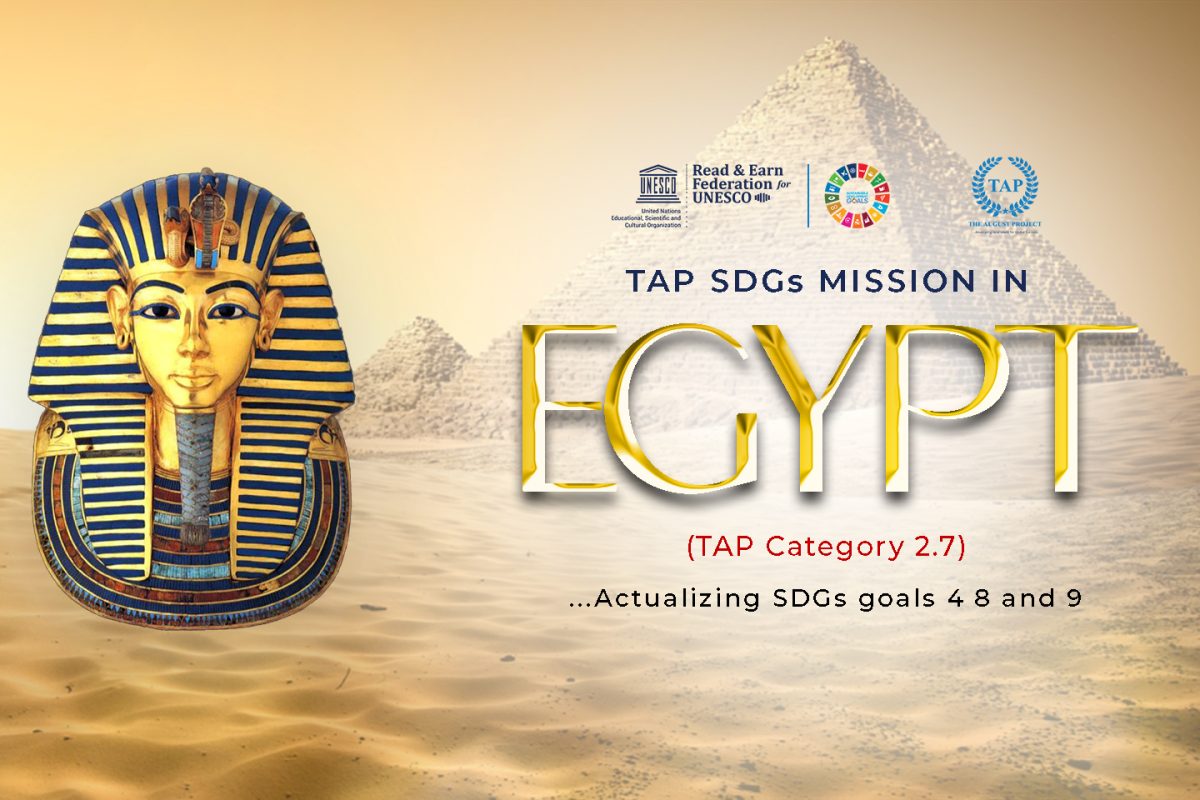
UNESCO REF Announces the Forthcoming Launch of Its SDGs Mission in Egypt
The Mission extends the TAP Project, under Categories 2.7 and 2.8 of the scheme, to the Arab Republic of Egypt, within NEPAD_EY, the platform of synchronisation of UNESCO REF for education and youth development in Africa.
UNESCO REF Media Centre | Abuja, Nigeria | 11 June 2026
ABUJA, Nigeria, 11 June 2026. The Read and Earn Federation for UNESCO (UNESCO REF) announces the forthcoming formal launch of its Sustainable Development Goals (SDGs) Mission in the Arab Republic of Egypt. The Mission marks a major continental expansion of the TAP Project under Categories 2.7 and 2.8 of the scheme, in alignment with NEPAD_EY, the platform of synchronisation for the development of education and youth in Africa.
Global alignmentAlignement mondial48917AUE30The global commitments this story advances. Open to see how.
The SDGs Mission in Egypt is designed to advance the global and continental frameworks that guide education, employment and innovation across Africa.
SDG4
SDG 4, Quality Education (primary)
ProvisionInclusive and equitable quality education and lifelong learning for all
How the Mission respondsExpands access to learning and strengthens educational systems
SDG8
SDG 8, Decent Work and Economic Growth
ProvisionProductive employment and decent work for young people
How the Mission respondsEquips youth with skills for sustainable employment
SDG9
SDG 9, Industry, Innovation and Infrastructure
ProvisionResilient infrastructure and inclusive innovation
How the Mission respondsBuilds resilient systems for innovation and industrial growth
SDG17
SDG 17, Partnerships for the Goals
ProvisionCooperation among nations and institutions
How the Mission respondsJoins Egyptian and Nigerian institutions in one continental effort
AU
African Union Agenda 2063
ProvisionThe Africa We Want: an integrated, prosperous continent driven by its people
How the Mission respondsGenerational capacity building for African youth
E30
Education 2030 Framework for Action
ProvisionInclusive and equitable education for all
How the Mission respondsEducation placed at the centre of continental development
Egypt, a founding member of the African Union and one of the most strategically positioned nations of the continent, stands as a critical gateway for the continental education mandate that UNESCO REF carries through NEPAD_EY.
Advancing the Global Goals
Faire progresser les objectifs mondiaux
The TAP SDGs Mission in Egypt contributes directly to three of the Sustainable Development Goals:
SDG 4, Quality Education. Expanding access to learning and strengthening educational systems.
SDG 8, Decent Work and Economic Growth. Empowering young people with the skills required for sustainable employment.
SDG 9, Industry, Innovation and Infrastructure. Building resilient systems for innovation and industrial growth.
Strategic alignment
Alignement stratégique
The Mission is fully aligned with three frameworks of international and continental consequence:
The United Nations 2030 Agenda for Sustainable Development.
The African Union Agenda 2063, for the transformation of Africa.
The UNESCO Education 2030 Framework for Action, for inclusive and equitable education.
The Mission
La Mission
The TAP SDGs Mission in Egypt will mobilise Egyptian and Nigerian youth, institutions and development partners to advance generational capacity building. It represents a unified effort to strengthen education, innovation and economic opportunity across Africa.
A continental call
Un appel continental
“Egypt is not merely a destination. It is a declaration of the continental purpose of UNESCO REF.”
UNESCO REF
Further details of the continental programme are available on the NEPAD_EY page.
ENDS
Notes to editorsNotes aux rédactions
About NEPAD_EY. NEPAD_EY is a platform of synchronisation for the development of education and youth in Africa, in line with the 17 United Nations Sustainable Development Goals, and serves as the diplomatic channel of UNESCO REF to Africa and the world. Full details: unesco-ref.org/nepad_ey.
About UNESCO REF. The Read and Earn Federation for UNESCO (UNESCO REF) is a multidimensional and multisectoral development institution, established in 2009 under the UNESCO Provisions Framework in Nigeria. It works to strengthen human and institutional capacity across Nigeria and Africa through education, research and professional development, in alignment with the 2030 Agenda for Sustainable Development.
EFFS: Complementing NELFUND to Open Global Higher Education to Young Nigerians
The DispatchUNESCO REF Media Centre · EISSN 3156-55576 min read
UNESCO REF Media Centre | Education Financing
The UNESCO REF Educational Financial Facility Scheme (EFFS) extends the reach of Nigeria’s national student loan system to accredited international programmes, with a first-phase target of 60,000 young beneficiaries, at least half of them young women.
UNESCO REF Media Centre | Abuja, Nigeria | 18 February 2026
ABUJA, Nigeria, 18 February 2026. The Educational Financial Facility Scheme (EFFS), a flagship initiative of the Read and Earn Federation for UNESCO (UNESCO REF), under the leadership of its President, Prince Abdulsalami Ladigbolu-Oranmiyan, is designed to complement the Federal Government’s Nigerian Education Loan Fund (NELFUND). The scheme expands access to accredited international higher education, strengthens Nigeria’s human capital, and aligns with the African Union’s Agenda 2063 and the United Nations Sustainable Development Goals.
Global alignmentAlignement mondial45891017UNESCOWBHCAUCESANGThe global commitments this story advances. Open to see how.
SDG4
SDG 4, Quality Education (primary)
ProvisionTarget 4.3: equal access to affordable, quality tertiary education; Target 4.b: expand scholarships for developing countries
How EFFS respondsTuition scholarships and loans for accredited higher education
SDG5
SDG 5, Gender Equality
ProvisionTarget 5.5 and equal access to opportunity
How EFFS respondsMinimum 50 per cent participation by young women
SDG8
SDG 8, Decent Work
ProvisionTarget 8.6: reduce youth not in employment, education or training
How EFFS respondsPre-departure employability and entrepreneurship training
SDG9
SDG 9, Industry, Innovation and Infrastructure
ProvisionTarget 9.5: enhance research and innovation capacity
How EFFS respondsSkilled graduates for national innovation ecosystems
SDG10
SDG 10, Reduced Inequalities
ProvisionTarget 10.2: economic and social inclusion of all
How EFFS respondsRemoves financial and administrative barriers to education
SDG17
SDG 17, Partnerships
ProvisionTarget 17.17: public, private and civil society partnerships
How EFFS respondsMulti-stakeholder governance across UNESCO REF, Lichfield, UAPP and financial partners
UNESCO
UNESCO Education 2030 Framework for Action
ProvisionInclusive, equitable quality education and lifelong learning for all
How EFFS respondsImplementation phase aligned with the Framework
WBHC
World Bank Human Capital Project
ProvisionInvestment in people as the basis of growth
How EFFS respondsDirectly addresses Nigeria’s human capital gap
AU
African Union Agenda 2063
ProvisionAspiration 6: development driven by the potential of African people, especially youth
How EFFS respondsContinental scaling phase
CESA
Continental Education Strategy for Africa (CESA)
ProvisionExpanded, quality tertiary education and skills for Africa
How EFFS respondsPositions Nigerian graduates for continental leadership
NG
Student Loans (Access to Higher Education) Act, 2024 (Nigeria)
ProvisionNational framework for student loans through NELFUND
How EFFS respondsEFFS complements, rather than duplicates, the national scheme
NELFUND, established under the Student Loans (Access to Higher Education) Act, 2024, had disbursed N242.4 billion to more than 1.38 million students across 288 Nigerian tertiary institutions by April 2026. EFFS builds on that national foundation by opening a structured, governed pathway to accredited international credentials, so that no talented Nigerian is held back by financial barriers.
Commissioned on 18 February 2026, the scheme has, according to UNESCO REF, already supported more than 6,850 beneficiaries across professional, undergraduate, Master’s and doctoral programmes. The Global University Application Portal (UAPP) participates as a strategic partner, and the scheme remains open to other credible institutions and stakeholders.
WatchNTA Network report: “Nigeria, UNESCO Sign MOU with UK Platform to Boost Overseas Studies”Watch on YouTube
Why it matters
Les enjeux
Demand for international education among young Nigerians has never been higher. UNESCO data show the number of Nigerian students abroad nearly doubled, from 71,753 in 2020 to about 142,000 in 2023, across 21 major study destinations. For most families, cost remains the decisive barrier.
The stakes are national. Nigeria scored 0.36 on the World Bank’s Human Capital Index in 2020, meaning a child born in Nigeria could expect to reach only about a third of their full productive potential by age 18. Structured, accountable financing for higher education is one of the most direct levers for closing that gap.
Voices of commitment
Des voix engagées
“The EFFS is more than financing. It is a national, continental and global commitment to ensure that no talented Nigerian is denied the opportunity to earn accredited international credentials because of financial barriers. By complementing NELFUND, we are embedding transparency, accountability and equity into education financing. This is Nigeria’s gift to Africa, and Africa’s contribution to the world.”
Prince Abdulsalami Ladigbolu-Oranmiyan, President, UNESCO REF
“Our youth are the custodians of Nigeria’s future. The EFFS ensures that their aspirations are matched with structured support, ethical governance and global opportunity. It is a flagship programme that strengthens families’ confidence and positions Nigeria as a leader in human capital development.”
Dr Mrs Elizabeth Egbetokun, National President, Police Officers’ Wives Association (POWA), at the time of the scheme’s commissioning
“Through our participation in the EFFS, we are connecting Nigerian students to world-class universities with a transparent and credible admissions process. This collaboration ensures that ambition is matched with opportunity, and that financing is responsibly structured under UNESCO REF’s governance. It is a model of how global collaboration can empower Africa’s next generation.”
Mr Md Shamim, Chief Executive Officer, Global University Application Portal (UAPP)
How the scheme works
Le fonctionnement du dispositif
EFFS supports tuition through two routes. Online study is supported by a tuition scholarship of 86 per cent, or 75 per cent for Professional Programmes. In-person study abroad is supported by a tuition loan. Both routes cover tuition only.
Partner
Role
UNESCO REF
Strategic oversight, governance and beneficiary protection
UNESCO REF Chartered Institute, Lichfield
Administrative hub: compliance, enquiries and pre-departure employability training
Global University Application Portal (UAPP)
Admissions facilitation with world-class universities
UAPP private financial partners and consultants
Loan products and advisory services under UNESCO REF’s governance framework
Other credible institutions and stakeholders
Invited to engage and partake, broadening collaboration and impact
Implementation proceeds in four phases:
Pilot phase. Initial implementation in Police Schools in Nigeria.
National rollout. Phased expansion across Nigeria, aligned with NELFUND.
Continental scaling. Integration into the African Union’s Agenda 2063 youth empowerment frameworks.
Global partnerships. Alignment with UNESCO’s Education 2030 agenda and the World Bank’s Human Capital Project.
The scheme commits to five impact measures:
Access. 60,000 youth beneficiaries in the first phase.
Equity. A minimum of 50 per cent participation by young women.
Employability. Pre-departure modules linked to job readiness and entrepreneurship.
Accountability. Independent audits, grievance mechanisms and transparent reporting.
Sustainability. Integration with national and continental financing frameworks.
A governed model for education financing
Un modèle de financement de l’éducation fondé sur la gouvernance
The EFFS is a professionally governed, student-centred response to the needs of Nigerian families seeking international education. It complements NELFUND, advances Agenda 2063 and contributes to the Sustainable Development Goals. With UNESCO REF providing oversight, Lichfield managing administration and pre-departure training, UAPP participating as a strategic partner and private partners supplying loan products, the scheme offers a model for equitable, transparent and sustainable education financing.
Applicants, families and prospective partners can learn more at effs.unesco-ref.org. The UNESCO REF Chartered Institute, Lichfield, is the official administrative contact point for enquiries and programme information.
ENDS
Notes to editorsNotes aux rédactions
About the EFFS. The Educational Financial Facility Scheme is the mechanism through which UNESCO REF works with investors, donors and corporate partners to sponsor programmes and negotiate scholarships and fee reductions. Its education component complements the Federal Government’s Nigerian Education Loan Fund.
About UNESCO REF. The Read and Earn Federation for UNESCO (UNESCO REF) works to strengthen human and institutional capacity across Nigeria and Africa through education, research and professional development, in alignment with the 2030 Agenda for Sustainable Development.
YWA National Advocate Leads UNESCO REF Delegation to Osun State Governor on Young Women in Agriculture
The DispatchUNESCO REF Media Centre · EISSN 3156-55575 min read
UNESCO REF Media Centre | Young Women in Agriculture
Governor Ademola Adeleke reaffirms Osun State’s readiness to partner UNESCO REF and the Police Officers’ Wives Association in a national campaign to train and certify 12 million young women in agriculture by 2030.
UNESCO REF Media Centre | Osogbo, Nigeria
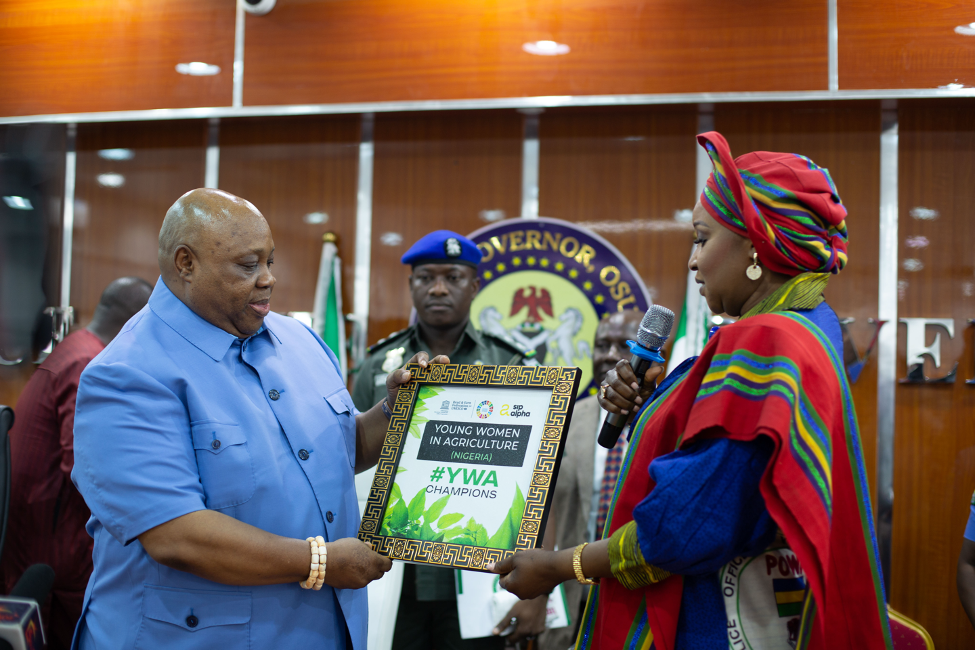
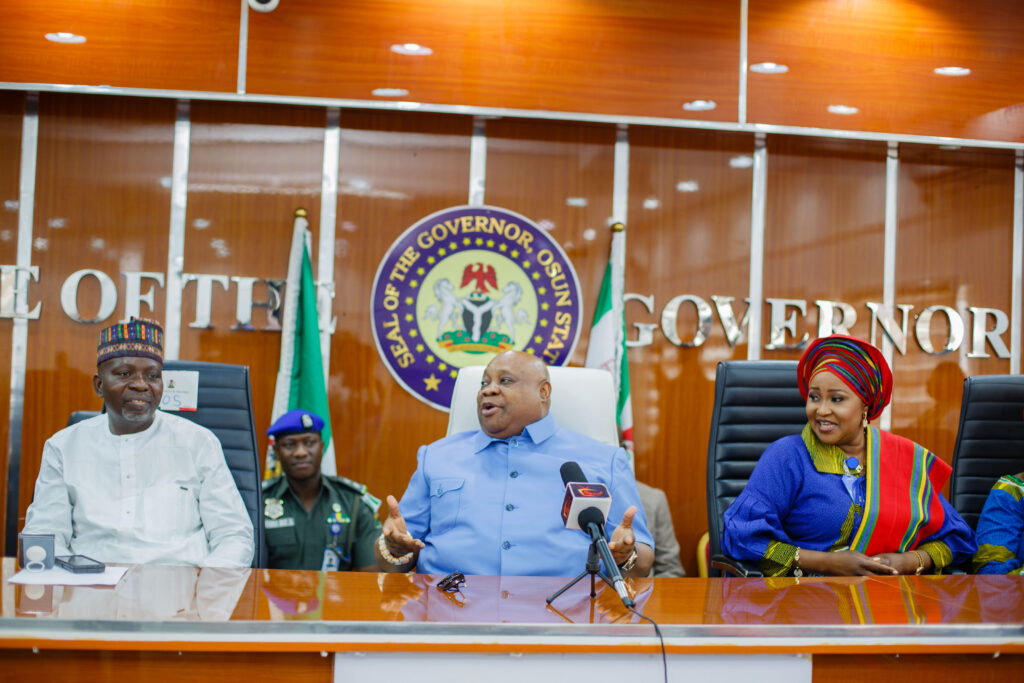
OSOGBO, Nigeria. Dr Mrs Elizabeth Egbetokun, National Advocate of the UNESCO REF Young Women in Agriculture (YWA) initiative and National President of the Police Officers’ Wives Association (POWA), led a UNESCO REF delegation on a working visit to the Governor of Osun State, His Excellency Senator Ademola Jackson Nurudeen Adeleke.
Global alignmentAlignement mondial251817MPAUCAADRHAJThe global commitments this story advances. Open to see how.
SDG2
SDG 2, Zero Hunger (primary)
ProvisionTarget 2.3: double the productivity and incomes of small-scale food producers, in particular women
How YWA respondsSkills, certification and income for young women in agriculture
SDG5
SDG 5, Gender Equality
ProvisionTarget 5.a: equal rights for women to economic resources, including land
How YWA respondsWomen-led agricultural enterprise and access to productive assets
SDG1
SDG 1, No Poverty
ProvisionTarget 1.4: equal rights to economic resources for the poor and vulnerable
How YWA respondsStructured income opportunities for participants
SDG8
SDG 8, Decent Work
ProvisionTarget 8.6: reduce youth not in employment, education or training
How YWA respondsAgribusiness employment for women aged 18 to 35
SDG17
SDG 17, Partnerships
ProvisionTarget 17.17: public and civil society partnerships
How YWA respondsA joint working framework between Osun State, UNESCO REF and POWA
MP
Maputo Protocol
ProvisionArticle 15: right to food security; Article 19: right to sustainable development, including access to land
How YWA respondsWomen’s agricultural empowerment at state level
AU
African Union Agenda 2063
ProvisionAspiration 6: development driven by the potential of African people, especially women and youth
How YWA respondsWomen and youth at the centre of agricultural transformation
CAAD
Comprehensive Africa Agriculture Development Programme (CAADP)
ProvisionAgricultural transformation and food systems resilience
How YWA respondsState-level delivery of national food security goals
RHAJ
Renewed Hope Agenda and the national food security emergency declared in July 2023
ProvisionFood security and inclusive growth
How YWA respondsMobilisation of young women as food producers
The visit advanced the national rollout of YWA, the UNESCO REF flagship programme that empowers young women aged 18 to 35 in agriculture and agribusiness, strengthens food security and advances sustainable development across Nigeria’s six geopolitical zones.
Governor Ademola Jackson Nurudeen Adeleke receives the UNESCO REF and POWA delegation at the Office of the Governor, Osogbo.
Purpose of the visit
Objet de la visite
The delegation’s engagement with the Governor was designed to:
Present the objectives and scope of the YWA initiative.
Explore Osun State’s active participation and leadership in programme implementation.
Strengthen institutional partnerships for grassroots delivery.
Highlight the programme’s alignment with the Renewed Hope Agenda, the United Nations Sustainable Development Goals and the African Union’s Agenda 2063.
Key outcomes
Principaux résultats
The Governor’s commitment. Governor Adeleke reaffirmed Osun State’s readiness to collaborate with UNESCO REF and POWA in advancing agricultural empowerment for women and youth.
Benefits to participants. The delegation set out the programme’s structured income opportunities, job creation and international certification for participants.
Strategic alignment. Discussions addressed how the initiative responds to poverty, gender inequality and food security challenges in Osun State.
A joint working framework. Both parties agreed to establish a joint working framework to ensure the effective rollout of the programme in the State.
Why it matters
Les enjeux
Women are central to Africa’s food systems, yet they work at a structural disadvantage. The Food and Agriculture Organization of the United Nations reports a 24 per cent gender gap in productivity between women and men farmers on farms of equal size, and finds that women in agricultural wage employment earn 82 cents for every dollar earned by men. Closing these gaps, FAO estimates, would increase global GDP by nearly US$1 trillion and reduce the number of food-insecure people by 45 million.
For Nigeria the stakes are immediate. The Cadre Harmonisé analysis projected that about 34.7 million Nigerians would face food insecurity in the June to August 2026 lean season. Equipping young women with skills, certification and income in agriculture is one of the most direct responses available.
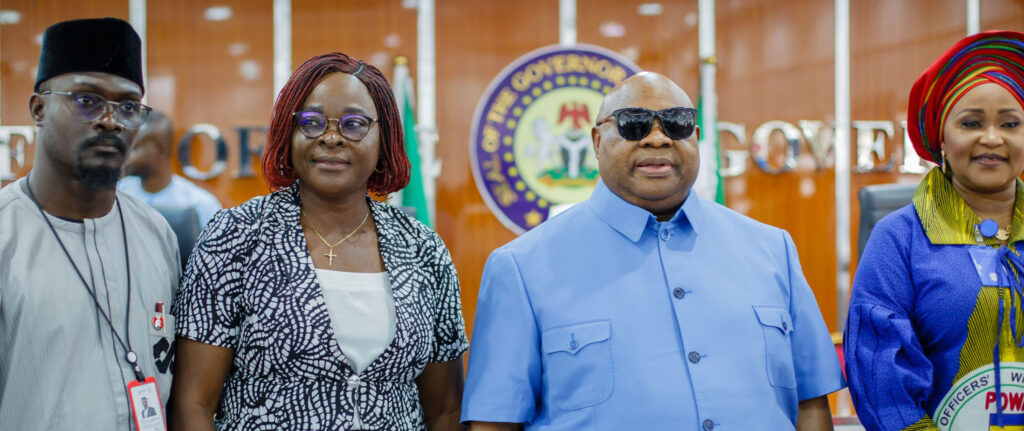
Governor Adeleke with members of the UNESCO REF and POWA delegation after the working visit.
Diplomatic significance
Portée diplomatique
The presence of Dr Mrs Egbetokun, as YWA National Advocate and National President of POWA, underlined the programme’s gender-inclusive vision and the collective resolve of women leaders to champion agricultural transformation. It also demonstrated UNESCO REF’s commitment to engaging state leadership at the highest level, so that the initiative is both nationally owned and globally aligned.
The visit builds on an established partnership. UNESCO REF, POWA and the Ogun State Government agreed in September 2023 to collaborate on YWA, with a plan to mobilise 100,000 women in that State. In July 2025, at its 61st anniversary, POWA inaugurated the National Soil to Security Campaign Team under the UNESCO REF SIP-ALPHA framework, to reach 12 million young women aged 18 to 35 with agribusiness education and to train and certify 12 million YWA Champions by 2030.
Osun State is also a leading partner of UNESCO REF in other programmes. It is the first sub-national government in Nigeria to implement The VOICE Initiative for women with disabilities.
A milestone in the national rollout
Une étape majeure du déploiement national
The working visit to Osun State marks a significant milestone in the nationwide rollout of Young Women in Agriculture. With the support of Governor Adeleke and his administration, UNESCO REF and POWA will proceed to establish the joint working framework for delivery in the State, empowering women and youth, strengthening food security and contributing to Nigeria’s socio-economic development.
About Young Women in Agriculture (YWA). YWA is a UNESCO REF flagship programme under the SIP-ALPHA framework that equips young women aged 18 to 35 with agribusiness education, certification and income opportunities, with a national target of 12 million women.
About POWA. The Police Officers’ Wives Association is the national association of the wives of officers of the Nigeria Police Force, engaged in welfare, empowerment and community development.
About UNESCO REF. The Read and Earn Federation for UNESCO (UNESCO REF) works to strengthen human and institutional capacity across Nigeria and Africa through education, research and professional development, in alignment with the 2030 Agenda for Sustainable Development.
UNESCO REF President and YWA National Advocate Hold Working Visit with Minister of Women Affairs on Food Security through Young Women in Agriculture
The DispatchUNESCO REF Media Centre · EISSN 3156-55574 min read
UNESCO REF Media Centre | Young Women in Agriculture
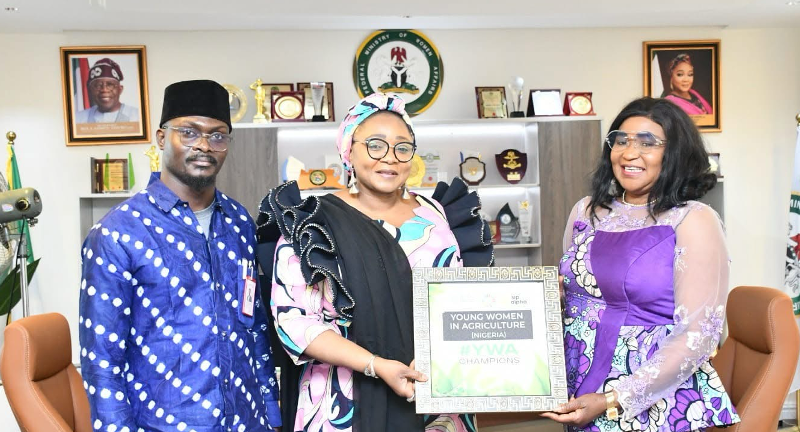
The Federal Ministry of Women Affairs and UNESCO REF agree joint action frameworks to roll out the Young Women in Agriculture programme and the national campaign to mobilise 12 million young women.
UNESCO REF Media Centre | Abuja, Nigeria
ABUJA, Nigeria. In furtherance of the national effort to secure Nigeria’s food future through the empowerment of its young women, the President of the Read and Earn Federation for UNESCO (UNESCO REF), Prince Abdulsalami Ladigbolu-Oranmiyan, accompanied by Dr Mrs Elizabeth Egbetokun, National Advocate of the UNESCO REF Young Women in Agriculture (YWA) programme and then National President of the Police Officers’ Wives Association (POWA), paid a working visit to the Honourable Minister of Women Affairs, Hajiya Imaan Sulaiman-Ibrahim. The meeting finalised the modalities for implementing YWA and for the National 12 Million Mobilisation Campaign.
Global alignmentAlignement mondial25117MPAURHAThe global commitments this story advances. Open to see how.
SDG2
SDG 2, Zero Hunger (primary)
ProvisionTarget 2.3: double the productivity and incomes of small-scale producers, in particular women
How the partnership respondsNational mobilisation of young women in agriculture
SDG5
SDG 5, Gender Equality
ProvisionTarget 5.5: women’s full participation and leadership; Target 5.a: equal rights to economic resources
How the partnership respondsWomen’s empowerment built into agricultural policy
SDG1
SDG 1, No Poverty
ProvisionTarget 1.4: equal rights to economic resources
How the partnership respondsIncome opportunities for young women
SDG17
SDG 17, Partnerships
ProvisionTarget 17.17: public and civil society partnerships
How the partnership respondsJoint action frameworks between a federal ministry and UNESCO REF
MP
Maputo Protocol
ProvisionArticle 15: right to food security
How the partnership respondsWomen at the centre of national food security
AU
African Union Agenda 2063
ProvisionAspiration 6: development driven by women and youth
How the partnership respondsYoung women as drivers of agricultural transformation
RHA
Renewed Hope Agenda
ProvisionFood security as a national priority
How the partnership respondsSupports the Federal Government’s food security agenda
The engagement brought together the federal ministry charged with the advancement of Nigerian women and the civil society institution leading one of the country’s largest mobilisations of women in agriculture. Its purpose was practical: to agree how the two institutions would work together to translate national policy into opportunity for young women in every geopolitical zone.
A national priority
Une priorité nationale
The visit took place against the Federal Government’s declaration of food security as a national priority under the administration of President Bola Ahmed Tinubu, and alongside the First Lady’s Food Bank Initiative, which addresses hunger among vulnerable groups. The YWA programme places young women at the centre of that national effort, with a target of 12 million women, two million in each of Nigeria’s six geopolitical zones.
The case for doing so is compelling. The Food and Agriculture Organization of the United Nations reports a 24 per cent gender gap in productivity between women and men farmers on farms of equal size, and finds that closing the gender gaps in agrifood systems would raise global GDP by nearly US$1 trillion and reduce the number of food-insecure people by 45 million. In Nigeria, where the Cadre Harmonisé analysis projected that about 34.7 million people would face food insecurity in the 2026 lean season, the empowerment of women farmers is a matter of national resilience.
Perspectives of the delegation
Points de vue de la délégation
Prince Ladigbolu-Oranmiyan presented the YWA programme and the 12 Million Mobilisation Campaign as national platforms for empowerment and resilience, capable of positioning Nigeria as a continental leader in food security. He anchored both initiatives in the Sustainable Development Goals, in particular Goal 1 on ending poverty and Goal 2 on ending hunger.
Dr Mrs Egbetokun underscored the importance of integrating women’s empowerment and youth mobilisation into agricultural policy. She welcomed the Ministry’s readiness to support the expansion of training, the mobilisation of resources and outreach to communities across the Federation.
Agreed outcomes
Résultats convenus
The meeting concluded with three commitments:
Joint action frameworks to guide the rollout of the YWA programme across the States.
Strengthened institutional collaboration between UNESCO REF and the Federal Ministry of Women Affairs.
Partner mobilisation in support of the YWA programme and the 12 Million Mobilisation Campaign.
Significance
Portée
The engagement marks the alignment of a federal ministry with a civil society programme of national scale. By bringing the Ministry’s policy mandate together with UNESCO REF’s delivery architecture and POWA’s grassroots reach, the partnership creates a pathway through which the empowerment of young women can contribute directly to Nigeria’s food security.
ENDS
Notes to editorsNotes aux rédactions
About Young Women in Agriculture (YWA). YWA is a UNESCO REF flagship programme under the SIP-ALPHA framework that equips young women aged 18 to 35 with agribusiness education, certification and income opportunities, with a national target of 12 million women.
About UNESCO REF. The Read and Earn Federation for UNESCO (UNESCO REF) works to strengthen human and institutional capacity across Nigeria and Africa through education, research and professional development, in alignment with the 2030 Agenda for Sustainable Development.
UNESCO REF President’s Working Visit to the Nigeria Police Force: Advancing National Cohesion through Youth Engagement
The DispatchUNESCO REF Media Centre · EISSN 3156-55573 min read
UNESCO REF Media Centre | UNESCO REF Nigeria Police Youths Summit
Meeting the Force Public Relations Officer at a time of national protest, the President of UNESCO REF finalised plans for the first UNESCO REF Nigeria Police Youths Summit on International Youth Day.
UNESCO REF Media Centre | Abuja, Nigeria | August 2024
ABUJA, Nigeria, August 2024. At a moment of heightened national tension, the President of the Read and Earn Federation for UNESCO (UNESCO REF), Prince Abdulsalami Ladigbolu-Oranmiyan, paid a working visit to the Force Public Relations Officer of the Nigeria Police Force, ACP Olumuyiwa Adejobi, to finalise preparations for the first UNESCO REF Nigeria Police Youths Summit. The Summit was scheduled for 12 August 2024, United Nations International Youth Day.
Global alignmentAlignement mondial1617UNSCIYDAYCThe global commitments this story advances. Open to see how.
SDG16
SDG 16, Peace, Justice and Strong Institutions (primary)
ProvisionTarget 16.7: responsive, inclusive and participatory decision-making
How the Summit respondsGives young people a direct voice with the security institutions
SDG17
SDG 17, Partnerships
ProvisionTarget 17.17: public and civil society partnerships
How the Summit respondsA partnership between the Nigeria Police Force and UNESCO REF
UNSC
UN Security Council Resolution 2250 (2015)
ProvisionYouth, Peace and Security: participation and partnerships
How the Summit respondsYouth engagement in national security dialogue
IYD
United Nations International Youth Day
ProvisionAnnual observance on 12 August
How the Summit respondsSummit held on International Youth Day 2024
AYC
African Youth Charter
ProvisionYouth participation in decision-making
How the Summit respondsStructured youth and police dialogue
The visit took place during the #EndBadGovernance protests of August 2024, when young Nigerians took to the streets in several States to voice grievances over economic hardship and governance. The protests brought the relationship between the nation’s youth and its security institutions into sharp public focus, and underscored the urgency of structured, good-faith dialogue between them.
Choosing dialogue over distance
Choisir le dialogue plutôt que la distance
Both parties agreed that the moment called for engagement rather than estrangement. The planned Summit would offer young people a direct and respectful channel to the leadership of the Nigeria Police Force, and offer the Force an opportunity to listen, explain and commit.
“A national platform for reconciliation and partnership.”
Prince Abdulsalami Ladigbolu-Oranmiyan, President, UNESCO REF, describing the Summit
ACP Adejobi affirmed the readiness of the Nigeria Police Force to partner UNESCO REF on youth-focused programmes, and welcomed the Summit as a contribution to public trust.
Purpose of the Summit
Objet du Sommet
The Summit was conceived around three objectives: to rebuild trust between the police and Nigerian youth, to advance civic education on rights, responsibilities and lawful engagement, and to create inclusive avenues through which young people could participate in shaping the policing of their communities.
What followed
La suite
The UNESCO REF Nigeria Police Youths Summit convened as planned on 12 August 2024 at the Nigeria Police Force Resource Centre, Abuja. More than 400 delegates from the 36 States and the Federal Capital Territory engaged the Inspector-General of Police and two federal Ministers, and the Summit closed with five recommendations for a new compact between youth and the security institutions.
ENDS
Notes to editorsNotes aux rédactions
About the Summit. The UNESCO REF Nigeria Police Youths Summit was held on 12 August 2024 at the Nigeria Police Force Resource Centre, Abuja, with more than 400 delegates from the 36 states and the Federal Capital Territory.
About UNESCO REF. The Read and Earn Federation for UNESCO (UNESCO REF) works to strengthen human and institutional capacity across Nigeria and Africa through education, research and professional development, in alignment with the 2030 Agenda for Sustainable Development.