
SIP X1: Digital Skills for 120,000 Young Nigerians a Year

The DispatchUNESCO REF Media Centre · EISSN 3156-55573 min read

UNESCO REF Media Centre | Digital Skills

Strategic Intervention Programme X1: Digital Technology Capacity Building for 120,000 Young Nigerians a Year

Through Category 2.9 of The August Project, UNESCO REF and global partners deliver training that equips young Nigerians to seize digital opportunity and manage digital risk.

ABUJA, Nigeria. The Read and Earn Federation for UNESCO (UNESCO REF), through Category 2.9 of The August Project (TAP), is working with global partners to deliver joint training for young people in the digital sector. Under the Strategic Intervention Programme X1 (SIP-X1) on the digital revolution, more than 120,000 young Nigerians will benefit each year.

Global alignmentAlignement mondialThe global commitments this story advances. Open to see how.
  • SDG4

    SDG 4, Quality Education (primary)

    ProvisionTarget 4.4: youth and adults with ICT skills for employment

    How SIP-X1 respondsDigital skills for 120,000 young Nigerians a year

  • SDG8

    SDG 8, Decent Work

    ProvisionTarget 8.6: youth employment and training; Target 8.10: access to financial services

    How SIP-X1 respondsPrepares youth for the digital and financial economy

  • SDG9

    SDG 9, Industry, Innovation and Infrastructure

    ProvisionTarget 9.c: access to information and communications technology

    How SIP-X1 respondsResponsible adoption of digital technology

  • SDG17

    SDG 17, Partnerships

    ProvisionTarget 17.8: enabling technology; Target 17.17: partnerships

    How SIP-X1 respondsJoint training with global partners

  • AU

    African Union Digital Transformation Strategy for Africa, 2020 to 2030

    ProvisionDigital skills and a trusted digital environment

    How SIP-X1 respondsBuilds digital capacity among young Africans

  • AU

    African Union Agenda 2063

    ProvisionAspiration 6: development driven by African youth

    How SIP-X1 respondsYouth at the centre of the digital economy

Digital technologies are reshaping every sphere of economic and social life, from finance and commerce to education, health and public administration. For a country with one of the youngest populations in the world, the capacity of young people to participate in that transformation, safely and productively, will shape national prosperity for a generation.

Why digital capacity, why now

Pourquoi les compétences numériques, et pourquoi maintenant

Three developments make investment in digital capacity urgent in Nigeria:

  • The pace of digitisation across public and private services.
  • The expansion of mobile access, bringing millions of new users online.
  • Proactive policy initiatives by the Central Bank of Nigeria to deepen digital financial services.

Each brings opportunity, and each brings risk. Without matching skills, user protection and good practice lag behind adoption, leaving new users exposed to fraud, misinformation and exclusion.

The programme

Le programme

SIP-X1 equips participants with the knowledge and skills to seize digital opportunities and to reduce digital risks, so that young people can adopt and adapt to the digital revolution responsibly. It is delivered through the Digital Technology Capacity Building (DTCB) programme, a core component of the TAP Project, which provides structured training and guidance for sustainable participation in the global digital economy.

UNESCO REF holds that early investment in training is essential, so that stakeholders and beneficiaries alike are prepared for fast-changing technologies rather than overtaken by them.

Significance

Portée

At a scale of 120,000 young people a year, SIP-X1 is designed not as a pilot but as a national contribution to digital inclusion. It complements UNESCO REF’s wider digital portfolio, including the GET EDUCATED pathway with the Global Learning Exchange and the ARDAI TIER I programme in artificial intelligence.

ENDS

Notes to editorsNotes aux rédactions

About TAP. The August Project is a UNESCO REF youth capacity-building initiative implemented across categories of education, enterprise and digital skills.

About UNESCO REF. The Read and Earn Federation for UNESCO (UNESCO REF) works to strengthen human and institutional capacity across Nigeria and Africa through education, research and professional development, in alignment with the 2030 Agenda for Sustainable Development.

Media enquiries. UNESCO REF Media Centre, [email protected]
SourcesSources

UNESCO REF Opens Pathways to US Degrees for Nigerian Youth

GET EDUCATED: UNESCO REF and United States Global Learning Exchange Open Global Higher Education Pathways for Nigerian Youth

The DispatchUNESCO REF Media Centre · EISSN 3156-55575 min read

UNESCO REF Media Centre | Education and Skills

Through GLX Hubs in all six geopolitical zones, the GET EDUCATED pathway gives Nigerians aged 18 to 35 locally supported access to internationally accredited degrees and certifications from university partners in the United States, the United Kingdom, Canada and Australia.

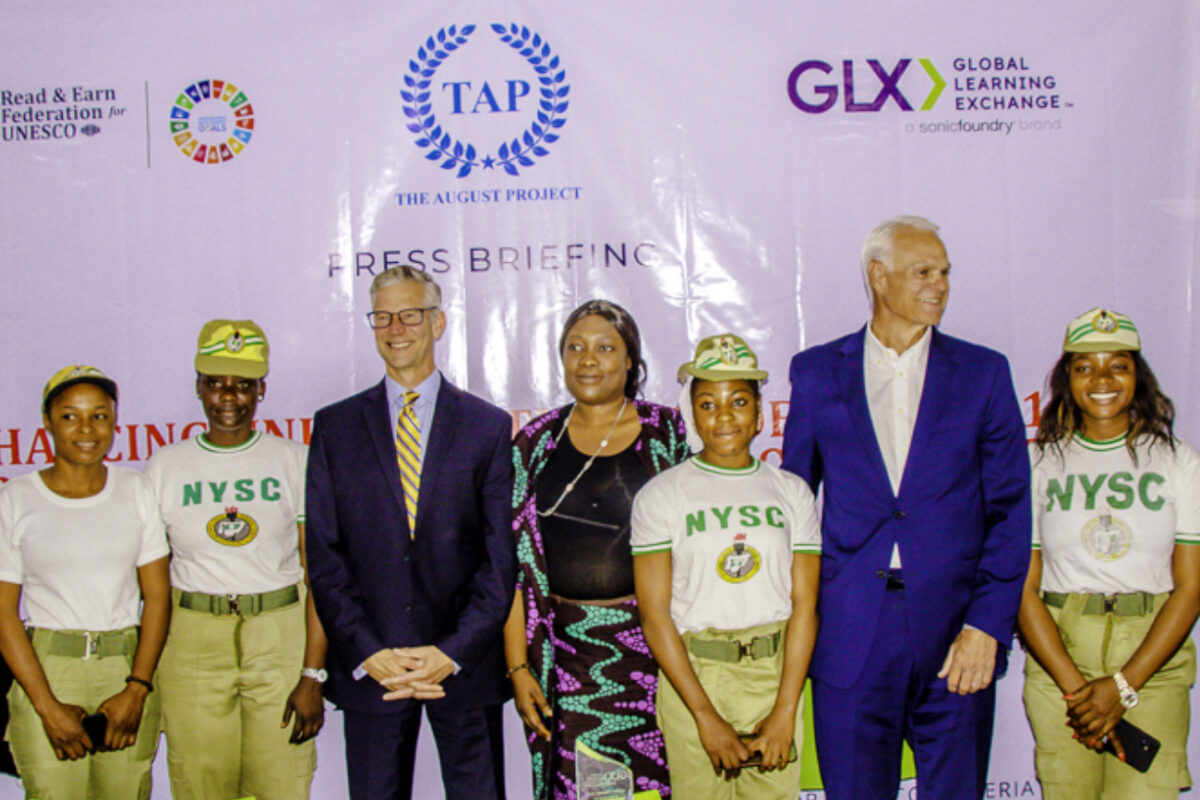
ABUJA, Nigeria, 8 November 2022. The Read and Earn Federation for UNESCO (UNESCO REF) and the Global Learning Exchange™ (GLX), a United States-based education company, are advancing a strategic collaboration for education and skills development in Nigeria. Branded GET EDUCATED, the partnership opens internationally accredited academic programmes, professional certifications and digital skills to young Nigerians, regardless of geography or economic circumstance.

Global alignmentAlignement mondialThe global commitments this story advances. Open to see how.
  • SDG4

    SDG 4, Quality Education (primary)

    ProvisionTarget 4.3: equal access to affordable, quality tertiary education; Target 4.4: youth with relevant skills, including ICT skills

    How GET EDUCATED respondsInternationally accredited degrees, certifications and digital skills

  • SDG8

    SDG 8, Decent Work

    ProvisionTarget 8.6: reduce youth not in employment, education or training

    How GET EDUCATED respondsEmployment pathways for graduates and jobs for local hub staff

  • SDG3

    SDG 3, Good Health and Well-being

    ProvisionTarget 3.4: promote mental health and well-being

    How GET EDUCATED respondsCounselling and mental health support in every hub

  • SDG9

    SDG 9, Industry, Innovation and Infrastructure

    ProvisionTarget 9.c: increase access to information and communications technology

    How GET EDUCATED respondsLaptops, high-speed internet and e-libraries

  • SDG10

    SDG 10, Reduced Inequalities

    ProvisionTarget 10.2: inclusion irrespective of economic status

    How GET EDUCATED respondsAccess regardless of geography or economic circumstance

  • SDG17

    SDG 17, Partnerships

    ProvisionTarget 17.6: knowledge and technology sharing; Target 17.17: effective partnerships

    How GET EDUCATED respondsKnowledge and technology transfer between the United States and Nigeria

  • UNESCO

    UNESCO Education 2030 Framework for Action

    ProvisionInclusive, equitable quality education and lifelong learning for all

    How GET EDUCATED respondsHigher education access for youth outside the university system

  • AU

    African Union Agenda 2063

    ProvisionAspiration 6: development driven by the potential of African people, especially youth

    How GET EDUCATED respondsYouth aged 18 to 35 at the centre of the programme

  • CESA

    Continental Education Strategy for Africa (CESA)

    ProvisionExpanded, quality tertiary education and ICT in education

    How GET EDUCATED respondsGLX Hubs as technology-enabled learning centres

  • NEPAD

    AUDA-NEPAD and NEPAD_EY frameworks

    ProvisionEducation and employment as pillars of Africa’s growth

    How GET EDUCATED respondsImplemented through the NEPAD_EY framework

First announced in September 2022 under The August Project (TAP), a UNESCO REF initiative then supported by the Office of the Senior Special Assistant to the President on the Sustainable Development Goals, the collaboration now operates within the UNESCO REF Strategic Intervention Programmes for Accelerated Learning and Productive Human Asset (SIP-ALPHA) and the NEPAD_EY framework, implemented through TAP Category 2.9.

WatchTVC News Nigeria report on the UNESCO REF and Global Learning Exchange scholarship partnership for young NigeriansWatch on YouTube

The access gap

Le déficit d’accès

Education is the foundation of sustainable development, social mobility and global competitiveness, yet demand for higher education in Nigeria far exceeds the places available where students most want them. More than 2.24 million candidates registered for the 2026 Unified Tertiary Matriculation Examination. In 2025, Nigerian tertiary institutions filled about 1.01 million places, with university places, at 74 per cent utilisation, the most heavily contested.

Each year, therefore, more than a million qualified and aspiring young Nigerians are left without a place. GET EDUCATED offers them a credible alternative: internationally accredited study, supported locally, without the need to relocate abroad.

GLX Hubs across the six geopolitical zones

Des centres GLX dans les six zones géopolitiques

The cornerstone of the initiative is a network of GLX Hub facilities across Nigeria’s six geopolitical zones. Each hub provides:

  • A modern learning environment. Laptops, high-speed internet and e-libraries.
  • Academic guidance and wellbeing. Counselling, career planning and mental health support.
  • A path to graduation. A supportive study environment in which participants matriculate and graduate with GLX university partners in the United States, the United Kingdom, Canada and Australia.
WatchThe opening of a GLX Hub

Local employment. Each hub creates jobs for qualified local professionals, who manage operations and provide academic and administrative support. The model builds institutional capacity, creates local ownership and secures sustainability.

Retention and wellbeing. Recognising that education must be holistic, the hubs deliver wraparound services, including career planning, counselling and mental health support, so that participants are prepared academically, personally and professionally.

Knowledge and technology transfer. Structured training and certification programmes localise expertise, build institutional capacity and position Nigeria as a hub for educational innovation in Africa.

The GET EDUCATED pathway

Le parcours GET EDUCATED

GET EDUCATED expresses the institutional commitment of both partners to connect Nigeria’s intellectual capital with global opportunity. The pathway serves young people aged 18 to 35, including National Youth Service Corps members, graduates and young professionals, and provides access to internationally validated programmes.

The result is a pipeline of globally competitive graduates, equipped to contribute to national development and to international collaboration.

A strategic investment in Nigeria’s future

Un investissement stratégique pour l’avenir du Nigéria

The UNESCO REF and GLX partnership is more than an educational programme. It is a strategic investment in Nigeria’s future and in Africa’s transformation. By combining infrastructure, employment, career and wellbeing support and knowledge transfer, the collaboration creates a complete ecosystem for learning and growth, anchored in global good practice and aligned with the Sustainable Development Goals.

ENDS

Notes to editorsNotes aux rédactions

About GET EDUCATED. GET EDUCATED is the education and skills pathway of the UNESCO REF and Global Learning Exchange partnership, offering Nigerians aged 18 to 35 locally supported access to internationally accredited programmes through GLX Hubs in the six geopolitical zones.

About Global Learning Exchange. Global Learning Exchange (GLX) is a United States-based education company that provides students with low-cost, locally supported access to online learning from international institutions.

About UNESCO REF. The Read and Earn Federation for UNESCO (UNESCO REF) works to strengthen human and institutional capacity across Nigeria and Africa through education, research and professional development, in alignment with the 2030 Agenda for Sustainable Development.

Media enquiries. UNESCO REF Media Centre, [email protected]
SourcesSources

UNESCO REF and ABE, United Kingdom: Youth Enterprise Partnership

UNESCO REF and ABE, United Kingdom, Join Forces to Develop Nigerian Talent for Global Success

The DispatchUNESCO REF Media Centre · EISSN 3156-55573 min read

UNESCO REF Media Centre | Institutional Partnership

A ten-year partnership with the Association of Business Executives targets 1.2 million young Nigerians with internationally recognised qualifications in enterprise, leadership and economic capacity.

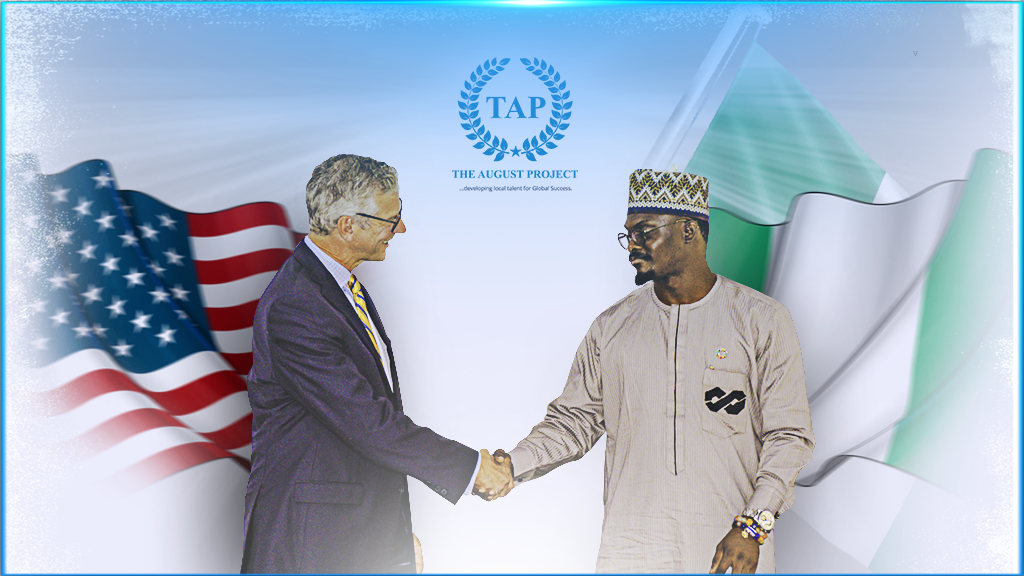
ABUJA, Nigeria, March 2019. The Read and Earn Federation for UNESCO (UNESCO REF) and the Association of Business Executives (ABE), United Kingdom, have signed a Memorandum of Understanding to develop Nigerian talent for global success. Delivered through The August Project (TAP), the ten-year partnership, running to 2027, targets 1.2 million young Nigerians for intellectual, leadership and economic capacity building through internationally recognised qualifications.

Global alignmentAlignement mondialThe global commitments this story advances. Open to see how.
  • SDG8

    SDG 8, Decent Work (primary)

    ProvisionTarget 8.3: entrepreneurship; Target 8.6: youth employment and training

    How the partnership respondsEnterprise skills for 1.2 million young Nigerians

  • SDG4

    SDG 4, Quality Education

    ProvisionTarget 4.4: skills for employment, decent jobs and entrepreneurship

    How the partnership respondsInternationally recognised qualifications

  • SDG9

    SDG 9, Industry, Innovation and Infrastructure

    ProvisionTarget 9.3: access of small enterprises to markets

    How the partnership respondsPrepares youth to engage international markets

  • SDG17

    SDG 17, Partnerships

    ProvisionTarget 17.17: partnerships

    How the partnership respondsA United Kingdom and Nigerian institutional partnership

  • AU

    African Union Agenda 2063

    ProvisionAspiration 6: development driven by African youth

    How the partnership respondsRetains talent for national development

The agreement joins a United Kingdom awarding body with long experience in business and management education to a Nigerian institution with a national reach among young people. Its premise is simple but consequential: that young Nigerians should be able to earn qualifications recognised anywhere in the world without having to leave Nigeria to do so.

The partnership

Le partenariat

  • Scale. 1.2 million young Nigerians over ten years, to 2027.
  • Qualifications. Internationally recognised ABE programmes and certificates in business, enterprise and management.
  • Professional standing. Two international memberships, with the Institute of Leadership and Management and with ABE.
  • Outcomes. Decent work, new enterprises, and reduced unemployment and poverty.
Watch“ABE in Nigeria: developing local talent for global success”, from ABE Qualifications and Business Skills, United KingdomWatch on YouTube

Voices

Témoignages

“The synergy will accelerate the provision of such improved competences and capabilities.”

Prince Abdulsalami Ladigbolu-Oranmiyan, President, UNESCO REF

Prince Ladigbolu-Oranmiyan added that the programme would equip young Nigerians to understand and compete in international markets.

“Nigerians have the best students around the world and yet struggle to cope in Nigeria.”

Dr Mark Abiye, Public Relations Officer, UNESCO REF

“ABE are proud to be partners with UNESCO-Ref on the TAP project in Nigeria”

Association of Business Executives

Addressing recognition and retention

Reconnaissance et rétention des talents

The partnership responds to two linked challenges. The first is recognition: qualifications earned at home have not always carried weight in international labour markets. The second is retention: too many talented young Nigerians have concluded that they must emigrate to fulfil their potential. Internationally recognised qualifications, earned in Nigeria and linked to professional membership, address both at once, strengthening the case for talent to build its future at home.

Significance

Portée

The ABE agreement reflects the model that has shaped UNESCO REF’s international partnerships: global partners, national reach and measurable outcomes for young Nigerians, aligned with the Sustainable Development Goals on education, decent work and innovation.

ENDS

Notes to editorsNotes aux rédactions

About ABE. The Association of Business Executives is a United Kingdom-based awarding body offering internationally recognised business and management qualifications.

About UNESCO REF. The Read and Earn Federation for UNESCO (UNESCO REF) works to strengthen human and institutional capacity across Nigeria and Africa through education, research and professional development, in alignment with the 2030 Agenda for Sustainable Development.

Media enquiries. UNESCO REF Media Centre, [email protected]
SourcesSources

Sonic Foundry, GLX and UNESCO REF: $100M SDGs Scheme

Sonic Foundry and GLX University Partners Join UNESCO REF in a USD 100 Million SDGs Global Mission Scheme for Nigeria

The DispatchUNESCO REF Media Centre · EISSN 3156-55575 min read

UNESCO REF Media Centre | Institutional Archives | Strategic Partnership

A three-year pilot led by the United States-based Sonic Foundry Inc. with GLX university partners in Australia, the United Kingdom and the United States sets out to widen access to accredited higher education, strengthen youth employability and build lasting learning infrastructure in Nigeria, with at least 55 per cent of scholarship resources directed to girls and young women.

ABUJA, Nigeria, 8 November 2022. The Read and Earn Federation for UNESCO (UNESCO REF) has joined Sonic Foundry Inc. and its GLX university partners in Australia, the United Kingdom and the United States in the SDGs Global Mission Scheme (SGMS), a three-year, USD 100 million pilot programme in Nigeria. The Scheme is designed to expand equitable access to higher education, strengthen youth employability and build resilient educational infrastructure, in a model intended to be replicated across emerging economies.

Global alignmentAlignement mondialThe global commitments this story advances. Open to see how.
  • SDG4

    SDG 4, Quality Education (primary)

    ProvisionTarget 4.3: equal access to affordable tertiary education; Target 4.b: expand scholarships for developing countries; Target 4.5: eliminate gender disparities

    How the Scheme respondsUSD 40 million in scholarships, with at least 55 per cent for girls and young women

  • SDG8

    SDG 8, Decent Work (primary)

    ProvisionTarget 8.6: reduce youth not in employment, education or training

    How the Scheme respondsAt least 60 per cent of graduates in employment or internships within 12 months

  • SDG5

    SDG 5, Gender Equality

    ProvisionTarget 5.3: eliminate child, early and forced marriage

    How the Scheme respondsOutreach to out-of-school girls at risk of early marriage and exploitation

  • SDG9

    SDG 9, Industry, Innovation and Infrastructure

    ProvisionTarget 9.c: increase access to information and communications technology

    How the Scheme respondsGLX Hubs with digital access and learning technology

  • SDG17

    SDG 17, Partnerships

    ProvisionTarget 17.17: public, private and civil society partnerships

    How the Scheme respondsAn international steering committee of private, public and civil society partners

  • UNESCO

    UNESCO Education 2030 Framework for Action

    ProvisionInclusive and equitable quality education and lifelong learning

    How the Scheme respondsDegrees and professional certifications through flexible pathways

  • AU

    African Union Agenda 2063

    ProvisionAspiration 6: development driven by the potential of African youth

    How the Scheme respondsHigher education and employment for young Nigerians

The partnership brings together international higher education, private investment and a Nigerian institution with deep roots in youth development. It rests on a simple premise: that talent is evenly distributed across Nigeria, but opportunity is not, and that a well-governed scheme can close the distance between the two at scale.

The Scheme at a glance

Le programme en bref

ElementDetail
NameSDGs Global Mission Scheme (SGMS)
Lead partnerSonic Foundry Inc., with GLX university partners in Australia, the United Kingdom and the United States
Nigerian partnerUNESCO REF
Duration and valueThree years, USD 100 million
Pilot countryNigeria, as a model for emerging economies
Primary goalsSDG 4, Quality Education, and SDG 8, Decent Work, with contributions to SDG 9 and SDG 17

Four objectives

Quatre objectifs

  1. Scholarships for accredited study. Funding for Bachelor’s and Master’s degrees and professional certifications through accredited GLX partner institutions.
  2. GLX Hubs. Physical learning centres offering study space, digital access, academic advising, mental health services and career planning.
  3. Reaching those most at risk. Targeted resources for out-of-school girls and recent secondary school graduates, to reduce barriers such as early marriage and exploitation.
  4. From learning to livelihood. Stronger retention, skills alignment, internships and international job placement for the most accomplished graduates.

Where the money goes

La répartition des fonds

ComponentAllocation (USD)Share
Scholarships and tuition40 million40%
GLX Hub capital and technology25 million25%
Operations and staffing15 million15%
Employability and placement10 million10%
Monitoring, evaluation and research5 million5%
Contingency and partnerships5 million5%
Total100 million100%

Scholarships account for the largest single share, but the design is deliberate in investing equally in what surrounds them: the hubs in which students learn, the services that keep them enrolled, and the placement support that turns a qualification into a career.

Why it matters

Les enjeux

Nigeria has one of the youngest populations in the world, and an estimated 20 million children and young people out of school. For those who complete secondary education, access to accredited tertiary study remains constrained by cost, capacity and distance. A scheme that combines funded places at international institutions with local hubs and career support addresses all three constraints at once.

The emphasis on girls is equally deliberate. By committing at least 55 per cent of scholarship resources to girls and young women, and by reaching out-of-school girls directly, the Scheme recognises that the barriers facing young women, including early marriage and exploitation, are among the most decisive obstacles to their education and economic independence.

How it will be delivered

Modalités de mise en œuvre

  • Scholarships awarded on the basis of merit and need.
  • GLX Hubs operated through public-private partnerships with national ministries, UNESCO REF, the Nigeria Police Force Education Unit, local universities and employers.
  • Performance-based disbursement, with funds released against results.
  • Phased rollout, so that each stage is tested before the next begins.

Governance and safeguards

Gouvernance et garanties

An International Steering Committee, bringing together Sonic Foundry, GLX representatives, UNESCO REF, Nigerian government officials, civil society and independent auditors, will provide oversight. A National Programme Office will manage day-to-day operations.

The Scheme is bound by child protection and gender-sensitive policies, a grievance redress mechanism and data protection standards. Independent midline and endline evaluations will be conducted, and results will be reported publicly each year.

Measuring success

Mesurer la réussite

IndicatorThree-year target
Enrolment10,000 students
Graduation rate, degree programmesAt least 70 per cent
Formal employment or internship within 12 monthsAt least 60 per cent of graduates
Scholarship resources for girls and young womenAt least 55 per cent
Hub utilisationTracked through quarterly dashboards

Progress will be tracked through quarterly dashboards, independent evaluations aligned with the SDG indicator framework, and public reporting.

An invitation to partners

Une invitation aux partenaires

The Scheme is conceived as a platform for collective action. United Nations agencies, bilateral donors, foundations, academic institutions and private employers are invited to co-finance, co-design and help scale the model, in Nigeria and beyond. Partnership enquiries may be directed to UNESCO REF through the Institutional Partnership Process.

ENDS

Notes to editorsNotes aux rédactions

About the SGMS. The SDGs Global Mission Scheme is a three-year, USD 100 million pilot led by Sonic Foundry Inc. with GLX university partners in Australia, the United Kingdom and the United States, implemented in Nigeria with UNESCO REF and national partners.

About UNESCO REF. The Read and Earn Federation for UNESCO (UNESCO REF) works to strengthen human and institutional capacity across Nigeria and Africa through education, research and professional development, in alignment with the 2030 Agenda for Sustainable Development.

Media enquiries. UNESCO REF Media Centre, [email protected]

SourcesSources

UNESCO Report: Boys at Risk of Not Completing School

Boys Face a Significant Risk of Not Completing Their Education, Warns UNESCO Report

The DispatchUNESCO REF Media Centre · EISSN 3156-55573 min read

UNESCO REF Media Centre | Outside Source

UNESCO’s global report on boys’ disengagement from education finds that while girls face greater barriers to entry, boys are increasingly falling behind in secondary and tertiary education in most regions of the world.

September 2022. A global report by UNESCO, Leave no child behind: global report on boys’ disengagement from education, warns that boys in many parts of the world face a significant risk of not completing their education. While girls continue to face greater barriers to entering school and make up the majority of out-of-school children at primary level, the report finds that boys face mounting challenges at later stages of education.

Global alignmentAlignement mondialThe global commitments this story advances. Open to see how.
  • SDG4

    SDG 4, Quality Education (primary)

    ProvisionTarget 4.1: complete primary and secondary education; Target 4.5: eliminate gender disparities

    RelevanceBoys’ completion of secondary and tertiary education

  • SDG8

    SDG 8, Decent Work

    ProvisionTarget 8.7: end child labour in all its forms

    RelevanceChild labour drives boys’ dropout

  • SDG5

    SDG 5, Gender Equality

    ProvisionGender equality for all learners

    RelevanceAddresses disadvantage wherever it falls

  • ILO

    ILO Convention 138

    ProvisionMinimum age for admission to employment

    RelevanceAlign working age with compulsory schooling

The report challenges a narrow reading of gender equality in education. Its message is that equity requires attention to disadvantage wherever it falls: to the girls still denied entry to the classroom, and to the boys who enter it but leave too soon. It draws on data from across the world to show where, and why, boys are falling behind.

Key findings

Principales conclusions

IndicatorFinding
Tertiary enrolment worldwide88 men enrolled for every 100 women
Upper-secondary enrolmentFewer boys than girls enrolled in 73 countries; the reverse in 48
Child labour, 2020160 million children, of whom 97 million were boys
Reading at age 10Boys read less well than girls in 57 countries with data
Minimum working ageIn 31 per cent of 146 countries, below 15 or not clearly defined

Young men are under-represented in higher education in every region except sub-Saharan Africa. The report identifies East Asia and the Pacific, Latin America and the Caribbean, and the Arab States as regions where boys face some of the highest risks of dropping out.

Why boys disengage

Pourquoi les garçons décrochent

The report traces boys’ disengagement to poverty, child labour and other pressures that pull them away from learning. Child labour is a decisive factor: where boys are expected to work, school becomes secondary, grade repetition rises and dropout follows. Warning signs often appear as early as the end of primary school.

Recommendations

Recommandations

  • Prevent boys from dropping out, acting on early warning signs at the end of primary school.
  • Make learning environments safe and inclusive.
  • Invest in better data and evidence on disengagement.
  • Build and finance equitable education systems.
  • Promote integrated, coordinated approaches that improve education for all learners.
  • Align the minimum working age with the end of compulsory education.

Why it matters for Nigeria

Les enjeux pour le Nigéria

For Nigeria, the report’s findings resonate strongly. The country has an estimated 20 million out-of-school children and youth, and according to the National Bureau of Statistics, 24.7 million children aged 5 to 17 were in child labour in 2022. The report’s call to align the minimum working age with compulsory schooling speaks directly to the link between child labour and school dropout that UNESCO REF has highlighted in its own advocacy.

ENDS

Notes to editorsNotes aux rédactions

About this article. This article summarises a report published by UNESCO. The findings are UNESCO’s own.

About UNESCO REF. The Read and Earn Federation for UNESCO (UNESCO REF) works to strengthen human and institutional capacity across Nigeria and Africa through education, research and professional development, in alignment with the 2030 Agenda for Sustainable Development.

Media enquiries. UNESCO REF Media Centre, [email protected]

SourcesSources