
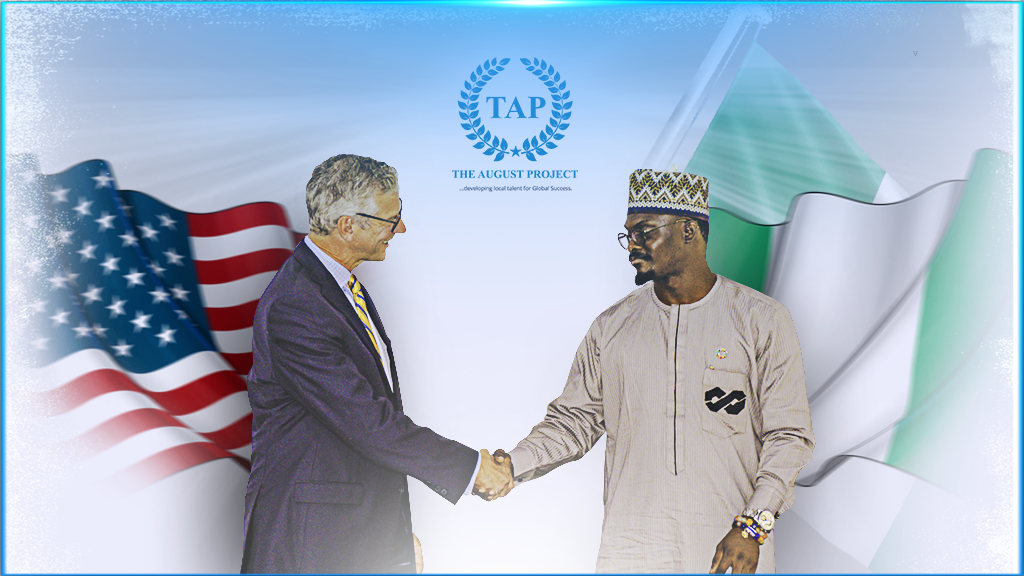
Sonic Foundry, GLX and UNESCO REF: $100M SDGs Scheme

Sonic Foundry and GLX University Partners Join UNESCO REF in a USD 100 Million SDGs Global Mission Scheme for Nigeria

The DispatchUNESCO REF Media Centre · EISSN 3156-55575 min read

UNESCO REF Media Centre | Institutional Archives | Strategic Partnership

A three-year pilot led by the United States-based Sonic Foundry Inc. with GLX university partners in Australia, the United Kingdom and the United States sets out to widen access to accredited higher education, strengthen youth employability and build lasting learning infrastructure in Nigeria, with at least 55 per cent of scholarship resources directed to girls and young women.

ABUJA, Nigeria, 8 November 2022. The Read and Earn Federation for UNESCO (UNESCO REF) has joined Sonic Foundry Inc. and its GLX university partners in Australia, the United Kingdom and the United States in the SDGs Global Mission Scheme (SGMS), a three-year, USD 100 million pilot programme in Nigeria. The Scheme is designed to expand equitable access to higher education, strengthen youth employability and build resilient educational infrastructure, in a model intended to be replicated across emerging economies.

Global alignmentAlignement mondialThe global commitments this story advances. Open to see how.
  • SDG4

    SDG 4, Quality Education (primary)

    ProvisionTarget 4.3: equal access to affordable tertiary education; Target 4.b: expand scholarships for developing countries; Target 4.5: eliminate gender disparities

    How the Scheme respondsUSD 40 million in scholarships, with at least 55 per cent for girls and young women

  • SDG8

    SDG 8, Decent Work (primary)

    ProvisionTarget 8.6: reduce youth not in employment, education or training

    How the Scheme respondsAt least 60 per cent of graduates in employment or internships within 12 months

  • SDG5

    SDG 5, Gender Equality

    ProvisionTarget 5.3: eliminate child, early and forced marriage

    How the Scheme respondsOutreach to out-of-school girls at risk of early marriage and exploitation

  • SDG9

    SDG 9, Industry, Innovation and Infrastructure

    ProvisionTarget 9.c: increase access to information and communications technology

    How the Scheme respondsGLX Hubs with digital access and learning technology

  • SDG17

    SDG 17, Partnerships

    ProvisionTarget 17.17: public, private and civil society partnerships

    How the Scheme respondsAn international steering committee of private, public and civil society partners

  • UNESCO

    UNESCO Education 2030 Framework for Action

    ProvisionInclusive and equitable quality education and lifelong learning

    How the Scheme respondsDegrees and professional certifications through flexible pathways

  • AU

    African Union Agenda 2063

    ProvisionAspiration 6: development driven by the potential of African youth

    How the Scheme respondsHigher education and employment for young Nigerians

The partnership brings together international higher education, private investment and a Nigerian institution with deep roots in youth development. It rests on a simple premise: that talent is evenly distributed across Nigeria, but opportunity is not, and that a well-governed scheme can close the distance between the two at scale.

The Scheme at a glance

Le programme en bref

ElementDetail
NameSDGs Global Mission Scheme (SGMS)
Lead partnerSonic Foundry Inc., with GLX university partners in Australia, the United Kingdom and the United States
Nigerian partnerUNESCO REF
Duration and valueThree years, USD 100 million
Pilot countryNigeria, as a model for emerging economies
Primary goalsSDG 4, Quality Education, and SDG 8, Decent Work, with contributions to SDG 9 and SDG 17

Four objectives

Quatre objectifs

  1. Scholarships for accredited study. Funding for Bachelor’s and Master’s degrees and professional certifications through accredited GLX partner institutions.
  2. GLX Hubs. Physical learning centres offering study space, digital access, academic advising, mental health services and career planning.
  3. Reaching those most at risk. Targeted resources for out-of-school girls and recent secondary school graduates, to reduce barriers such as early marriage and exploitation.
  4. From learning to livelihood. Stronger retention, skills alignment, internships and international job placement for the most accomplished graduates.

Where the money goes

La répartition des fonds

ComponentAllocation (USD)Share
Scholarships and tuition40 million40%
GLX Hub capital and technology25 million25%
Operations and staffing15 million15%
Employability and placement10 million10%
Monitoring, evaluation and research5 million5%
Contingency and partnerships5 million5%
Total100 million100%

Scholarships account for the largest single share, but the design is deliberate in investing equally in what surrounds them: the hubs in which students learn, the services that keep them enrolled, and the placement support that turns a qualification into a career.

Why it matters

Les enjeux

Nigeria has one of the youngest populations in the world, and an estimated 20 million children and young people out of school. For those who complete secondary education, access to accredited tertiary study remains constrained by cost, capacity and distance. A scheme that combines funded places at international institutions with local hubs and career support addresses all three constraints at once.

The emphasis on girls is equally deliberate. By committing at least 55 per cent of scholarship resources to girls and young women, and by reaching out-of-school girls directly, the Scheme recognises that the barriers facing young women, including early marriage and exploitation, are among the most decisive obstacles to their education and economic independence.

How it will be delivered

Modalités de mise en œuvre

  • Scholarships awarded on the basis of merit and need.
  • GLX Hubs operated through public-private partnerships with national ministries, UNESCO REF, the Nigeria Police Force Education Unit, local universities and employers.
  • Performance-based disbursement, with funds released against results.
  • Phased rollout, so that each stage is tested before the next begins.

Governance and safeguards

Gouvernance et garanties

An International Steering Committee, bringing together Sonic Foundry, GLX representatives, UNESCO REF, Nigerian government officials, civil society and independent auditors, will provide oversight. A National Programme Office will manage day-to-day operations.

The Scheme is bound by child protection and gender-sensitive policies, a grievance redress mechanism and data protection standards. Independent midline and endline evaluations will be conducted, and results will be reported publicly each year.

Measuring success

Mesurer la réussite

IndicatorThree-year target
Enrolment10,000 students
Graduation rate, degree programmesAt least 70 per cent
Formal employment or internship within 12 monthsAt least 60 per cent of graduates
Scholarship resources for girls and young womenAt least 55 per cent
Hub utilisationTracked through quarterly dashboards

Progress will be tracked through quarterly dashboards, independent evaluations aligned with the SDG indicator framework, and public reporting.

An invitation to partners

Une invitation aux partenaires

The Scheme is conceived as a platform for collective action. United Nations agencies, bilateral donors, foundations, academic institutions and private employers are invited to co-finance, co-design and help scale the model, in Nigeria and beyond. Partnership enquiries may be directed to UNESCO REF through the Institutional Partnership Process.

ENDS

Notes to editorsNotes aux rédactions

About the SGMS. The SDGs Global Mission Scheme is a three-year, USD 100 million pilot led by Sonic Foundry Inc. with GLX university partners in Australia, the United Kingdom and the United States, implemented in Nigeria with UNESCO REF and national partners.

About UNESCO REF. The Read and Earn Federation for UNESCO (UNESCO REF) works to strengthen human and institutional capacity across Nigeria and Africa through education, research and professional development, in alignment with the 2030 Agenda for Sustainable Development.

Media enquiries. UNESCO REF Media Centre, [email protected]

SourcesSources

UNESCO Opens Global Course on AI and the Rule of Law

Outside SourceUNESCO REF Media Centre · EISSN 3156-55574 min read

UNESCO REF Media Centre | Outside Source

UNESCO Opens Global Online Course on Artificial Intelligence and the Rule of Law

Developed with The Future Society and leading judicial and technical partners, the course equips judges, lawyers and judicial operators worldwide to navigate the opportunities and the risks of artificial intelligence in justice systems.

PARIS, France. Judicial systems worldwide are increasingly adopting artificial intelligence (AI) to support legal practitioners in identifying precedents, to streamline judicial processes, and to assist judges in decisions related to sentencing and recidivism. While these applications hold promise for efficiency and innovation, they also raise profound implications for human rights, particularly where the opacity of AI systems may challenge the principles of open justice, due process and the rule of law.

Global alignmentAlignement mondialThe global commitments this story advances. Open to see how.

The course responds to international commitments on justice, human rights and the ethical governance of technology.

  • SDG16

    SDG 16, Peace, Justice and Strong Institutions (primary)

    ProvisionTarget 16.3: the rule of law and equal access to justice for all

    How the course respondsPrepares judicial operators to use AI without weakening due process

  • SDG4

    SDG 4, Quality Education

    ProvisionTarget 4.4: relevant skills for decent work

    How the course respondsFree, multilingual professional learning

  • SDG9

    SDG 9, Industry, Innovation and Infrastructure

    ProvisionResponsible innovation

    How the course respondsResponsible adoption of AI in public institutions

  • UDHR

    Universal Declaration of Human Rights

    ProvisionArticle 10: a fair and public hearing by an independent and impartial tribunal

    How the course respondsPlaces open justice at the centre of AI adoption

A global training initiative

Une initiative mondiale de formation

To strengthen capacity in this critical area, UNESCO, in partnership with The Future Society (TFS), has launched a joint online training programme on Artificial Intelligence and the Rule of Law. The course was formally introduced on 6 December 2021 at The Athens Roundtable, the premier international multi-stakeholder forum on AI, legal systems, regulatory compliance and governance.

Voices of the partners

La parole aux partenaires

Marielza Oliveira, Director in the Communication and Information Sector of UNESCO, emphasised that the societal and human rights impacts of AI demand collective action.

“The online course on AI and the Rule of Law is an effort in this direction, with 21 speakers from 14 countries sharing their unique knowledge and experience.”

Marielza Oliveira, Director, Communication and Information Sector, UNESCO

Nicolas Miailhe, President and Founder of The Future Society, highlighted the strategic importance of the programme.

“The course aims to build capacity across judicial stakeholders worldwide so they can be better equipped to navigate AI’s opportunities as well as manage the risks. This is crucial for the responsible adoption of AI.”

Nicolas Miailhe, President and Founder, The Future Society

Benes Aldana, President of the National Judicial College of the United States, underlined the urgency of early engagement.

“The legitimacy of judicial decisions in democratic societies depends on public acceptance of their fairness. It is important for the judiciary to begin early on to build capacity to deal with these rapidly evolving technologies. The Massive Open Online Course (MOOC) is a valuable resource in training judicial operators globally.”

Benes Aldana, President, National Judicial College, United States

Structure of the course

Structure du cours

Developed in collaboration with Cetic.br and NIC.br, the National Judicial College (NJC) and IEEE SA, the course engages participants in a timely global dialogue on the application of AI in justice systems. Structured around six introductory modules, it explores:

  • Why AI matters for justice.
  • How AI can be responsibly adopted within judicial systems worldwide.
  • What AI means for human rights.
  • The evolving role of judicial operators in the age of AI.

Access and certification

Accès et certification

The programme is offered in English, French, Spanish, Russian, Chinese, Arabic and Portuguese, ensuring broad accessibility. Hosted by the National Judicial College, the course commenced on 14 March 2022 and runs for six weeks, after which it remains available online for self-directed learning. Participants who complete all six modules receive a Certificate of Course Completion.

The initiative is supported by the Open Society Foundations and the UNESCO Multi-Donor Programme on Freedom of Expression and Safety of Journalists (MDP), underscoring a shared commitment to advancing judicial capacity, safeguarding human rights and ensuring the responsible integration of AI into justice systems worldwide.

ENDS

Notes to editorsNotes aux rédactions

About this story. This story reports an announcement made by UNESCO. The UNESCO REF Media Centre carries it in its Outside Source section for the information of its readers. It reflects the position of its original publisher and does not represent the position of UNESCO REF.

About UNESCO REF. The Read and Earn Federation for UNESCO (UNESCO REF) is a multidimensional and multisectoral development institution, established in 2009 under the UNESCO Provisions Framework in Nigeria. It works to strengthen human and institutional capacity across Nigeria and Africa through education, research and professional development, in alignment with the 2030 Agenda for Sustainable Development.

Media enquiries. UNESCO REF Media Centre, [email protected]

SourcesSources

UNESCO Designates Eight New Global Geoparks

Outside SourceUNESCO REF Media Centre · EISSN 3156-55572 min read

UNESCO REF Media Centre | Outside Source

UNESCO Expands the Global Geoparks Network with Eight New Designations

The UNESCO Executive Board has designated eight new UNESCO Global Geoparks, bringing the Network to 177 sites in 46 countries, with Luxembourg and Sweden joining for the first time.

PARIS, France, 8 September 2021. The UNESCO Executive Board has approved the designation of eight new UNESCO Global Geoparks, bringing the total number of sites in the Global Geoparks Network to 177 across 46 countries. With this expansion, Luxembourg and Sweden join the Network for the first time, entering the global community of geoparks.

Global alignmentAlignement mondialThe global commitments this story advances. Open to see how.

UNESCO Global Geoparks join the conservation of the Earth’s heritage to education and local sustainable development.

  • SDG15

    SDG 15, Life on Land (primary)

    ProvisionConservation of terrestrial ecosystems and natural heritage

    How geoparks respondProtect geological heritage of international significance

  • SDG11

    SDG 11, Sustainable Cities and Communities

    ProvisionTarget 11.4: protect the world’s cultural and natural heritage

    How geoparks respondJoin heritage to the life of local communities

  • SDG4

    SDG 4, Quality Education

    ProvisionEducation for sustainable development

    How geoparks respondPublic education in the Earth sciences

  • SDG8

    SDG 8, Decent Work

    ProvisionSustainable tourism that creates jobs

    How geoparks respondLocal empowerment through sustainable tourism

A label of international significance

Un label d’importance internationale

The UNESCO Global Geopark label, unanimously ratified by Member States in 2015, recognises geological heritage of international significance. These sites display an extraordinary geological diversity that underpins the biological and cultural richness of their regions.

By combining the conservation of unique geological heritage with public education and sustainable development, geoparks serve as catalysts for the empowerment of local communities and for global knowledge exchange.

A network the size of a nation

Un réseau à l’échelle d’une nation

With the latest designations, the Network now covers a surface area of 370,662 square kilometres, comparable to the size of Japan, reinforcing its role as a truly global initiative.

The new designations

Les nouvelles désignations

This year’s designations include two geoparks in Latin America and six in Europe. While COVID-19 restrictions prevented the evaluation of new applications from Asia, Africa and the Arab region, several projects are under way to extend the Network into these regions in the near future.

ENDS

Notes to editorsNotes aux rédactions

About this story. This story reports an announcement made by UNESCO. The UNESCO REF Media Centre carries it in its Outside Source section for the information of its readers. It reflects the position of its original publisher and does not represent the position of UNESCO REF.

About UNESCO REF. The Read and Earn Federation for UNESCO (UNESCO REF) is a multidimensional and multisectoral development institution, established in 2009 under the UNESCO Provisions Framework in Nigeria. It works to strengthen human and institutional capacity across Nigeria and Africa through education, research and professional development, in alignment with the 2030 Agenda for Sustainable Development.

Media enquiries. UNESCO REF Media Centre, [email protected]

SourcesSources

UNESCO REF Signs MoU with ABE, United Kingdom

Institutional ArchivesUNESCO REF Media Centre · EISSN 3156-55572 min read

UNESCO REF Media Centre | Institutional Archives

UNESCO REF Signs Memorandum of Understanding with the Association of Business Executives, United Kingdom

The agreement between UNESCO REF and the Association of Business Executives (ABE), United Kingdom, establishes a framework of cooperation for the development of business and enterprise capacity among young Nigerians.

NIGERIA, 22 March 2019. The Read and Earn Federation for UNESCO (UNESCO REF) has signed a Memorandum of Understanding with the Association of Business Executives (ABE), United Kingdom. The signing, reported by TVC News Nigeria, establishes a framework of cooperation between the two institutions for the development of business and enterprise capacity among young Nigerians.

Global alignmentAlignement mondialThe global commitments this story advances. Open to see how.

The cooperation between UNESCO REF and ABE serves the global commitments on youth skills and decent work.

  • SDG4

    SDG 4, Quality Education (primary)

    ProvisionTarget 4.4: youth with relevant skills for employment and entrepreneurship

    How the cooperation respondsInternationally recognised business and enterprise qualifications

  • SDG8

    SDG 8, Decent Work and Economic Growth

    ProvisionTarget 8.6: reduce the proportion of youth not in employment, education or training

    How the cooperation respondsPrepares young Nigerians for enterprise and employment

  • SDG17

    SDG 17, Partnerships for the Goals

    ProvisionInternational cooperation for capacity building

    How the cooperation respondsA partnership between Nigeria and the United Kingdom

WatchTVC News Nigeria report on the signing of the Memorandum of Understanding between UNESCO REF and ABEWatch on YouTube

A framework of cooperation

Un cadre de coopération

The Memorandum forms part of a sustained cooperation between UNESCO REF and ABE, devoted to opening internationally recognised business and management education to young people in Nigeria. The work of ABE with UNESCO REF on economic capacity building in West Africa has since been recorded by the Commonwealth Enterprise and Investment Council.

The cooperation continues today within the TAP Project of UNESCO REF. Details are available on the TAP page.

ENDS

Notes to editorsNotes aux rédactions

About ABE. The Association of Business Executives (ABE), United Kingdom, is a provider of business and management qualifications delivered in partnership with institutions around the world.

About this record. This story forms part of the UNESCO REF Institutional Archives, the record of the milestones that have shaped the work of UNESCO REF since its establishment.

About UNESCO REF. The Read and Earn Federation for UNESCO (UNESCO REF) is a multidimensional and multisectoral development institution, established in 2009 under the UNESCO Provisions Framework in Nigeria. It works to strengthen human and institutional capacity across Nigeria and Africa through education, research and professional development, in alignment with the 2030 Agenda for Sustainable Development.

Media enquiries. UNESCO REF Media Centre, [email protected]

SourcesSources

UNESCO REF and ABE Commit to Youth Enterprise in Nigeria

Institutional ArchivesUNESCO REF Media Centre · EISSN 3156-55572 min read

UNESCO REF Media Centre | Institutional Archives

UNESCO REF and ABE Commit to Youth Entrepreneurship Development in Nigeria

UNESCO REF and the Association of Business Executives (ABE), United Kingdom, have affirmed a joint commitment to the development of youth entrepreneurship in Nigeria.

NIGERIA, 6 January 2019. The Read and Earn Federation for UNESCO (UNESCO REF) and the Association of Business Executives (ABE), United Kingdom, have affirmed a joint commitment to youth entrepreneurship development in Nigeria. The commitment was reported by Channels Television.

Global alignmentAlignement mondialThe global commitments this story advances. Open to see how.

The cooperation between UNESCO REF and ABE serves the global commitments on youth skills and decent work.

  • SDG4

    SDG 4, Quality Education (primary)

    ProvisionTarget 4.4: youth with relevant skills for employment and entrepreneurship

    How the cooperation respondsInternationally recognised business and enterprise qualifications

  • SDG8

    SDG 8, Decent Work and Economic Growth

    ProvisionTarget 8.6: reduce the proportion of youth not in employment, education or training

    How the cooperation respondsPrepares young Nigerians for enterprise and employment

  • SDG17

    SDG 17, Partnerships for the Goals

    ProvisionInternational cooperation for capacity building

    How the cooperation respondsA partnership between Nigeria and the United Kingdom

WatchChannels Television report on the commitment of UNESCO REF and ABE to youth entrepreneurship developmentWatch on YouTube

Enterprise as a national strength

L’entreprise, une force nationale

The commitment reflects the conviction of UNESCO REF that the enterprise of young Nigerians is a national strength to be cultivated through education of international standard. It prepared the ground for the Memorandum of Understanding later signed between the two institutions.

The cooperation continues today within the TAP Project of UNESCO REF. Details are available on the TAP page.

ENDS

Notes to editorsNotes aux rédactions

About ABE. The Association of Business Executives (ABE), United Kingdom, is a provider of business and management qualifications delivered in partnership with institutions around the world.

About this record. This story forms part of the UNESCO REF Institutional Archives, the record of the milestones that have shaped the work of UNESCO REF since its establishment.

About UNESCO REF. The Read and Earn Federation for UNESCO (UNESCO REF) is a multidimensional and multisectoral development institution, established in 2009 under the UNESCO Provisions Framework in Nigeria. It works to strengthen human and institutional capacity across Nigeria and Africa through education, research and professional development, in alignment with the 2030 Agenda for Sustainable Development.

Media enquiries. UNESCO REF Media Centre, [email protected]

SourcesSources