
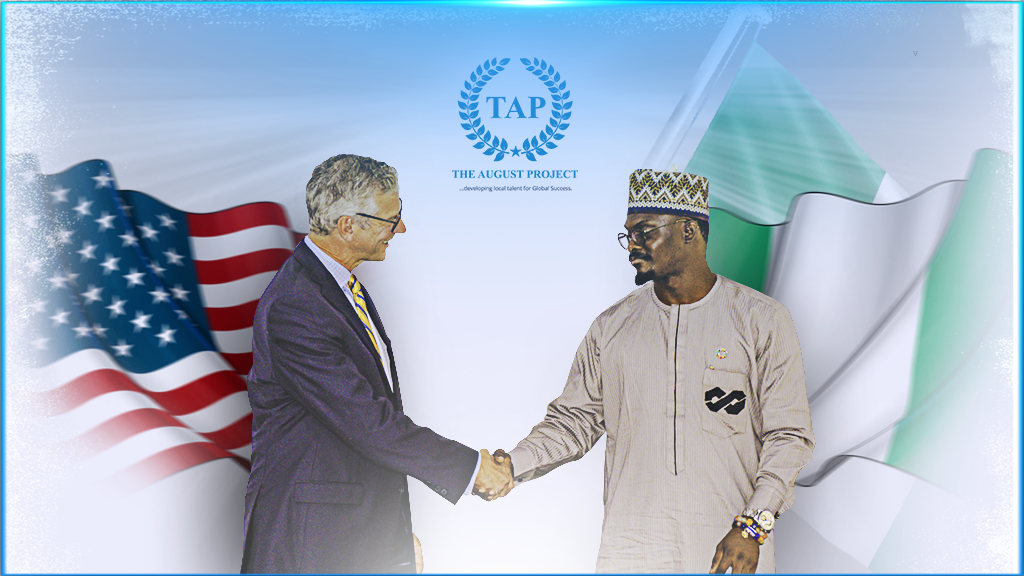
Sonic Foundry and GLX University Partners Join UNESCO REF in a USD 100 Million SDGs Global Mission Scheme for Nigeria
UNESCO REF Media Centre | Institutional Archives | Strategic Partnership
A three-year pilot led by the United States-based Sonic Foundry Inc. with GLX university partners in Australia, the United Kingdom and the United States sets out to widen access to accredited higher education, strengthen youth employability and build lasting learning infrastructure in Nigeria, with at least 55 per cent of scholarship resources directed to girls and young women.
ABUJA, Nigeria, 8 November 2022. The Read and Earn Federation for UNESCO (UNESCO REF) has joined Sonic Foundry Inc. and its GLX university partners in Australia, the United Kingdom and the United States in the SDGs Global Mission Scheme (SGMS), a three-year, USD 100 million pilot programme in Nigeria. The Scheme is designed to expand equitable access to higher education, strengthen youth employability and build resilient educational infrastructure, in a model intended to be replicated across emerging economies.
Global alignmentAlignement mondialThe global commitments this story advances. Open to see how.
- SDG4
SDG 4, Quality Education (primary)
ProvisionTarget 4.3: equal access to affordable tertiary education; Target 4.b: expand scholarships for developing countries; Target 4.5: eliminate gender disparities
How the Scheme respondsUSD 40 million in scholarships, with at least 55 per cent for girls and young women
- SDG8
SDG 8, Decent Work (primary)
ProvisionTarget 8.6: reduce youth not in employment, education or training
How the Scheme respondsAt least 60 per cent of graduates in employment or internships within 12 months
- SDG5
SDG 5, Gender Equality
ProvisionTarget 5.3: eliminate child, early and forced marriage
How the Scheme respondsOutreach to out-of-school girls at risk of early marriage and exploitation
- SDG9
SDG 9, Industry, Innovation and Infrastructure
ProvisionTarget 9.c: increase access to information and communications technology
How the Scheme respondsGLX Hubs with digital access and learning technology
- SDG17
SDG 17, Partnerships
ProvisionTarget 17.17: public, private and civil society partnerships
How the Scheme respondsAn international steering committee of private, public and civil society partners
- UNESCO
UNESCO Education 2030 Framework for Action
ProvisionInclusive and equitable quality education and lifelong learning
How the Scheme respondsDegrees and professional certifications through flexible pathways
- AU
African Union Agenda 2063
ProvisionAspiration 6: development driven by the potential of African youth
How the Scheme respondsHigher education and employment for young Nigerians
The partnership brings together international higher education, private investment and a Nigerian institution with deep roots in youth development. It rests on a simple premise: that talent is evenly distributed across Nigeria, but opportunity is not, and that a well-governed scheme can close the distance between the two at scale.
The Scheme at a glance
Le programme en bref
| Element | Detail |
|---|---|
| Name | SDGs Global Mission Scheme (SGMS) |
| Lead partner | Sonic Foundry Inc., with GLX university partners in Australia, the United Kingdom and the United States |
| Nigerian partner | UNESCO REF |
| Duration and value | Three years, USD 100 million |
| Pilot country | Nigeria, as a model for emerging economies |
| Primary goals | SDG 4, Quality Education, and SDG 8, Decent Work, with contributions to SDG 9 and SDG 17 |
Four objectives
Quatre objectifs
- Scholarships for accredited study. Funding for Bachelor’s and Master’s degrees and professional certifications through accredited GLX partner institutions.
- GLX Hubs. Physical learning centres offering study space, digital access, academic advising, mental health services and career planning.
- Reaching those most at risk. Targeted resources for out-of-school girls and recent secondary school graduates, to reduce barriers such as early marriage and exploitation.
- From learning to livelihood. Stronger retention, skills alignment, internships and international job placement for the most accomplished graduates.
Where the money goes
La répartition des fonds
| Component | Allocation (USD) | Share |
|---|---|---|
| Scholarships and tuition | 40 million | 40% |
| GLX Hub capital and technology | 25 million | 25% |
| Operations and staffing | 15 million | 15% |
| Employability and placement | 10 million | 10% |
| Monitoring, evaluation and research | 5 million | 5% |
| Contingency and partnerships | 5 million | 5% |
| Total | 100 million | 100% |
Scholarships account for the largest single share, but the design is deliberate in investing equally in what surrounds them: the hubs in which students learn, the services that keep them enrolled, and the placement support that turns a qualification into a career.
Why it matters
Les enjeux
Nigeria has one of the youngest populations in the world, and an estimated 20 million children and young people out of school. For those who complete secondary education, access to accredited tertiary study remains constrained by cost, capacity and distance. A scheme that combines funded places at international institutions with local hubs and career support addresses all three constraints at once.
The emphasis on girls is equally deliberate. By committing at least 55 per cent of scholarship resources to girls and young women, and by reaching out-of-school girls directly, the Scheme recognises that the barriers facing young women, including early marriage and exploitation, are among the most decisive obstacles to their education and economic independence.
How it will be delivered
Modalités de mise en œuvre
- Scholarships awarded on the basis of merit and need.
- GLX Hubs operated through public-private partnerships with national ministries, UNESCO REF, the Nigeria Police Force Education Unit, local universities and employers.
- Performance-based disbursement, with funds released against results.
- Phased rollout, so that each stage is tested before the next begins.
Governance and safeguards
Gouvernance et garanties
An International Steering Committee, bringing together Sonic Foundry, GLX representatives, UNESCO REF, Nigerian government officials, civil society and independent auditors, will provide oversight. A National Programme Office will manage day-to-day operations.
The Scheme is bound by child protection and gender-sensitive policies, a grievance redress mechanism and data protection standards. Independent midline and endline evaluations will be conducted, and results will be reported publicly each year.
Measuring success
Mesurer la réussite
| Indicator | Three-year target |
|---|---|
| Enrolment | 10,000 students |
| Graduation rate, degree programmes | At least 70 per cent |
| Formal employment or internship within 12 months | At least 60 per cent of graduates |
| Scholarship resources for girls and young women | At least 55 per cent |
| Hub utilisation | Tracked through quarterly dashboards |
Progress will be tracked through quarterly dashboards, independent evaluations aligned with the SDG indicator framework, and public reporting.
An invitation to partners
Une invitation aux partenaires
The Scheme is conceived as a platform for collective action. United Nations agencies, bilateral donors, foundations, academic institutions and private employers are invited to co-finance, co-design and help scale the model, in Nigeria and beyond. Partnership enquiries may be directed to UNESCO REF through the Institutional Partnership Process.
ENDS
Notes to editorsNotes aux rédactions
About the SGMS. The SDGs Global Mission Scheme is a three-year, USD 100 million pilot led by Sonic Foundry Inc. with GLX university partners in Australia, the United Kingdom and the United States, implemented in Nigeria with UNESCO REF and national partners.
About UNESCO REF. The Read and Earn Federation for UNESCO (UNESCO REF) works to strengthen human and institutional capacity across Nigeria and Africa through education, research and professional development, in alignment with the 2030 Agenda for Sustainable Development.
Media enquiries. UNESCO REF Media Centre, [email protected]