
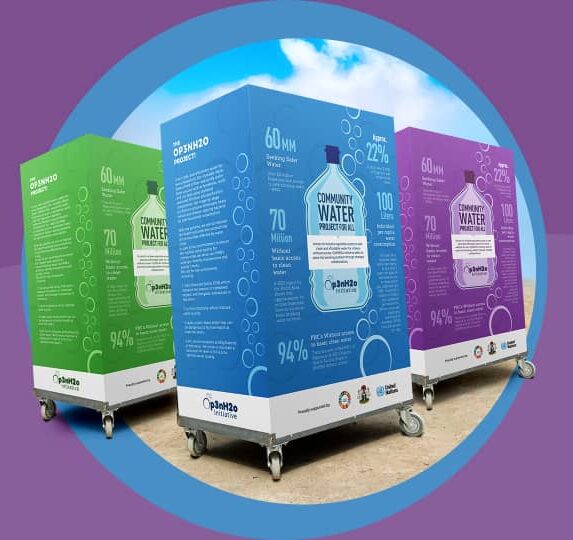
UNESCO REF, Nigerian Diaspora and US Technology Partner Pilot Modular Water Purification System under SIP-ALPHA Category 11
UNESCO REF Media Centre | SIP-ALPHA Category 11
A solar-hybrid, modular purification system inaugurated at the NYSC Federal Capital Territory site is the first validation site of a national framework for safe drinking water, local skills and Nigerian-owned infrastructure.
ABUJA, Nigeria, 6 July 2026. In a development that places Nigerian ingenuity and diaspora expertise at the service of public health, the Read and Earn Federation for UNESCO (UNESCO REF) has inaugurated a modular water purification system developed in partnership with Nigerian professionals in the diaspora and a technology company based in the United States. Implemented under Category 11 of the UNESCO REF Strategic Intervention Programmes for Accelerated Learning and Productive Human Asset (SIP-ALPHA), the system is now undergoing operational and public health validation as the first site of a national framework for safe drinking water.
Global alignmentAlignement mondialThe global commitments this story advances. Open to see how.
- SDG6
SDG 6, Clean Water and Sanitation (primary)
ProvisionTarget 6.1: universal and equitable access to safe and affordable drinking water
How the pilot respondsModular purification at community water points, schools and health centres
- SDG3
SDG 3, Good Health and Well-being
ProvisionTarget 3.3: combat water-borne diseases; Target 3.9: reduce illness from water contamination
How the pilot respondsTargets cholera, typhoid, hepatitis A and diarrhoeal disease
- SDG9
SDG 9, Industry, Innovation and Infrastructure
ProvisionTarget 9.1: resilient infrastructure; Target 9.5: technological capability
How the pilot respondsLocally maintained, solar-hybrid infrastructure
- SDG8
SDG 8, Decent Work
ProvisionTarget 8.6: youth employment and training
How the pilot respondsApprenticeships and local enterprise in assembly and spare parts
- SDG7
SDG 7, Affordable and Clean Energy
ProvisionTarget 7.2: increase the share of renewable energy
How the pilot respondsSolar-hybrid power
- SDG17
SDG 17, Partnerships
ProvisionTarget 17.6: technology cooperation; Target 17.17: partnerships
How the pilot respondsDiaspora, United States partner, government and evaluators in one governance structure
- AU
African Union Agenda 2063
ProvisionAspiration 1: a prosperous Africa with access to safe water
How the pilot respondsNigerian-owned water infrastructure
The initiative rests on a conviction that has guided UNESCO REF since its establishment: that durable development is built, not donated. Rather than importing finished solutions, the programme combines international technology with Nigerian skills, Nigerian supply chains and Nigerian ownership, so that every installation strengthens national capability as well as public health.
A public health imperative
Un impératif de santé publique
Access to safe drinking water remains one of the defining development challenges of our time. According to the World Health Organization and UNICEF, one in four people worldwide, some 2.1 billion, still lacked safely managed drinking water in 2024, and 106 million drew their water directly from untreated surface sources. The burden falls most heavily on children, women and the poorest communities, for whom waterborne disease remains a leading and wholly preventable cause of illness and death.
For Nigeria, the stakes are both human and economic. Outbreaks of cholera, typhoid and diarrhoeal disease strain health systems, keep children out of school and erode household incomes. A reliable, locally maintained supply of safe water is therefore not a single-sector intervention but a foundation for progress in health, education and productivity alike.
Why the National Youth Service Corps
Pourquoi le Service national de la jeunesse
The pilot is sited at the National Youth Service Corps (NYSC) Federal Capital Territory site. The choice is deliberate. With a presence in all 36 States and the Federal Capital Territory, the NYSC offers a ready national architecture through which a validated model can be replicated at scale, while its camps bring together young graduates who can themselves become ambassadors of safe water practice in the communities they serve.
Engineered for Nigerian conditions
Conçu pour les réalités nigérianes
The system has been designed to perform reliably where grid power is intermittent and specialist support is distant. Its treatment chain and operating model are as follows:
- Multi-stage treatment. Sediment and carbon pre-filtration, followed by ultrafiltration or reverse osmosis, UV-C disinfection and covered storage.
- Energy resilience. Solar-hybrid power, reducing operating cost and dependence on the national grid.
- Remote monitoring. Continuous oversight of performance and water quality.
- Local maintainability. Locally sourced components, modular cartridges and field-repair protocols that reduce reliance on external suppliers.
- Deployment settings. Community water points, NYSC orientation camps, schools and primary health centres.
Evidence, skills and accountability
Données probantes, compétences et redevabilité
The programme is committed to measurable outcomes. Its public health objectives include reductions in cholera, typhoid, hepatitis A and diarrhoeal disease, to be assessed through independent midline and endline evaluations. Results will be reported against recognised national and international standards before any claim of impact is made.
Equally central is the transfer of skills. A training curriculum developed with Nigerian technical institutes, supported by apprenticeships and local enterprise in assembly and spare parts, is intended to create a skilled workforce and a domestic supply chain that outlive the pilot itself.
Governance has been structured for transparency. A National Programme Office will operate under the oversight of an International Steering Committee comprising UNESCO REF, representatives of the Nigerian diaspora, the United States technology partner, relevant federal ministries and independent evaluators. Non-sensitive programme data will be published on public dashboards.
Voices of the partnership
Les voix du partenariat
“We are not delivering aid. We are building sovereign infrastructure.”
Prince Abdulsalami Ladigbolu-Oranmiyan, President, UNESCO REF
“It must build capability, never dependency.”
Jonathan David, Chief Executive Officer, United States technology partner
Taken together, the two statements capture the philosophy of the programme: international partnership in service of national self-reliance.
An open invitation
Une invitation ouverte
UNESCO REF invites federal and state ministries, technical institutes, United Nations agencies, development finance institutions, researchers, the private sector and civil society to join the national framework as host sites, curriculum partners, data partners, financiers or independent validators. Each additional partner extends the reach of safe water to communities that have waited too long for it.
ENDS
Notes to editorsNotes aux rédactions
About SIP-ALPHA. The Strategic Intervention Programmes for Accelerated Learning and Productive Human Asset (SIP-ALPHA) is UNESCO REF’s integrated development framework. Category 11 addresses water and public health infrastructure.
About UNESCO REF. The Read and Earn Federation for UNESCO (UNESCO REF) works to strengthen human and institutional capacity across Nigeria and Africa through education, research and professional development, in alignment with the 2030 Agenda for Sustainable Development.
Media enquiries. UNESCO REF Media Centre, [email protected]