

Young Women
in Agriculture
A sovereign national programme of UNESCO REF SIP-ALPHA enrolling 12 million young women across the 36 states and the FCT in kenaf cultivation, hydroponic food production and certified agribusiness leadership: one integrated response to food insecurity, foreign exchange dependence and youth unemployment.
Un programme national souverain de UNESCO REF SIP-ALPHA qui inscrit 12 millions de jeunes femmes dans la culture du kénaf, la production hydroponique et le leadership agro-entrepreneurial certifié.
The 12 Million Young Women in Agriculture Mobilisation Campaign Report
Rapport de la campagne de mobilisation des 12 millions de jeunes femmes dans l'agriculture
A documented account of the national mobilisation campaign across the 36 states and the Federal Capital Territory: the evidentiary record of delivery, published and available for institutional review.
The UN Deputy Secretary-General
at the 12 Million Mobilisation
Campaign Flag-off
La Vice-Secrétaire générale des Nations Unies au lancement de la Campagne de mobilisation des 12 millions : la portée institutionnelle d'une présence souveraine
Amina J. Mohammed serves as the fifth Deputy Secretary-General of the United Nations. She was appointed by Secretary-General António Guterres in January 2017 and reappointed for a second term in January 2022. In that capacity she chairs the United Nations Sustainable Development Group, the body that guides, supports and oversees the coordination of the United Nations development system across 162 countries and territories. Her biography carries a particular significance for this programme. She was raised in Nigeria and served as Minister of Environment of the Federal Republic of Nigeria from 2015 to 2016. Earlier, as Special Adviser to the Secretary-General on Post-2015 Development Planning, she was among the principal architects of the process that produced the 2030 Agenda for Sustainable Development and its seventeen Sustainable Development Goals. She did not attend the YWA 12 Million Mobilisation Campaign Flag-off as an external observer. She attended as the most senior Nigerian within the United Nations system, carrying the institutional authority of the office that oversees implementation of the Goals worldwide.
The Flag-off was not a programme launch in the conventional sense. It was a sovereign national declaration: the formal commencement of UNESCO REF's most ambitious single-country initiative, which targets 12 million young Nigerian women for structured integration into the agricultural economy. The timing carries analytical weight. Agriculture accounts for approximately 24 per cent of Nigeria's gross domestic product, and women, who constitute the majority of smallholder farmers, remain systematically excluded from land title, credit, extension services and the technology adoption pathways that determine agricultural productivity and income. The Flag-off is the institutional moment at which that exclusion was publicly named as unacceptable and at which the architecture for ending it was declared operational. Read in this light, the presence of the Deputy Secretary-General was not an act of diplomatic courtesy. It was a documented alignment between the YWA Programme and the highest levels of the United Nations development system.
The literature on development effectiveness has long held that external endorsement acquires meaning only when it attaches to national ownership. The principle runs from the Paris Declaration on Aid Effectiveness of 2005 through the Accra Agenda for Action of 2008 and the Busan Partnership of 2011, and it is restated in the 2030 Agenda itself, which affirms that each country bears primary responsibility for its own economic and social development. The YWA Programme satisfies that test by design. It is conceived, owned and governed within Nigeria, it is anchored in a Federal Government institution, and it is delivered through a consortium in which international partners contribute specialised competence rather than direction. An endorsement from the Chair of the United Nations Sustainable Development Group, given to a programme of that character, is an assessment of substance and not a gesture of encouragement.
Her statement at the Flag-off, reproduced below, should be read with that context in view. Coming from the Chair of the UNSDG and one of the architects of the 2030 Agenda, it is a specific, considered and consequential declaration: that the YWA Programme is precisely the kind of concrete, nationally owned and measurable intervention that the framework of the Goals was designed to catalyse, and that the United Nations development system exists to support.
Sources: United Nations, Official Biography of the Deputy Secretary-General (un.org/sg/en/dsg). United Nations, announcement of the reappointment of the Deputy Secretary-General, January 2022. United Nations Sustainable Development Group, mandate and membership (unsdg.un.org). OECD, Paris Declaration on Aid Effectiveness (2005) and Accra Agenda for Action (2008). United Nations General Assembly, Resolution 70/1, Transforming Our World: the 2030 Agenda for Sustainable Development (2015). UNESCO REF, YWA 12 Million Mobilisation Campaign Documentation, 2025.
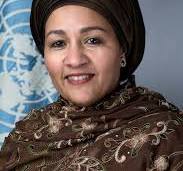
Chair, UN Sustainable Development Group YWA Flag-off · Federal Republic of Nigeria
This programme is exactly what Africa needs, a concrete, measurable, nationally owned initiative that connects women to land, to income, and to their rightful place in the economy. When we invest in women in agriculture, we invest in the entire nation.
Amina J. Mohammed Deputy Secretary-General, United Nations · YWA 12 Million Mobilisation Campaign Flag-off, Nigeria« Ce programme est exactement ce dont l'Afrique a besoin : une initiative concrète, mesurable et d'appartenance nationale qui connecte les femmes à la terre, au revenu et à leur place légitime dans l'économie. Lorsque nous investissons dans les femmes dans l'agriculture, nous investissons dans la nation tout entière. »
Read More from the Flag-offWhy Nigeria
Cannot Wait
Pourquoi le Nigeria ne peut pas attendre : l'impératif national de transformation agricole
UNESCO REF's sovereign institutional response to Nigeria's compounding agricultural, nutritional and economic emergency: rigorously designed, benchmarked against international practice, and anchored in the evidence base of development economics and agricultural science.
Food Security Crisis
Nigeria's food security emergency is the product of at least three converging structural failures. The first is the progressive degradation of arable land through desertification, flooding and soil exhaustion, which has reduced the productive capacity of smallholder farms across the northern and Middle Belt zones. The second is the erosion of agricultural extension services and the chronic underfunding of rural infrastructure, which has left millions of smallholder farmers without technical support, quality inputs or reliable access to markets. The third is climate variability, whose effect on rainfall has made rain-fed agriculture unpredictable and has converted seasonal food deficits into chronic nutritional crises. The World Food Programme estimates that more than 25 million Nigerians experience moderate to severe food insecurity, a figure projected to worsen in the absence of structural intervention at scale. The analytical conclusion is direct: a crisis produced by structural causes cannot be resolved by episodic relief. It requires a production system that is itself structurally resilient.
The Gender Agriculture Gap
The structural paradox at the centre of Nigerian agriculture is this: women constitute between 60 and 80 per cent of the smallholder farming workforce, yet they receive fewer than 10 per cent of available agricultural credit and fewer than 15 per cent of extension services, and they are widely excluded from the formal land rights that would allow productive assets to serve as collateral. This is not a marginal inefficiency in the allocation of resources. It is the structural suppression of the country's most active agricultural constituency. The Food and Agriculture Organization of the United Nations, in its landmark report on women in agriculture, estimated that giving women the same access to productive resources as men could raise yields on their farms by 20 to 30 per cent, with corresponding gains in national output and food security, and without the addition of a single hectare of land. In the language of economics, the gender gap is the largest unexploited productivity reserve in Nigerian agriculture.
Youth Unemployment and Agricultural Abandonment
Nigeria's youth unemployment crisis and its agricultural productivity deficit are not independent phenomena. They are structurally linked. Over two decades, the departure of young Nigerians from agriculture has removed from the sector the cohort with the greatest adaptive capacity, the highest propensity to adopt technology and the longest productive horizon, precisely when the sector most requires transformation. That departure was not irrational. It was a reasoned response to a sector that offered subsistence-level income, no formal qualification, no assured market and no professional recognition. Labour force data published by the National Bureau of Statistics for 2020 placed combined youth unemployment and underemployment above 60 per cent. The Young Women in Agriculture Programme addresses the root causes of both phenomena at once, by changing the terms on which agriculture is offered to the generation that left it.
A Sovereign Response
to a National Emergency
Une réponse souveraine à une urgence nationale de sécurité alimentaire
On 13 July 2023, the Federal Government of Nigeria declared a state of emergency on food security, elevating agricultural production from a sectoral priority to an obligation of national security. A declaration of that gravity demands an institutional response of commensurate seriousness. The Young Women in Agriculture Programme is that response.
The Young Women in Agriculture Programme is a sovereign national intervention designed with the analytical rigour and institutional depth that the scale of the challenge requires. It operates under the UNESCO REF SIP-ALPHA Strategic Implementation Platform, the flagship development architecture of UNESCO REF, and it is aligned with the Renewed Hope Agenda of the Federal Republic, the United Nations 2030 Agenda for Sustainable Development and the African Union's Agenda 2063. Its enterprise pillars were selected by evidence rather than convention. Kenaf was chosen as a non-oil foreign exchange commodity with documented global demand and agroclimatic conditions in Nigeria that are close to optimal. Hydroponic food production was chosen as a climate-independent, year-round mechanism for nutrition and income, which serves at once as a food security intervention and as a technological gateway through which young people re-enter agricultural enterprise.
Over its five-year implementation period from 2023 to 2028, the programme will enrol and certify 12 million young women across the 36 states and the Federal Capital Territory, with 2,000,000 champions allocated to each geopolitical zone to secure equitable national coverage. Each participant receives enterprise-grade agricultural training delivered through The Lichfield Academy, a qualification co-certified by the London School of Management (UK) and compliant with ISO/IEC international standards, and a structured off-take agreement that secures market access for the kenaf harvest before a single seed is planted. The distinction between this architecture and conventional agricultural training is fundamental. YWA does not train women and then leave them to find markets. It establishes the market relationship first and then trains women to fulfil it. That reversal of sequence is the structural innovation on which the predictability of income depends.
Expressed as a theory of change, the programme proceeds through four linked propositions. If young women are given secure access to a commercially demanded crop and an assured buyer, their income becomes predictable. If income is predictable and household food production is decoupled from the weather, household nutrition and the retention of children in school improve. If production is aggregated across 12 million certified producers and directed to export markets, the country gains a recurring source of non-oil foreign exchange. And if every stage is measured, verified and published, the programme generates the evidence that attracts the capital required for its own continuation. Each proposition is tested against data collected through the programme's geotagged monitoring system, and it is on that evidence, rather than on assertion, that the programme's claims rest.
A Sovereign Declaration
at the Nigerian Presidency
Engagement gouvernemental et institutionnel : la déclaration souveraine du Gouvernement fédéral du Nigeria
This footage records a declaration of institutional consequence: a national press conference at the Presidency of the Federal Republic of Nigeria at which the Federal Government announced its sovereign commitment to broker and mobilise structured financial support for the Young Women in Agriculture Programme. A declaration of this kind is more than a statement of intent. It is a sovereign signal to the international development finance community that the programme carries the institutional weight of the Nigerian state, and that its implementation is supported at the highest level of political authority available.
The declaration affirmed a national target of 12 million beneficiaries across the 36 states and the Federal Capital Territory by 2028, and the Presidency confirmed its active engagement in mobilising the blended finance architecture. That confirmation changes the standing of the programme in a material way. It moves YWA from an institutional initiative to a government-backed national programme, a distinction that alters its risk profile for every development finance institution that reviews it.
In the political economy of development finance, durability is priced. Lenders and guarantors discount programmes whose continuation depends on a single sponsor or a single electoral cycle, and they favour programmes embedded in the institutions of the state. The declaration at the Presidency, the designation of a Federal Government secretariat and the alignment with the Renewed Hope Agenda together place YWA firmly in the second category. That placement is what makes concessional and commercial capital available on terms that a stand-alone initiative could not obtain.
"The highest available signal of a programme's political durability and implementation viability."
The declaration also positions Nigeria as a continental reference point in the national operationalisation of the Sustainable Development Goals through agricultural policy. For the 55 member states of the African Union and the 193 member states of the United Nations, the YWA model offers a replicable institutional architecture for integrating gender-responsive agricultural enterprise into national development strategy at scale.
Institutional Signal
SDG 1 · SDG 2 · SDG 3 · SDG 4 · SDG 5 · SDG 8 · SDG 10 · SDG 12 · SDG 13 · SDG 17
Maryam Babangida National Centre
for Women Development
Secrétariat national : l'architecture institutionnelle souveraine du programme
The designation of the Maryam Babangida National Centre for Women Development as the National Secretariat of the Young Women in Agriculture Programme is an institutional statement of the first order. The Centre is the Federal Government's principal institutional infrastructure for the advancement of women: a public body established to coordinate, resource and advance the socioeconomic empowerment of Nigerian women at national scale. Its selection as Secretariat is not an administrative convenience. It is a deliberate act of institutional anchoring, which places the programme within the development architecture of the Nigerian state and confers on it the standing, governmental access and durability that no non-governmental initiative can achieve on its own.
Established by the Federal Government, the Centre maintains standing liaison with state ministries, women's affairs commissions and local government administrations across the 36 states and the Federal Capital Territory. Through that network the programme gains an existing institutional system through which enrolment, the coordination of training, the monitoring of yields, the reporting of income and the facilitation of off-take can be administered with the reach and authority that a target of 12 million beneficiaries demands. No external development organisation could construct such infrastructure from the beginning. The Centre's role as Secretariat makes it available from the first day of implementation.
The institutional home also supplies a dimension of credibility that weighs increasingly in international development finance: public accountability. Donor governments, multilateral institutions and impact investors who contribute to YWA are not entrusting their capital to a free-standing project unit. They are partnering with a programme whose secretariat answers to the Federal Government and, through it, to the National Assembly, the Office of the Auditor-General for the Federation and the Nigerian people. That chain of accountability is among the most robust available in the West African development finance landscape.
National Secretariat Address
Maryam Babangida National Centre for Women Development1 Better Life Street, Opposite Central Bank of Nigeria
Abuja, Federal Capital Territory, Nigeria
[email protected]
Nigeria Answers
the World's Call
Le lancement officiel : l'activation souveraine d'un programme national d'envergure continentale
The formal Flag-off marked a moment of precise institutional consequence: the point at which a sovereign national commitment became an operational programme, with a confirmed secretariat, a live implementation calendar, an active enrolment architecture and a structured off-take framework engaged across the six geopolitical zones. The presence of federal ministers, United Nations officials, civil society leaders and the first cohort of champions was not ceremonial. It was the public activation of a legal and institutional structure that had been months in construction.
The Flag-off activated five distinct implementation mechanisms at once: state-level enrolment coordinated by the Secretariat; the kenaf off-take agreement framework; the curriculum delivery partnership of The Lichfield Academy in five languages; the geotagged national monitoring system; and the signalling of the blended finance architecture to development finance institutions. That simultaneity reflects an architecture designed to be deployed and not merely described. Programmes that activate their mechanisms in sequence tend to lose momentum between stages; programmes that activate them together generate the early evidence on which subsequent financing depends.
"The first sovereign national response to a global development question that had remained unanswered for a decade."
The United Nations Food Systems Summit of 2021, the African Union's Malabo Declaration of 2014 and successive assessments by the World Bank and the Food and Agriculture Organization had each identified the exclusion of women from agricultural resources as a decisive and insufficiently remedied constraint on food security in sub-Saharan Africa. Nigeria's Flag-off was therefore more than a domestic policy event. It was a national answer to an established international consensus, and it converted a recommendation repeated across a decade into an operational programme with a budget, a secretariat and a timetable.
Five Mechanisms Activated
- MBNCWD Secretariat · 36 States + FCT
- Kenaf Off-take Framework
- Lichfield Academy · 5 Languages
- Geotagged Monitoring System
- Blended Finance Architecture
Scale, Ambition and Global Reach
Ampleur, ambition et rayonnement mondial du programme YWA
The figures below are the programme's committed parameters rather than aspirational projections. The target of 12 million is confirmed in the Government declaration. The annual income of ₦1.6 million is underwritten by structured off-take agreements concluded before planting. Each of the Sustainable Development Goals addressed is traceable to specific programme outcomes subject to independent monitoring. And the five-year timeline coincides with the terminal phase of the 2030 Agenda, which positions YWA among the most significant national contributions to the attainment of the Goals in sub-Saharan Africa.
Three Pillars of Transformation
Trois piliers de transformation agricole, économique et entrepreneuriale
The curriculum is enterprise-grade, co-certified by the London School of Management (UK) and delivered through an international consortium spanning the United States, the United Kingdom, Israel and Nigeria. Its three pillars are not independent modules. They form a single enterprise architecture in which each pillar reinforces the others: hydroponic production secures household nutrition and demonstrates technical capability; kenaf cultivation secures income and foreign exchange; and enterprise leadership converts technical competence and secured income into a durable commercial undertaking. The graduate is therefore not simply a trained farmer. She is a certified agribusiness operator, equipped to produce, to contract, to account and to grow.
- Water-efficient year-round cultivation systems independent of rainfall variability
- Climate-smart controlled environment agriculture eliminating seasonal production gaps
- US-led curriculum with international practicum
- Greenhouse campus training at partner institutions in Israel and the United States
- LSM UK co-certified qualification
The hydroponic pillar is designed to decouple food production from climatic uncertainty. Champions will be trained to operate controlled-environment growing systems that use nutrient-enriched water in place of soil, creating a permanent, weather-independent capacity for food production at household and community scale that persists beyond the programme cycle. A champion growing leafy vegetables and herbs in this way secures household nutrition throughout the year, irrespective of the agricultural calendar. She also produces a marketable surplus for local trade, an income stream independent of the kenaf harvest that provides monthly cash flow between quarterly off-take payments. The pillar is at once a food security intervention, a mechanism of income diversification and a technological gateway that positions YWA graduates among the most technically capable cohorts in Nigeria's smallholder sector.
- Industrial fibre crop production and systems management
- Structured off-take contracts at national scale
- Non-oil FX export commodity - forex diversification
- Textile, paper, biofuel value chain development
- ₦400K per acre x 4 cycles = ₦1.6M+ guaranteed income
The kenaf pillar converts agricultural labour into a tradable industrial commodity. Champions will be trained in varietal selection, planting density, retting and fibre separation, grading and post-harvest handling, under the technical supervision of the Obafemi Awolowo University Institute for Agricultural Research and Training. Production is undertaken against a structured off-take agreement concluded before planting, so that price and buyer are known in advance and income can be planned. Because kenaf yields two commercial fractions, bast fibre for textiles and geotextiles and core fibre for composites, insulation and bioenergy, the pillar also opens a pathway from raw production to local processing, where the greater share of value, and of foreign exchange, is retained.
- ENTILEAD entrepreneurship curriculum delivery
- Agribusiness management and SME scaling
- Women's Space USA one-year membership
- Cross-border mentorship and knowledge exchange
- Global professional network with pathway to international markets
The enterprise leadership pillar transforms technically trained producers into commercially capable agribusiness operators. Without it, champions would possess production skills without the competencies in negotiation, financial management, contract literacy, quality assurance and market positioning that determine whether training yields a sustained enterprise or a temporary activity. The ENTILEAD curriculum addresses precisely the gap that has caused many agricultural training programmes in sub-Saharan Africa to produce capable growers who cannot sustain commercial viability beyond a first or second season. Membership of Women's Space USA and access to the international alumni and mentorship network extend that capability beyond Nigeria's borders, connecting graduates to export buyers, investors and global agribusiness networks from the moment of certification.
Kenaf: Nigeria's Strategic
Non-Oil Export Commodity
Le kenaf : la culture industrielle stratégique du Nigeria pour l'exportation hors-pétrole
Hibiscus cannabinus, commonly known as kenaf, is among the fastest-growing industrial fibre crops in the world. With its agroclimatic advantage across the Middle Belt, North West and North East, Nigeria is positioned to become a principal global supplier to a market valued at more than USD 4.5 billion a year.

Achievable within 90 to 150 days under Nigerian agroclimatic conditions.
Four guaranteed harvest cycles per acre per annum under structured off-take agreements.
Annual global kenaf industrial market. Growing 4.2% per annum. Nigeria underrepresented.
MOU Signing: UNESCO REF and the Obafemi Awolowo University Institute for Agricultural Research and Training
Signature du protocole d'accord entre UNESCO REF et l'Institut de recherche et de formation agricoles de l'Université Obafemi Awolowo
The Memorandum of Understanding between UNESCO REF and the Obafemi Awolowo University Institute for Agricultural Research and Training (OAU IAR&T), Ibadan, is the scientific and institutional foundation of the kenaf pillar. The Institute is one of Nigeria's foremost agricultural research institutions, with a national mandate for the development of commercially viable production systems for the smallholder and enterprise sectors, and a long record of research on kenaf and other fibre crops. Its formal endorsement of the YWA kenaf programme is not a ceremonial arrangement. It constitutes the programme's scientific credibility: confirmation, by a leading national research authority, that kenaf cultivation under the YWA framework is agronomically sound, commercially viable and replicable at national scale. The Memorandum commits the Institute to technical oversight, varietal certification, soil assessment protocols and extension advisory support for YWA champions in all participating states. Its signing was reported by TVC News, as recorded below.
The 12 million young women enrolled in the programme are not a welfare statistic. Considered in aggregate, they constitute a foreign exchange instrument. Every kenaf harvest cycle they complete is a non-oil export event, and every tonne of industrial fibre sold into global markets is an inflow of hard currency to the national reserve system. The distinction between a social programme and a fiscal instrument is not rhetorical. It is the difference between a programme that consumes public resources and one that generates them.
I. The Structural Vulnerability of Nigeria's Foreign Exchange Position
I. La vulnérabilité structurelle de la position du Nigeria en devises étrangères
By any objective assessment, Nigeria's foreign exchange position is structurally fragile. The overwhelming share of the country's hard currency earnings derives from the export of crude petroleum, a commodity that is finite in its reserve base, volatile in its pricing and exposed to demand erosion as the global energy transition accelerates. The annual reports of the Central Bank of Nigeria have consistently recorded non-oil exports as a small minority of total foreign exchange earnings. This concentration of risk is not a marginal policy concern. It is a structural vulnerability of the first rank, and the literature on resource-dependent economies, from the analysis of Dutch disease to the study of commodity price cycles, explains why it persists in the absence of deliberate diversification.
The consequences of that vulnerability are not theoretical. They appear in the chronic instability of the naira, in the periodic insufficiency of reserve buffers during oil price downturns, in pressure on the parallel market and in recurring cycles of import compression that constrain industrial and commercial activity whenever oil prices fall. The International Monetary Fund's 2022 Article IV Consultation for Nigeria placed export diversification among the structural reforms most relevant to reserve stability and exchange rate management. In its kenaf pillar, the YWA programme is among the most operationally advanced responses to that recommendation currently active in Nigeria.
II. Kenaf as a Non-Oil Foreign Exchange Commodity
II. Le kénaf, produit d'exportation hors pétrole générateur de devises
Kenaf (Hibiscus cannabinus) is recognised by the Food and Agriculture Organization of the United Nations as one of the principal natural fibre crops, valued for its versatility across industrial applications. Its two commercial fractions, bast fibre and core fibre, are in active and growing demand from buyers in the European Union, Japan, the Republic of Korea, the United States and China, for uses spanning technical textiles, geotextiles, paper and pulp, automotive composite panels, construction materials and bioenergy.
Industry estimates valued the global kenaf market at approximately USD 4.5 billion in 2023, with projected compound annual growth of 4 to 5 per cent through 2030, driven principally by the European Union's Single-Use Plastics Directive of 2019 and the resulting demand for bio-based alternatives in packaging, textiles and composites. Nigeria, endowed with suitable conditions across its Middle Belt, North West and North East, supplies only a negligible fraction of this market. The YWA programme is the institutional mechanism through which that gap can be closed.
Each champion producing kenaf under a structured off-take agreement is, wherever her fibre is priced for export, a participant in a hard currency transaction. The aggregate of those transactions, conducted by 12 million certified producers across four annual harvest cycles, constitutes a material, recurring and predictable stream of non-oil foreign exchange, on a scale commensurate with a significant intervention in Nigeria's export architecture.
Programme Scale · YWA
12M Certified Kenaf Producers ₦1.6M+ Guaranteed Annual Income per Producer 4x Annual Harvest Cycles · FX Inflow EventsStructured off-take at ₦400,000 per acre per cycle. At export-priced fibre rates, each cycle generates a foreign exchange event.
IMF Assessment · Nigeria 2022
The Fund's 2022 Article IV Consultation identified the diversification of exports and of the revenue base as central to reducing Nigeria's vulnerability to oil price shocks and to stabilising its external position.
International Monetary Fund, Article IV Consultation, Nigeria, 2022.
III. The Aggregate FX Contribution: From Individual Harvest to Reserve Stabilisation
III. La contribution globale en devises : de la récolte individuelle à la stabilisation des réserves
The foreign exchange contribution of the kenaf programme is not a single calculation. It is a compounding phenomenon, distributed across many producers and many cycles, which intensifies over the five-year timeline as certified producers build agronomic expertise, extend the area under cultivation and establish recurring relationships with international buyers through the off-take architecture.
Consider the arithmetic on its most conservative assumptions. If each of the 12 million champions cultivates a single acre per cycle, and if only one fifth of that output is graded and priced as export-quality industrial fibre at prevailing international rates, the aggregate export revenue across four annual cycles would still represent a material and measurable improvement in the share of non-oil earnings in Nigeria's total foreign exchange receipts. The conservatism of the assumption is deliberate: the case does not depend on optimistic yields or prices to hold.
Nor does the contribution end with the export of raw fibre. As champions progress through the enterprise leadership curriculum, the programme creates the conditions for value-added processing within Nigeria: processed bast fibre, composite panels, technical textiles and bio-based packaging, each of which commands a higher international price than raw kenaf and therefore generates more foreign exchange per tonne of crop. The development literature on export upgrading is consistent on this point: countries that move from raw commodity export into processing capture a larger and more stable share of value.
The macroeconomic significance of this trajectory extends beyond the arithmetic. A sustained rise in non-oil export revenue eases structural pressure on the naira by increasing the supply of hard currency in the formal market, narrowing the premium commanded by the parallel market and giving the Central Bank a more diversified inflow base from which to conduct exchange rate policy. These benefits accrue to the whole economy, not to the agricultural sector alone.
The engagement of the Federal Government as an institutional partner of YWA is therefore not an act of agricultural patronage. It is participation in one of the most significant non-oil export diversification initiatives operating in the country. The fiscal case for that participation rests neither on charity nor on the vocabulary of social development. It rests on the logic of reserve management, exchange rate stability and the long-term diversification of the national foreign currency base. At every level of analysis, the evidence favours action.
Two qualifications strengthen rather than weaken the case. First, the foreign exchange benefit depends on quality: fibre must meet the grading standards of international buyers, which is why varietal certification and post-harvest training are built into the curriculum. Second, it depends on logistics: aggregation, transport and export documentation must function at scale, which is why the off-take framework and the enterprise leadership pillar are designed together. A programme that names its conditions of success, and builds the institutions to meet them, is a more credible fiscal instrument than one that assumes them.
Sources: Central Bank of Nigeria, Annual Report 2022. International Monetary Fund, Nigeria: 2022 Article IV Consultation. World Bank, Nigeria Development Update, 2023. Food and Agriculture Organization of the United Nations, publications on jute, kenaf and allied fibres. Grand View Research, Kenaf Market Analysis, 2023. Directive (EU) 2019/904 of the European Parliament and of the Council on the reduction of the impact of certain plastic products on the environment.
"12 million young women harvesting industrial kenaf fibre four times annually and selling into structured global export markets is not an agricultural development narrative. It is a non-oil foreign exchange policy. Nigeria's reserve diversification agenda is not waiting for a new instrument. The instrument exists. It grows in the ground."
Hydroponics: Reclaiming
Agriculture for the 21st Century
La culture hydroponique : reconquérir l'agriculture pour le XXIe siècle
Hydroponic farming is the cultivation of plants in mineral nutrient solutions circulated through water, without soil as a growing medium. It is neither peripheral nor experimental. It is among the most resource-efficient and highest-yielding systems of food production in commercial use, and it is a principal method for high-value vegetables, herbs and fruit in the Netherlands, Japan, Canada, the United States and Israel. Industry estimates valued the global market for controlled environment agriculture at close to USD 38 billion in 2023, with projections exceeding USD 100 billion by 2030, driven by the convergence of climate variability, urbanisation, water scarcity and food security policy in developed and developing economies alike. YWA introduces this system to Nigeria at national scale, through one of the most institutionally comprehensive agricultural training architectures the country has deployed.
Hydroponics was selected for the programme not merely because it outperforms soil-based agriculture in yield and resource efficiency, but because it fits three structural realities of Nigerian development. It operates in urban and peri-urban settings, where much of Nigeria's young population lives. It produces food throughout the year, irrespective of rainfall. And it presents agriculture, for the first time in the experience of most young Nigerians, as a technology-enabled, commercially structured and internationally recognised profession rather than a subsistence fallback.
The programme does not treat the technology as self-executing. Hydroponic systems depend on reliable water quality, a dependable supply of nutrient inputs and, in many configurations, a source of power for circulation. YWA addresses these conditions through system designs suited to local energy realities, including low-power and gravity-fed configurations, through supply arrangements for nutrient inputs, and through practical training that places as much weight on system maintenance as on cultivation. In this respect the programme follows the lesson of the agricultural technology literature: adoption is sustained only where the supporting institutions are built alongside the technology.
Crop selection follows the same logic of evidence. The programme concentrates initially on leafy vegetables, herbs and selected fruiting crops, which combine short growing cycles, high nutritional value and dependable demand in Nigerian urban and peri-urban markets. Short cycles allow champions to learn quickly from successive harvests; nutritional value serves the household; and dependable demand converts surplus into income. As competence grows, champions may diversify into higher-value produce for hospitality, retail and institutional buyers, extending the pillar from household food security into a commercial enterprise in its own right.
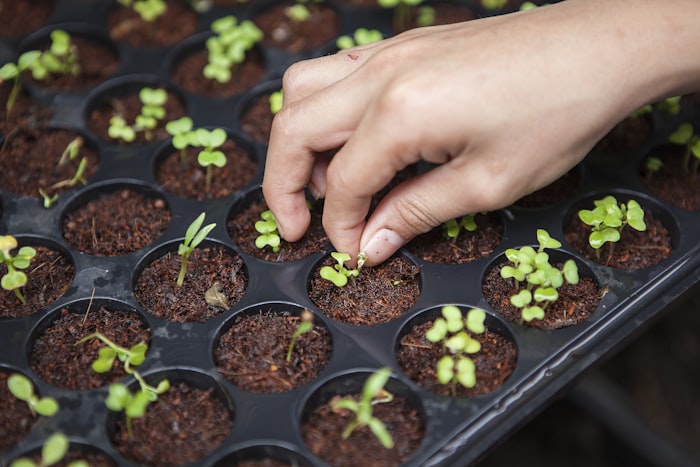
Nigeria's Shift to Hydroponics · Channels Television 2024 · Food Security
Hydroponics Technology · Global Food Production · Public Domain Resource
Hydroponics · Africa Food Demand · SDG 12 Responsible Production
Hydroponics · Africa Food Demand · SDG 12 Responsible Production
Why Young Nigerians Abandoned Agriculture,
and How YWA Brings Them Back
Pourquoi les jeunes Nigérians ont abandonné l'agriculture, et comment YWA les ramène
The departure of Nigerian youth from agriculture is not a failure of ambition. It is a reasoned response to a sector that historically offered low income, heavy physical labour, no assured market and no professional recognition. YWA changes each of those variables.
The scholarly literature on youth disengagement from agriculture in sub-Saharan Africa is extensive, methodologically diverse and notably convergent. Across country studies, regional surveys and multi-country analyses, three determinants recur as the principal drivers of youth exit from the sector: the unpredictability of income, the deficit of social status attached to farming, and the absence of technology-mediated pathways into enterprise. Work across the CGIAR system on youth in African food systems has identified assured income and the integration of digital technology among the variables with the greatest influence on whether young people engage in agricultural enterprise.
YWA addresses all three determinants at once. Its off-take architecture removes the unpredictability of income. Its co-certification with the London School of Management (UK) and its ISO/IEC compliance turn agricultural training from a vocational fallback into an internationally recognised professional credential. And its hydroponic and kenaf curriculum is technology-enabled by design: managed through digital dashboards, connected to international markets, and producing graduates as comfortable in a commercial negotiation as in a growing chamber.
The emphasis on young women is analytically deliberate. The literature on intra-household resource allocation consistently finds that income controlled by women is more likely to be spent on food, health and the education of children than income controlled by men. A programme that raises the earnings of young women therefore produces returns that extend beyond the individual producer to the next generation. In this sense, YWA is simultaneously an employment programme, a nutrition programme and an investment in human capital.
YWA does not ask young Nigerians to reconsider agriculture on the terms in which they currently understand it. It offers them agriculture on terms they have not encountered before: as a structured, technology-enabled and internationally credentialled profession, with assured income, access to global markets and a pathway of progression without a fixed ceiling.
Sources: CGIAR research on youth in African agri-food systems, 2022 to 2023. International Food Policy Research Institute, studies on youth engagement in African agriculture. Food and Agriculture Organization of the United Nations, The State of Food and Agriculture 2010 to 2011 and 2023. World Bank, analyses of youth employment in Nigeria. National Bureau of Statistics, Labour Force Statistics, 2020.
Technology as the Entry Point
Hydroponic farming is managed through a dashboard. It responds to sensor data and produces consistent, predictable yields regardless of season. For a generation raised on smartphones, it is agriculture that resembles a career in the digital economy. The technology is not ornamental. It is the gateway that changes who is willing to walk through the door.
Guaranteed Income as the Incentive
The most powerful deterrent to youth engagement in Nigerian agriculture has historically been the unpredictability of markets. YWA's structured off-take architecture removes it. The buyer is identified before the seed is planted, the price is agreed before the growing cycle begins, and the income is therefore assured. For a generation that has grown up amid economic uncertainty, this is not merely an incentive. It is a change of paradigm.
International Credential as the Status Signal
YWA's co-certification with the London School of Management (UK), its ISO/IEC compliance and its alignment with UNESCO ISCED turn agricultural training from a vocational fallback into a professional credential benchmarked internationally. When a YWA graduate presents her qualification, she presents an internationally recognised certification, and that recognition matters to the generation the programme is recruiting.
SDG 8 Decent Work · Youth Unemployment · UN SDG Media Zone 2026
SDG 8 Decent Work · Youth Unemployment Crisis · UN SDG Media Zone · United Nations Official
Hunger, Malnutrition, and the
Child Who Cannot Attend School
La faim, la malnutrition infantile et l'enfant qui ne peut pas aller à l'école
The relationship between agricultural underproduction, household hunger, child malnutrition and school dropout is not a loose correlation. It is a causal chain, and YWA interrupts it at its origin: food insecurity and income instability in the agricultural household.
Nigeria recorded 10.2 million out-of-school children in 2023, one of the largest such populations in the world. The UNESCO Institute for Statistics' analysis for Nigeria (2022) identified hunger, malnutrition and the loss of household income as contributory factors in 34 per cent of dropout cases. These are not separate crises. They are links in a single chain whose upstream origin is insufficient food production and income at the level of the household. Public policy has tended to address the chain at its end, through school feeding and enrolment drives. Those measures are necessary, but they cannot be sufficient while the source of the deprivation remains untouched.
Agricultural Underproduction at Household Level
Nigeria's smallholder agricultural sector, in which women constitute between 60 and 80 per cent of the workforce, produces insufficient food volume to sustain household food security across the full agricultural calendar. The structural cause is not land scarcity but resource deprivation compounded by institutional exclusion. Female smallholder farmers receive fewer than 10 per cent of available agricultural credit, fewer than 15 per cent of government extension services, and are excluded from formal land title in most customary tenure systems. The Food and Agriculture Organisation's 2022 assessment estimated a per-hectare output gap of 40 per cent relative to what the same land produces under gender-equitable resource allocation. That gap is a policy failure, and it is the proximate cause of everything that follows.
Household Hunger and Chronic Food Insecurity
The World Food Programme's 2023 Nigeria Country Brief documents that an estimated 25 million Nigerians experience moderate to severe food insecurity, concentrated in rural and peri-urban households whose livelihoods depend on smallholder agricultural output. For these households, food insecurity is not an episodic crisis triggered by exceptional circumstances. It is a structural chronic condition that intensifies during the dry season, deepens in drought years, and worsens systematically across successive generations of children raised in nutritional deficit. The inability of the household's primary agricultural producer to generate sufficient food or income is both the consequence of the resource deprivation documented in Step 1 and the engine of the malnutrition and educational exclusion documented in Steps 3 and 4.
Child Malnutrition, Stunting, and Cognitive Impairment
UNICEF's 2023 Nigeria Nutrition Country Profile documents that 37 per cent of Nigerian children under five years of age are stunted as a direct consequence of chronic nutritional deprivation. Research published in The Lancet Nutrition Series (2013, confirmed in the 2022 update) establishes that stunted children experience measurable deficits in cognitive processing speed, working memory capacity, and language acquisition, all directly predictive of reduced school readiness, lower grade progression, and earlier school exit. A stunted child does not merely attend school under more difficult circumstances than a well-nourished peer. She arrives at the school gate already cognitively disadvantaged in ways the educational system, absent nutritional remediation, cannot fully address. The problem must be solved upstream of the school.
School Dropout, Absenteeism, and Educational Exclusion
The UNESCO Institute for Statistics 2022 Nigeria analysis identified household income loss and food insecurity as primary contributory factors in 34 per cent of school dropout cases. The pathway operates through three independently documented mechanisms: hungry children concentrate less effectively and disengage from learning at measurably higher rates, creating a spiral of underperformance that precedes formal withdrawal; households facing food insecurity deploy children, disproportionately girls, into domestic labour when economic pressure reaches critical threshold; and the direct costs of education, school fees, uniforms, transport, and materials, are the first expenditure sacrificed when household income falls below subsistence. Nigeria's 10.2 million out-of-school children, the second largest such population in the world, represent the aggregate of all three mechanisms operating simultaneously across millions of food-insecure agricultural households.
YWA Interrupts the Chain at Its Structural Origin
The Young Women in Agriculture Programme intervenes at the origin of this causal chain, not at its terminus. A YWA champion who operates a hydroponic growing system has eliminated the seasonal production gap that creates chronic food deficit in her household. A YWA champion who receives structured kenaf off-take income at four-cycle intervals annually has eliminated the income volatility that forces the school-fee sacrifice and the labour deployment of her children. Every meal her hydroponic system produces above the household's consumption threshold is a unit of child malnutrition prevention. Every naira of kenaf off-take income disbursed is a school fee that does not go unpaid, a child who remains in class. The programme does not address educational exclusion directly. It removes the two structural preconditions, hunger and poverty, without which educational exclusion in agricultural households cannot be sustained.
Sources: UNESCO Institute for Statistics Nigeria 2022. UNICEF Nigeria Nutrition Country Profile 2023. Federal Ministry of Humanitarian Affairs Food Security Assessment 2023. World Food Programme Nigeria Country Brief 2023. CGIAR Nutrition-Education Linkage Study Sub-Saharan Africa 2022.


The contribution of YWA to SDG 4 is structural and causal rather than aspirational. By equipping 12 million young women with year-round hydroponic food production and assured kenaf income, the programme addresses the two principal upstream drivers of school dropout together: household hunger and household income instability. UNICEF data for 2023 record that 37 per cent of Nigerian children under five are stunted through chronic nutritional deprivation, and research published in The Lancet establishes that stunted children arrive at school with cognitive disadvantages that the education system alone cannot remedy. YWA intervenes before the child arrives at school, at the level of household food production where the deficit begins.
The gendered dimension of this chain deserves particular emphasis. When households under economic pressure withdraw children from school, or deploy them into domestic and agricultural labour, it is girls who are most often withdrawn first and returned last. The education of girls is in turn among the most extensively documented determinants of later outcomes in maternal health, child nutrition and household income. A programme that stabilises the income and food supply of young women therefore protects the education of their daughters, and through them the prospects of the following generation. The returns to YWA compound across generations in a way that conventional agricultural programmes, which address the producer alone, cannot.
Every meal that a YWA champion produces above her household's consumption is a unit of malnutrition prevented. Every naira of kenaf income disbursed is a school fee that is paid, and a child who remains in class rather than joining the national count of children out of school. The programme does not claim to solve the problem of education. It removes two of its most powerful structural barriers: hunger and poverty.
SDG 2 Zero Hunger · United Nations Official · Hunger, Malnutrition and Education
12 Million Champions Across Nigeria
12 millions de championnes réparties équitablement dans les 36 États du Nigeria et le Territoire de la capitale fédérale
The target of 12 million champions is distributed in equal shares across the six geopolitical zones, so that the benefits of agricultural enterprise reach every state, every local government area and every community, regardless of remoteness or historical marginalisation. Equality of allocation by zone is a deliberate principle of national cohesion. It ensures that no region experiences the programme as the property of another, and it builds the broad political ownership on which a five-year national programme depends.
Within each zone, allocation proceeds to the level of the state and the local government area, so that the programme reaches rural communities as well as urban centres. The two enterprise pillars support that reach: kenaf is suited to the extensive land of rural savannah districts, while hydroponics is suited to dense urban and peri-urban settings. The result is a programme whose geography follows the distribution of Nigeria's young women rather than the distribution of existing infrastructure, which is the condition for genuine national inclusion.
The national monitoring system uses a geotagged data architecture that records every training completion, harvest cycle, off-take transaction and income payment at the level of the local government area. State governors receive quarterly dashboards for their states, and consolidated national reporting is provided to the Office of the Senior Special Assistant to the President on the Sustainable Development Goals. Transparency is not only a requirement of governance. It is a design feature: the data generated by each cohort become the evidence of impact that attracts the institutional capital required for the next.
| Zone | States | Target | Per State | Share |
|---|---|---|---|---|
| North West | 7 | 2,000,000 | 285,714 | 16.67% |
| North East | 6 | 2,000,000 | 333,333 | 16.67% |
| North Central | 6 + FCT | 2,000,000 | 285,714 | 16.67% |
| South West | 6 | 2,000,000 | 333,333 | 16.67% |
| South East | 5 | 2,000,000 | 400,000 | 16.67% |
| South South | 6 | 2,000,000 | 333,333 | 16.67% |
| NATIONAL TOTAL | 36 + FCT | 12,000,000 | Equal | 100% |
UN Sustainable Development Goals
and African Union Agenda 2063
Objectifs de développement durable des Nations Unies et Agenda 2063 de l'Union africaine
YWA addresses ten of the seventeen Sustainable Development Goals directly, through an integrated architecture of production, income, nutrition, gender equity and environmental stewardship. Few agricultural programmes operating at national scale in sub-Saharan Africa engage the Goals as comprehensively, or report against them as precisely.
Each contribution is anchored in an official indicator. The income of small-scale food producers is measured under indicator 2.3.2; the proportion of women among owners or rights-bearers of agricultural land under indicator 5.a.1; the proportion of young people not in education, employment or training under indicator 8.6.1; and the prevalence of stunting among children under five under indicator 2.2.1. Because YWA records outcomes at the level of the individual champion and her household, its results can be aggregated directly against these indicators. The programme's alignment with the Goals is therefore a matter of measurement and not merely of declaration.
The programme also advances the aspirations of the African Union's Agenda 2063, most directly Aspiration 1 (a prosperous Africa based on inclusive growth and sustainable development), Aspiration 6 (an Africa whose development is people-driven, relying on the potential of its people, especially its women and youth) and Aspiration 7 (Africa as a strong, united, resilient and influential global player and partner). By implementing YWA across the 36 states and the Federal Capital Territory, Nigeria places itself among the first member states of the African Union to operationalise, at national scale, a gender-responsive, technology-enabled and export-oriented agricultural enterprise programme that addresses food security, youth employment, foreign exchange diversification and climate resilience together.
A champion earning ₦1.6 million a year from assured kenaf off-take rises above the national poverty line. Across 12 million champions, the programme becomes a structural intervention against poverty at national scale, lifting a quantifiable cohort out of income poverty through enterprise rather than transfer.
The hydroponic pillar secures household food production throughout the year, independent of seasonal rainfall, while the kenaf pillar provides stable quarterly income that removes the economic barrier to buying food. Together they address the two structural causes of hunger in agricultural households: deficient production and unstable income.
Hydroponic production gives households year-round access to fresh vegetables and nutrient-rich produce, addressing the micronutrient deficiencies associated with Nigeria's 37 per cent rate of child stunting. Stable off-take income also lowers the economic barrier to healthcare. Both contributions to SDG 3 accrue at household level, without the need for a separate health programme.
Training and Certification Pathway
Parcours de formation et certification internationale : de l'inscription à la qualification mondiale
The certification architecture was designed for a single purpose: that a qualification earned by a young woman in Sokoto or in Calabar should be recognised in London, Nairobi and New York with the same authority as one earned in any of those cities. ISO/IEC compliance, alignment with UNESCO ISCED Level 4 and co-certification by the London School of Management (UK) together secure that standard. The certification is not ornamental. It is the means by which a YWA graduate enters international labour markets, pursues further study and establishes the professional credibility that her kenaf buyers and hydroponic customers require for sustained commercial relationships. In the economics of signalling, a credential is valuable to the extent that it is trusted by those who did not issue it; the architecture is built to earn that trust.
The pathway is progressive. A champion begins with multilingual orientation in English, Hausa, Igbo, Yoruba or Pidgin, so that language is never a barrier to entry; proceeds through theory modules aligned with UNESCO ISCED; undertakes supervised practical training in Nigeria, with an international practicum available at partner campuses; and completes a capstone assessment before certification. Each stage is recorded on the national dashboard, so that the credential at the end is supported by a verifiable record of the competence it attests.
- Multilingual orientation (5 languages)
- Online and practical sessions
- Self-paced flexible study
- UNESCO ISCED aligned
- US-led curriculum delivery
- Hydroponics and kenaf modules
- Hands-on training in Nigeria
- International practicum option
- USA, UK, Israel campuses
- ISO/IEC compliant
- LSM UK co-certified
- UNESCO REF credential
Guaranteed Livelihoods.
Measurable Prosperity.
Moyens de subsistance garantis, prospérité mesurable : le modèle économique de YWA
Structured off-take agreements assure ₦400,000 per acre per harvest cycle, achievable four times a year. This predictability of income is a contractual commitment written into the off-take architecture before any champion plants her first seed, and not a promotional claim.
The income model is deliberately transparent in its assumptions. The figure of ₦1.6 million represents four cycles on a single acre under an off-take agreement concluded in advance; it does not depend on speculative market prices, and it excludes the separate income that champions earn from hydroponic produce. Income above this baseline grows as champions extend the area under cultivation, improve their grading outcomes and progress into processing. Presenting the baseline conservatively, and naming the conditions on which additional income depends, is the practice expected by development finance institutions and the standard to which the programme holds itself.
💲 Foreign Exchange Reserve Contribution
Kenaf harvested under the YWA off-take architecture and sold into international fibre markets earns foreign exchange independent of the price of crude oil. Aggregated across 12 million certified producers and four annual cycles, this non-oil contribution is structural, recurring and insulated from the energy market volatility that defines Nigeria's present reserve position. It is not a supplementary income stream. It is a mechanism of reserve diversification operating at agricultural scale.
👥 Direct and Indirect Employment Architecture
The 450,000 direct positions projected from implementation are only the first order of job creation. Each kenaf production cluster generates demand for input suppliers, transport operators, processing workers, quality control technicians, export documentation specialists and off-take contract administrators. Research on agricultural employment multipliers indicates that each direct job in a structured programme of this design supports between 1.8 and 2.4 indirect positions in upstream and downstream activities. At full scale, the total employment effect of YWA therefore substantially exceeds its direct count.
🥗 National Food Security Architecture
The hydroponic component operates as a year-round, climate-independent food supply system, structurally decoupled from the seasonal and meteorological variables that drive Nigeria's recurrent food price volatility. Champions growing leafy vegetables, herbs, tomatoes and selected fruit under controlled conditions avoid the harvest failures, post-harvest losses and supply disruptions that characterise conventional smallholder production. Their output reaches local markets consistently through all twelve months, moderating the off-season price spikes that fall most heavily on the poorest households.
A World-Class Alliance
Across 4 Continents
Une alliance de classe mondiale sur 4 continents au service du Nigeria
The YWA consortium was assembled on the principle that no single institution possesses the full range of competencies required to deliver an agricultural enterprise programme of this complexity and scale. Each partner was selected for a specific and non-duplicable contribution: strategic oversight, diplomatic engagement, curriculum design, certification authority, research capacity, development finance, enterprise networks, community reach and sovereign institutional standing. The accession of TSSDI, the RSD Foundation and The Veronica Foundation extends that architecture further. The result is one of the most institutionally diverse and geographically distributed agricultural development consortia currently operating in West Africa.
Partnership within YWA is governed rather than informal. Each partner's contribution is linked to specific programme functions and reviewed against delivery, so that the consortium operates as a coordinated system rather than a collection of endorsements. UNESCO REF exercises global oversight; The Lichfield Partners and Associates provides strategic advisory, diplomatic and fiduciary support; and the technical, academic, financial and community partners contribute within clearly delimited roles. This architecture allows new partners to join, as TSSDI, the RSD Foundation and The Veronica Foundation have done, without diluting accountability or duplicating effort.
Transparent. Fiduciary-Grade.
Results-Driven.
Transparent, fiduciaire et axé sur les résultats : l'architecture de responsabilité de YWA
The Young Women in Agriculture Programme operates under a governance and fiduciary architecture designed to the standards required by the most demanding multilateral development finance institutions. Every element of financial management, monitoring and accountability was constructed with a single objective: that every naira contributed is traceable, every output is independently verifiable, and every claim made to government partners, donors and the Nigerian public can be substantiated against documentary evidence that exists in real time rather than in retrospect.
Governance here is not a matter of formal compliance. It is the foundation of institutional credibility, and it is what distinguishes YWA from the generality of agricultural development programmes in Nigeria. Contributors are not entrusting their capital to an isolated project unit. They are partnering with a programme whose accountability extends, through its federal Secretariat, to the oversight institutions of the Nigerian state, including the National Assembly, the Office of the Auditor-General for the Federation and the anti-corruption agencies, and ultimately to the Nigerian people. Development finance institutions require precisely this architecture before committing co-financing at the scale the programme's ambitions demand.
Risk management is built into the same architecture. The principal risks to a programme of this kind are well understood: shortfalls in yield or quality, default by an off-take buyer, delays in disbursement, and the diversion of funds. Each is addressed by a specific control. Agronomic risk is mitigated by the technical supervision of OAU IAR&T and by varietal certification; buyer risk by diversified off-take arrangements and escrow; disbursement risk by milestone-based release; and fiduciary risk by ring-fenced accounts and independent audit. Safeguarding of participants, including the protection of young women from exploitation in the course of their enterprise, is treated as an obligation of the programme and not as an afterthought.
Fiduciary Controls
Signals of Delivery
Indicateurs de réalisation
The Programme in Questions
Le programme en questions : réponses aux interrogations les plus fréquentes
01What is the Young Women in Agriculture (YWA) Programme?Qu'est-ce que le programme Jeunes Femmes dans l'Agriculture (YWA) ?
The Young Women in Agriculture Programme is a sovereign national initiative of UNESCO REF under its SIP-ALPHA Strategic Implementation Platform, endorsed by the Federal Government of Nigeria. It will train and certify 12 million young women across the 36 states and the Federal Capital Territory between 2023 and 2028 in three enterprise pillars: kenaf cultivation, hydroponic food production and agribusiness leadership.
02Why kenaf, and how does it support Nigeria's foreign exchange reserves?Pourquoi le kénaf, et comment soutient-il les réserves de change du Nigeria ?
Kenaf (Hibiscus cannabinus) is a fast-growing industrial fibre crop in demand in the European Union, Japan, the United States, the Republic of Korea and China for textiles, composites, packaging and bioenergy. Grown under structured off-take agreements and sold into export markets, it generates recurring non-oil foreign exchange and supports the diversification of Nigeria's reserves away from crude oil.
03How does hydroponics improve food security and child nutrition?Comment la culture hydroponique améliore-t-elle la sécurité alimentaire et la nutrition des enfants ?
Hydroponic systems produce vegetables and herbs throughout the year, independent of rainfall, using up to 90 per cent less water than conventional irrigation. Champions secure household nutrition and sell surplus produce locally, addressing the household hunger and income instability that drive child stunting and school dropout.
04What income can a YWA champion expect?Quel revenu une championne YWA peut-elle attendre ?
Structured off-take agreements assure NGN 400,000 per acre per harvest cycle. Across four cycles a year, a certified producer earns NGN 1.6 million or more annually per acre, with additional income from hydroponic produce.
05Who certifies the YWA qualification?Qui certifie la qualification YWA ?
Training is delivered through The Lichfield Academy. The qualification is co-certified by the London School of Management (UK), compliant with ISO/IEC standards and aligned with UNESCO ISCED Level 4, and it carries a UNESCO REF credential.
06What is the role of OAU IAR&T?Quel est le rôle de l'OAU IAR&T ?
Under a Memorandum of Understanding with UNESCO REF, the Obafemi Awolowo University Institute for Agricultural Research and Training, Ibadan, provides technical oversight, varietal certification, soil assessment protocols and extension advisory support for the kenaf pillar.
07Who are the programme's partners?Qui sont les partenaires du programme ?
The consortium includes UNESCO REF, The Lichfield Partners and Associates, The Lichfield Academy, the London School of Management (UK), Open Labs (USA), Onida Agri and Aquaculture (Israel), OAU IAR&T Ibadan, Women's Space USA, NAOWA Nigeria, the Bank of Agriculture, RightsFronts and Equipr Africa, Pulse Engineering and Consultancy, TSSDI, the RSD Foundation and The Veronica Foundation.
08How is the programme financed and held accountable?Comment le programme est-il financé et soumis à la reddition de comptes ?
YWA uses a blended finance architecture combining participant contributions, grants, concessional loans, private capital and off-take escrows, including UNESCO REF's Educational Financial Facility Scheme. Funds are ring-fenced, released only against verified milestones, tracked on a geotagged national dashboard and subject to independent audit.
09How can an institution partner with YWA or a young woman enrol?Comment une institution peut-elle devenir partenaire de YWA, ou une jeune femme s'inscrire ?
Institutions, donors and young women seeking enrolment may write to UNESCO REF at [email protected]. Partnership enquiries may also be made through the Institutional Partnerships page of the UNESCO REF website.
Join a Movement That
Feeds Nations
Rejoignez un mouvement qui nourrit les nations et transforme l'Afrique
The Young Women in Agriculture Programme is Nigeria's nationally endorsed and internationally benchmarked initiative for agricultural transformation. Every partnership deepens its mandate, and every contribution empowers a champion, her household and her community.